The global investment map is being redrawn, and the Middle East is firmly at its centre.
Once defined largely as a supplier of global capital, the region is increasingly becoming a destination for it. Sovereign wealth funds, family offices, and institutional investors across the Gulf are not just deploying money overseas, they’re now inviting the world to participate in their own growth story. It’s a shift underpinned by aggressive domestic economic reform agendas, a rising appetite for private capital in infrastructure and technology and a new generation of investors pushing for greater diversification and sophistication.
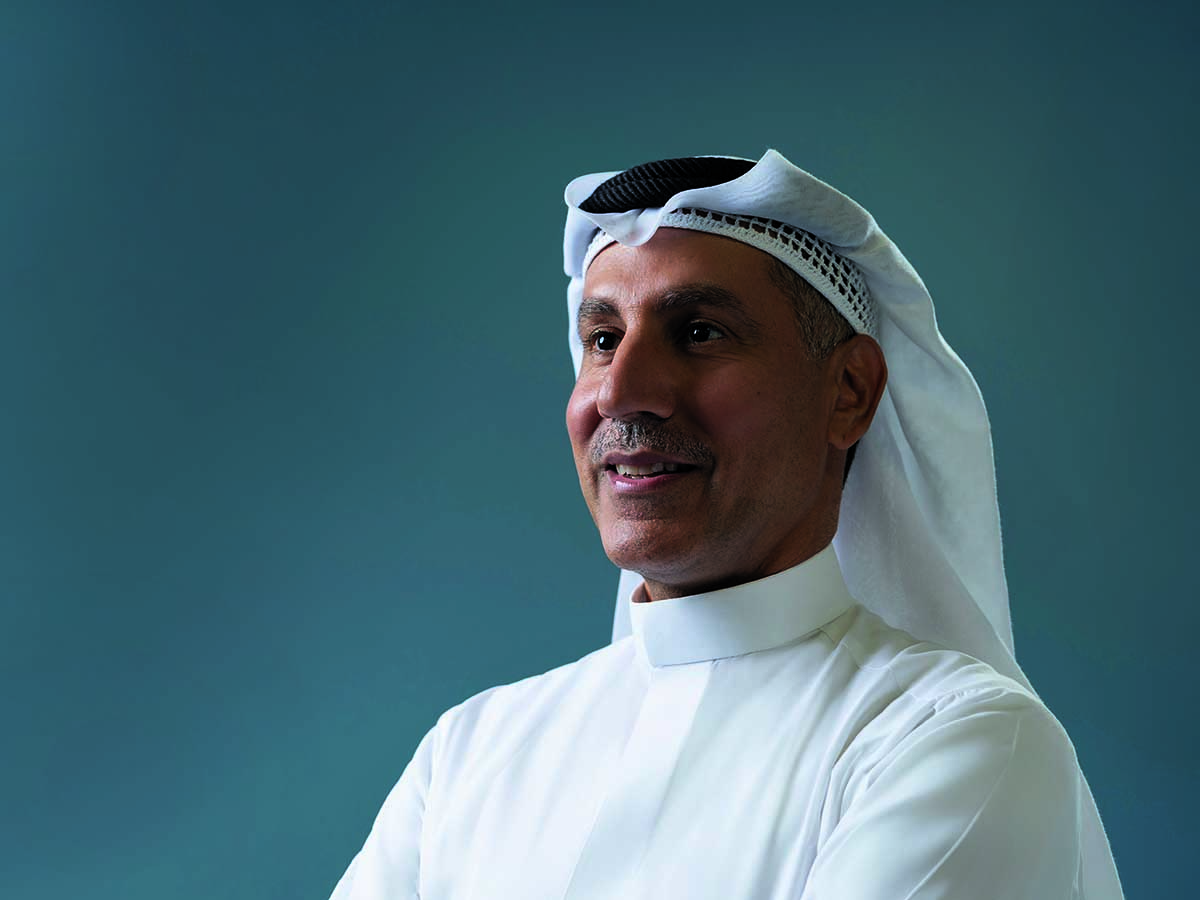
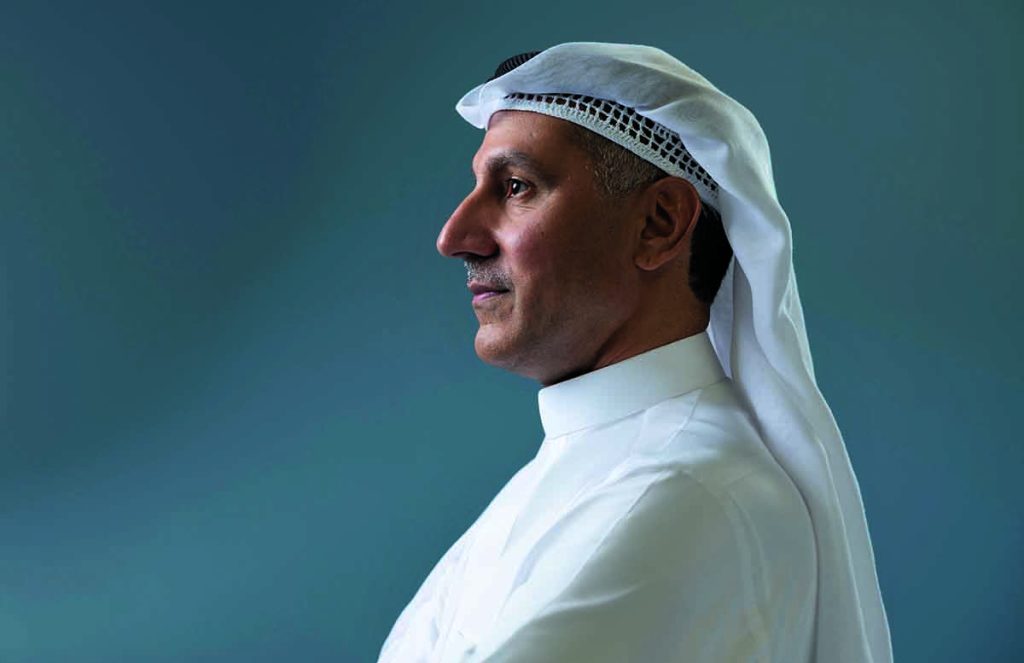
Few are better placed to assess this evolution than Meshal AlFaras, Head of Middle East, Africa, and Central Asia at Janus Henderson Investors. With decades of experience bridging global asset management and regional allocators, AlFaras is helping to shape what the next phase of investment in the region will look like, from pioneering Shariah-compliant structures in alternatives, to responding to the rising demand for private credit and sustainable investing. Crucially, as Gulf markets deepen and regulatory regimes gradually harmonise, global firms like Janus Henderson are finding new opportunities, not just to raise capital, but to allocate it in. A key trend: sovereign wealth funds and large family offices across the GCC are hunting for tailored solutions across private markets, ETFs and impact investments. And they’re doing so with growing expectations around governance, transparency and alignment with regional values.
AlFaras outlines how the region is moving beyond its capital-exporting roots. He breaks down the regulatory headwinds, the gaps in the Islamic investment landscape, and how cities like Dubai and Abu Dhabi are emerging as rival but complementary, financial hubs.
He also explores why Gulf allocators are doubling down on private markets, how tech is reshaping real asset investing, and what it will take for regional markets to make the leap from ‘emerging’ to ‘developed’ status.
For global managers looking to play a long game in the Gulf, the message is clear: bring local knowledge, flexible product structures, and a commitment to long-term presence, or risk being left behind.
How has the role of the Middle East in global asset management evolved from being a capital exporter to becoming a destination for institutional capital deployment?
The Middle East has long been recognised as a global source of capital, particularly through its sovereign wealth funds and institutional investors. What we are seeing now is a significant shift – the region itself is increasingly becoming a destination for international capital. This reflects the scale of domestic economic transformation programmes, the acceleration of infrastructure and private sector development, and the appetite for diversifying funding sources. International investors are looking to participate in this growth story, particularly in sectors such as energy transition, logistics, financial services and technology.
The region is no longer just sending capital abroad; it is actively competing to attract global inflows.
You’ve been pioneering new Shariah-compliant fund structures. What gaps do you see in the current Islamic investment market, and how can innovation address them?
Despite the size and importance of Islamic finance, many investors still find that their choices are limited to traditional asset classes, such as equities and sukuk. What is missing are innovative structures that provide exposure to private credit, infrastructure and alternative investments – areas that are critical for portfolio diversification and risk-adjusted returns.
By developing Shariah-compliant fund structures in these areas, we are aiming to broaden the investable universe for Islamic investors.
Innovation in structuring, governance and transparency can help bridge this gap, enabling Islamic capital to access the same breadth of opportunities available to global investors while remaining fully aligned with Shariah principles.
How critical is local expertise in building trust with Gulf allocators?
Local expertise is essential. Many investors in this region place a premium on relationships, cultural understanding and long-term commitment. It is not enough to offer a global track record; you also need to demonstrate that you understand the region’s regulatory environment, investor expectations and Shariah requirements where relevant.
Having people on the ground, engaging in continuous dialogue and tailoring solutions to local needs are what build trust. In our experience, Gulf investors value managers who can combine global insight with regional nuance and who are prepared to commit resources locally.
What are the most pressing product needs you see among sovereign wealth funds, pension funds and family offices in the GCC and how is the industry adapting to meet them?
We see a range of consistent themes across investor types. Firstly, there is a strong appetite for private market strategies, particularly private credit, infrastructure and real assets, which provide both diversification and long-term yield.
Secondly, there is rising demand for Shariah-compliant alternatives, to ensure alignment with cultural and religious values without sacrificing performance or innovation.
Thirdly, investors are increasingly looking for products that combine income generation with strong risk management. ETFs are well suited to these needs, offering efficiency, cost-effectiveness and daily liquidity – qualities that resonate strongly in a market where investors are becoming more sophisticated in their portfolio construction.
We are also seeing an increasing focus on sustainability and impact, where GCC investors are looking to make a difference within their communities. The industry is responding by creating more specialised vehicles, deepening co-investment opportunities and building structures that combine global best practices with regional priorities.
How do differences in regulatory regimes across the GCC affect product design and cross-border investment flows? What progress are you seeing on harmonisation?
There has been good progress in recent years, but differences in regulatory frameworks still create complexity for asset managers and investors. Variations in fund passporting rules, licensing regimes and Shariah standards can make it challenging to design products that work seamlessly across all jurisdictions.
That said, there is clear momentum toward harmonisation. Ongoing efforts by regulators to align listing, disclosure and fund management standards are creating a more integrated investment landscape. Over time, greater convergence will reduce friction, improve scale and make the region even more attractive for global allocators.
You’ve advocated for the reclassification of Gulf markets from “emerging” to “developed.” What structural changes are still needed to achieve this shift?
The Gulf markets have already made remarkable progress. They have diversified their economies beyond oil, investing in infrastructure and technology, leading to stable growth and enhanced financial resilience. Their high sovereign credit ratings and tight bond spreads indicate strong investor confidence and market stability.
Reclassifying the UAE and KSA as developed markets, and Oman and Bahrain as emerging markets, would acknowledge their achievements and attract a broader range of investors, further supporting their global standing and continued growth. Some of the structural changes that are in process will help to enhance transparency and disclosure standards, broaden the investor base with deeper retail participation and continue to expand the availability of derivatives and hedging tools. The trajectory is clearly positive.
With Gulf investors increasing allocations to private credit, real estate and other alternatives, what risk and return dynamics are shaping those choices today?
Investors in the region are looking for diversification and resilience at a time of heightened global volatility. Private credit offers attractive risk-adjusted returns, particularly in a higher-for-longer interest rate environment, while also providing access to mid-market borrowers who may not be well served by traditional banks. Real estate remains a core allocation, but with a sharper focus on logistics, healthcare and data infrastructure rather than just traditional office and retail. Alternatives more broadly are seen as a hedge against inflation and as a way to access long-term secular growth themes.
Investors are broadening their alternatives allocations, which is why our affiliate, Privacore, plays an important role in providing access to private markets strategies in structures designed for institutional portfolios. Together, our ETF platform and Privacore’s alternative offerings enable us to serve investors with a full spectrum of solutions.
One area where we have seen considerable traction is in alternative credit. As the largest provider of AAA CLO ETFs globally, Janus Henderson has been able to give investors access to high-quality, diversified exposure to the senior-most tranche of the collateralised loan market, which combines defensive credit characteristics with attractive yields.
How are AI and deep tech reshaping real asset investing, and what opportunities do you see for the Middle East to lead in this space?
AI and advanced technologies are transforming how we assess, manage and extract value from real assets. From predictive analytics for real estate demand to AI-driven optimisation of infrastructure and energy assets, technology is creating efficiencies and new investment opportunities. In the Middle East, there is a unique opportunity to lead because governments are committed to embedding AI into national strategies, and significant capital is being directed toward smart cities, digital infrastructure and advanced manufacturing.
For asset managers, this means integrating technology into how assets are developed and managed, creating new value chains in which the region can play a global leadership role.
Family offices in the region are becoming more sophisticated. How are their investment philosophies and governance models changing compared to a decade ago?
Family offices in the region used to be primarily focused on preserving wealth across generations, with a heavy tilt toward traditional assets and local real estate. Today, we see far greater sophistication, from institutionalised governance models and professional investment committees to broader global diversification and active participation in private markets. There is also a sharper focus on sustainability, succession planning and impact investing, reflecting the priorities of the next generation of family members. Family offices are increasingly operating like institutional investors, but with the agility to move quickly into emerging opportunities.
Interestingly, we’re also seeing growing interest in Global Small cap investment, which is an area that offers higher yield than private equities while providing liquidity and transparency.
With Abu Dhabi and Dubai strengthening their positions as financial centres, how do you see competition and collaboration between regional hubs influencing global asset flows?
Abu Dhabi and Dubai are complementary in many ways. Abu Dhabi brings deep sovereign capital and a strong base of institutional investors, while Dubai has built a highly connected ecosystem for global asset managers and financial services firms.
The interplay between the two strengthens the region’s overall value proposition, positioning the UAE as a gateway for global capital into the Middle East, Africa and South Asia. Over time, collaboration across hubs will be key to scaling regional markets and cementing the Gulf’s role in global asset flows.