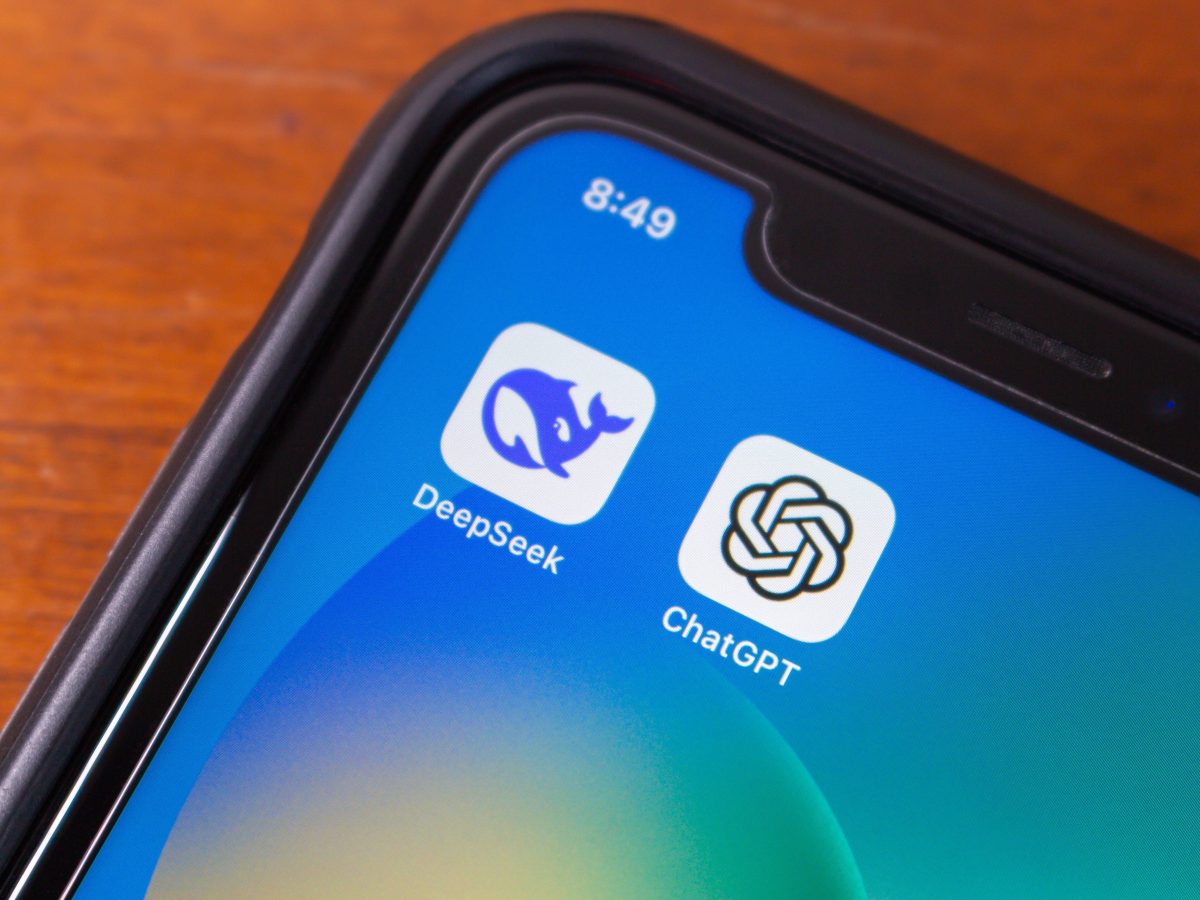
Chinese AI startup DeepSeek has emerged as a key player in the global artificial intelligence race, posing a potential challenge to President Donald Trump’s ambitious plans to solidify the United States’ leadership in AI. Its open-source reasoning model, DeepSeek R1, has been making waves for its cost-effective performance, reportedly matching or surpassing OpenAI’s ChatGPT o1 on key benchmarks while raising broader questions about the US strategy to contain China’s technological advancements.
DeepSeek’s R1 and its implications
DeepSeek R1, launched in January 2025, has gained widespread attention for its ability to solve complex reasoning tasks in mathematics and coding. According to MIT Technology Review, the model employs a “chain of thought” approach, processing queries step by step. Researchers, including Dimitris Papailiopoulos from Microsoft’s AI Frontiers lab, have praised its engineering simplicity, which reduces computing time without compromising accuracy.
R1’s smaller versions, some capable of running locally on laptops, have further added to its appeal. One version reportedly outperforms OpenAI’s o1-mini, according to Perplexity CEO Aravind Srinivas. The release of R1 and its smaller counterparts has raised concerns in Silicon Valley about the necessity of massive investments in AI infrastructure, as DeepSeek claims to have developed these models on a limited budget.
Sanctions
DeepSeek’s rise is significant given the US export controls aimed at curbing China’s access to advanced semiconductors. These measures were intended to hinder Chinese AI development but, as MIT Technology Review notes, have pushed companies like DeepSeek to innovate with limited resources.
Founder Liang Wenfeng, leveraging a stockpile of Nvidia A100 chips acquired before the sanctions, reworked the company’s training processes to maximise efficiency. According to Zihan Wang, a former employee, DeepSeek reduced memory usage and sped up calculations, enabling the development of R1 despite using GPUs capped at half the performance of Nvidia’s top-tier products.
A Sputnik moment for AI?
DeepSeek’s achievements have triggered a reevaluation of US dominance in AI. Venture capitalist Marc Andreessen described R1 as “AI’s Sputnik moment,” a wake-up call similar to the Soviet Union’s launch of the first satellite in 1957, Financial Times reported. The announcement has also shaken global markets, with tech stocks in Japan and the US experiencing sell-offs amid fears that hardware spending on AI may fall short of current projections.
Trump’s AI strategy
DeepSeek’s progress comes as the Trump administration pushes forward with its ambitious AI agenda. Recent measures include an executive order removing regulatory barriers to AI innovation and the $500 billion Stargate initiative, which aims to create over 100,000 American jobs through investments in AI infrastructure. These steps are designed to reinforce US dominance in AI, but DeepSeek’s rapid ascent underscores the challenges of containing China’s progress.
Matt Sheehan, an AI researcher at the Carnegie Endowment for International Peace, told MIT Technology Review that the export controls have forced Chinese companies to become more efficient with limited resources, fostering a new wave of innovation.
China’s AI landscape
DeepSeek is part of a growing ecosystem of Chinese AI companies embracing open-source principles to compete globally. According to a white paper from the China Academy of Information and Communications Technology, China accounts for 36% of the world’s 1,328 large language models, second only to the US. Other players like Alibaba Cloud and 01.AI are also advancing open-source initiatives.
Kai-Fu Lee, former head of Google China, recently partnered with Alibaba Cloud to establish an “industrial large model laboratory,” signalling increased collaboration within China’s AI sector.
What it means for the US
DeepSeek’s emergence highlights the limitations of current US strategies to maintain its AI edge. The reliance on sanctions may have unintended consequences, driving Chinese companies to innovate faster and more efficiently. As the US ramps its AI investments, it must contend with the reality of a rapidly advancing competitor that has learned to thrive under constraints.
“DeepSeek R1 is a clear demonstration of how resource constraints can fuel innovation rather than hinder it,” said Anita Joseph, Editor of ITP.net. “While OpenAI has set the gold standard for generative AI, DeepSeek’s efficiency-focused approach could challenge the dominance of larger, costlier models.
“The bigger question is whether this will lead to healthy competition or spark an AI arms race between global powers.”
Whether the Stargate initiative and other measures can sustain American leadership in the face of competition from DeepSeek and other Chinese innovators remains to be seen. What is clear is that the global AI race is entering a new and more competitive phase.