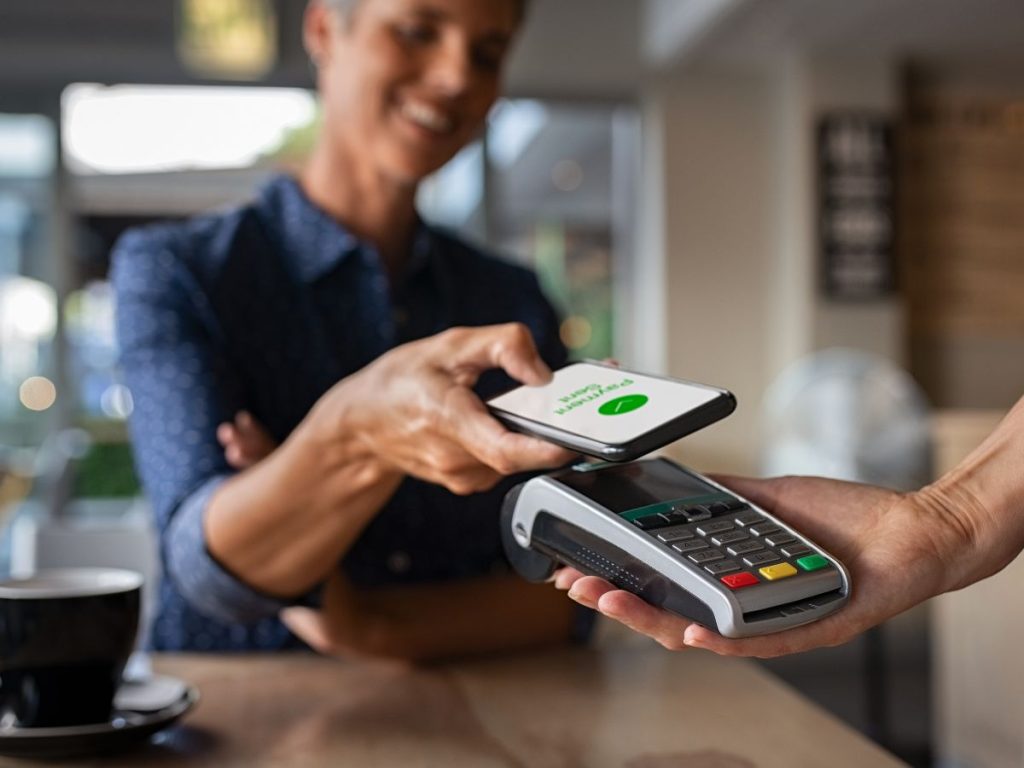
When once the norm was cash and cheques, digital payments have become part of our daily routine and now seem as natural as making a call or sending an email.
The MENA digital payments market size is estimated at $226.53 billion in 2024 and is expected to reach $380.86 billion by 2029, according to Mordor Intelligence. The Middle East is leading the way, having become the fastest-growing real-time payments market, set to grow from $675 million in 2022 to $2.6 billion by 2027, according to ACI Worldwide. In this process, like many others, the pandemic was the great accelerator.
“Now that customers have experienced digital payment solutions, there is no returning to pre-COVID times,” said Maram Al Jazireh, Global Head of Financial Institutions at Arab Bank. “Digital appetite continues to grow, and the market is demanding further digitisation.”
“Now that customers have experienced digital payment solutions, there is no returning to pre-COVID times”
Maram Al Jazireh
Understanding demand
The global society is more digital than ever—and so are its financial institutions. These share the need to provide digital solutions to their customers regardless of geography. Whilst certain industries witnessed a trend of return-to-classic user experiences after the pandemic, experts agreed that the trends in cross-border payments remain towards a digital-first approach.
“Clients are looking at efficient, low-cost digital payment solutions for their collection requirements,” Anurag Saigal, Head of Investment and Transaction Banking, at Commercial Bank of Dubai, explained. “Priorities have now shifted to digital solutions.”


Despite the Middle East’s traditional preference for cash, experts highlighted that GCC countries have large expatriate communities that remit money to support their families back home. Their main priorities are cost-effective and fast transfers. Hence, client expectations often revolve around accessing their funds at nearby locations at no additional cost.
“Change in the payments space is constant, though the pace of change is dependent on the market in question,” added Bana Akkad-Azhari, Head of Treasury Services EMEA, BNY Mellon. “The Middle East–despite its digital-savvy population–has had a longstanding, cultural bias towards cash, whereas the European market has tended to have a higher level of payment option fragmentation.
“One unifying factor has been the pandemic, which has acted as a catalyst to drive a real move away from cash towards digital payments.”
Instant payments
If the present is digital payments, the future is instant ones. Customers are increasingly seeking instant delivery with low transaction costs and competitive foreign exchange (FX) rates.
Several MENA countries have already started or are working towards local real-time payment initiatives. Given the lack of a uniform payment platform for the whole region, regional banks find themselves formulating systems that collectively cater to their different markets. For many of the banks interviewed, making this transition in an effective way is the next great challenge.
“Banks, corporates, NBFIs [non-banking financial institutions] and fintechs, each have unique questions and requests with respect to this move towards a non-stop financial industry,” explained Andrew Haskell, Product Executive, Global FX Solutions, Treasury Services, BNY Mellon. “That said, one common theme is clients seeking guidance on how to support 24/7/365 processing without having to overhaul their entire internal technological infrastructure.”
“The next step would be inter-country interoperability, facilitating seamless cross-border payments”
Anurag Saigal
Initiatives such as the 19 building blocks referenced in the Committee on Payments and Market Infrastructures (CPMI) report are showcasing the power of standardisation in improving cross-border payments. Buna and Project Nexus also have the potential to transform cross-border payment experiences for corporates and individuals. This is prompting financial system participants to align their strategies to remain competitive in a changing market.
“In the Gulf region, each country is enhancing its respective payment landscape,” Saigal said. “It is expected that once the major Gulf economies implement their domestic instant payment platforms, the next step would be inter-country interoperability, facilitating seamless cross-border payments.


Collaboration is key
From real-time payment rails to the advent of digital currencies, a host of new and innovative payment solutions have emerged over the past several years. This is creating dynamism in both the type of payment capabilities on offer and the companies providing these services.
The result is that collaboration is increasingly becoming a recipe for success, with traditional providers and fintechs coming together to optimise client experiences.
“We believe that collaboration is key to creating the right solutions for our customers and are actively collaborating with various banks, fintechs, government agencies and free zones to address customer needs in the cross-border payments space,” said Seemanti Considine, Head of FI and Transaction Banking, Wio Bank.
The UAE Central Bank’s NPSS programme is one such initiative. Others include subscription-based pricing, providing a choice of payment channels for routing and tracking payments, and exploring Banking-as-a-Service (BaaS) solutions for payments and collections.

For local banks, these developments allow the sector to be more interconnected and in tune with global market trends and solutions that are either SWIFT-based or using other technologies such as DLT and blockchain. Most importantly, it makes the local payment market more competitive, translating to better prices and products for clients.
Medhi Manaa, CEO of Buna, highlighted how initiatives like Buna and the interlinking of projects are envisioned to transform cross-border payment experiences for businesses and individuals.
“The expected efficiencies are promising to individuals who need faster and quicker remittances, to businesses that are looking for enhanced payables and receivables, and to FIs which aim to serve both segments in a better way and increase their business,” Manaa added.
The standardisation push
When it comes to cross-country and instant payments, standardisation and interoperability are vital. Achieving it is easier said than done. Nonetheless, the region has taken significant steps in that direction, with initiatives such as AFAQ, a regional payment system equivalent to a GCC RTGS, which all banks in the block will have to sign up for when it is rolled out.
“Southeast Asia has already demonstrated that an immediate cross-border payments model can work, but central banks would need to collaborate to allow interoperability between each of the domestic instant payment schemes,” Saigal said.
Experts support the introduction of such schemes, with Considine claiming it would be a “welcome change”. However, to achieve true cross-border standardisation, stakeholders would also need to agree on mandatory payment information, regulatory requirements and messaging standards.

“The success of the immediate cross-border payments model is contingent on building regional ecosystems that can interface globally,” Al Jazireh explained. “This requires regulatory harmonisation, industry collaboration, being open to new technology such as APIs, DLT and blockchain, data standardisation and user education.”
Haskell highlighted the efforts made by the CPMI and FSB in the pursuit of improved cross-border payments, describing them as “a blueprint” for the industry to follow.
“That said, more can and should be done,” he added. “The harmonisation of regional efforts has the potential to advance the market forward organically, while governments, central banks and network operator mandates can accelerate transformation in a more forceful manner, as long as said international bodies are aligned and promoting the same standards.”
“The success of the immediate cross-border payments model is contingent on building regional ecosystems that can interface globally”
Maram Al Jazireh
ISO 20022
ISO 20022, which aims to allow banks to offer better-quality reconciliations and real-time payments; as well as make a considerable difference against financial crime. These standards reduce payment delays caused by requests for information and allow FIs to integrate APIs and analytical tools, enabling them to deliver tailored services to customers.
“These capabilities will deliver enriched experiences, higher customer satisfaction and new business opportunities for banks,” Buna’s Manaa said. “The richness of ISO20022 will allow using the right set of data to achieve different purposes such as accounts pre-validation, reduction of false hits in compliance and the use of mobile number aliases to initiate payments.
“In a cross-border context, in particular, this will remove many existing frictions and enhance efficiency.”

Banks in the region are at different stages of the migration process. Some are still migrating their impacted infrastructure. Others target a like-for-like approach, where converters will be used to comply with message formatting. Arab Bank and Wio are working towards the November 2025 deadline, while platforms like Buna have been ISO 20022 ready since their launch.
The future is now
Middle Eastern banks are currently seeing the rapid uptake of instant payment solutions, the advent of buy-now-pay-later arrangements and a boom in e-commerce–making digital payments an increasing priority. Global, regional and digital banks will all have a part to play in this process.
“Global banks must put this region, which includes some of the world’s largest cross-border payment markets, higher on their agenda”
Medhi Manaa
“Global banks must put this region, which includes some of the world’s largest cross-border payment markets, higher on their agenda and realise that it is home to an abundance of opportunities,” Manaa stressed.
In an ever-changing social and technological landscape, the Middle East finance sector has risen to the task and embraced digitalisation. Looking ahead, the next challenge lies in ensuring the instant and truly cross-border nature of transactions. Any solution that can expedite the last-mile delivery would be a significant opportunity for the region, its banks and its customers.