In the first few days of August, a perfect storm shook global financial markets.
Poor US unemployment numbers brought back the doomsday scenario of an impending recession. The market got spooked and instantly priced a precipitous decline in interest rates. Simultaneously, the Bank of Japan raised its own rates, which provoked the unwinding of the lucrative Yen carry trade. This all resulted in proper panic. VIX, the volatility index of the S&P 500 Index, otherwise known as the “fear index”, soared 300% in three days.
Global equities sold off in a massive, correlated move along with interest rates, oil, and
cryptocurrencies. Even gold was no haven. Our regional markets were not spared, but
this panic was short-lived. The rebound started in earnest and, in Biblical fashion, nearly
seven days after the rout, while the actual panic lasted barely a weekend. Today, equity markets have more than recovered, and the wider expectation is for a safe, soft landing, to preserve long-earned stock market wealth.
“Equity markets have more than recovered, and the wider expectation is for a safe, soft landing”
In this optimistic yet uncertain-and now volatile-context, regional equity markets have
underperformed, calling for repeated questions from investors. Now that the summer is
nearly over, with US markets back near their historical high, and with the Fed pivot well
underway, we discuss what happened this year and what awaits Gulf investors.

Stock-market caution defeated optimism
Last December, we predicted that UAE equities could increase by 15% in 2024 on the
back of a double-digit earnings momentum, a solid local economic backdrop, and still
compelling valuations. We assumed the habitual positive relationship between earnings
and the stock market. As earnings go, so should stocks.
All the while, we identified multiple risks to this insured upside, including an uncertain
interest rate path, challenges across emerging markets notably in Russia and China, and
geopolitical tension in the Middle East. This led us to tone down our asset allocation to the safest, most defensive positioning of 40-40-20, where we advised placing 40% of portfolios in each of equities and bonds, with the rest in cash.
Against all odds, the expected re-rating in regional stock markets did not happen. Fundamental and earnings strengths were defeated by other factors, which analysts and
investors scrambled to identify with precision. Our asset allocation still paid off, with
cash deposits and bond yields over-compensating for the absent equity performances.
Gold, bonds and real estate thrived
There is one, most obvious explanation, for the relative under-performance of our
regional stocks compared to the world. Nimble regional investors may have preferred
other, more compelling destinations for their money. They also probably shopped for
safer investments in the context of a brewing regional military debacle.
“While equities underperformed this year to date, other asset classes reaped the benefits of global money flows.”
Regional equities got competition from a cheaper and larger China, a faster-growing India, a sky-rocketing US market, safer global commodities such as gold, re-birthing cryptos, and bonds, which offered equity-like returns without the risk. We probably even got competition from local real estate, which has been buoyed by fast transactions and stellar prices. Suddenly, in 2024, appetite for higher-dividend Gulf stocks paled against such a roster of competing yields, during a year when everything has been “going up”.

Under the surface of a flat regional equity market, however, many unusual and positive
things happened to reflect the underlying economic miracle. Initial public offerings
continued to fuel market interest with over-subscriptions in multiple digits amounting to
billions of dollars. Secondary issuances broke records of speed and size of placement,
with just two stocks – Aramco and ADNOC Drilling – mobilising $12 billion in global money overnight. Bonds and Sukuks were also the new stars with $10 billion issued in Q2 alone.
While equities underperformed this year to date, other asset classes reaped the benefits
of global money flows. Now, investors wonder: What next?
What to invest in going forward
While equities disappointed, other assets in the GCC il have been in high demand, for good reason. Macroeconomic strength continues, with the above-average growth of regional economies. Oil prices, known to bring prosperity in the form of Petrodollars, remain supportive. Government infrastructure spending, a famous supply-side stimulant, is historically unmatched. Corporate earnings are still growing at a visible and healthy rate. Issuances of primary paper, across asset classes and instruments, are still throbbing.
On the global front, the upcoming Jackson Hole meeting this week should bring some
answers. Guidance for mild rate cuts could support the current “Goldilocks state” and
soft-landing scenario, while a more aggressive pivot could trigger some fear of a fast deteriorating macro. All the while, financial assets continue their endless upside
trajectory, albeit with some volatility around the top until the market finds its new footing.
“We reiterate our opinion that an upside resolution should be the most likely event for GCC equities.”
Going forward, the current euphoria could persist, especially in the absence of a major
structural dislocation such as a war, recession, or financial blowup. The divergence
between regional equities and other assets may continue for some time but should be
resolved in the end. An upside resolution could take regional equities higher, while a
downside resolution would bring other assets down. For now, we reiterate our opinion
that an upside resolution should be the most likely event for GCC equities.
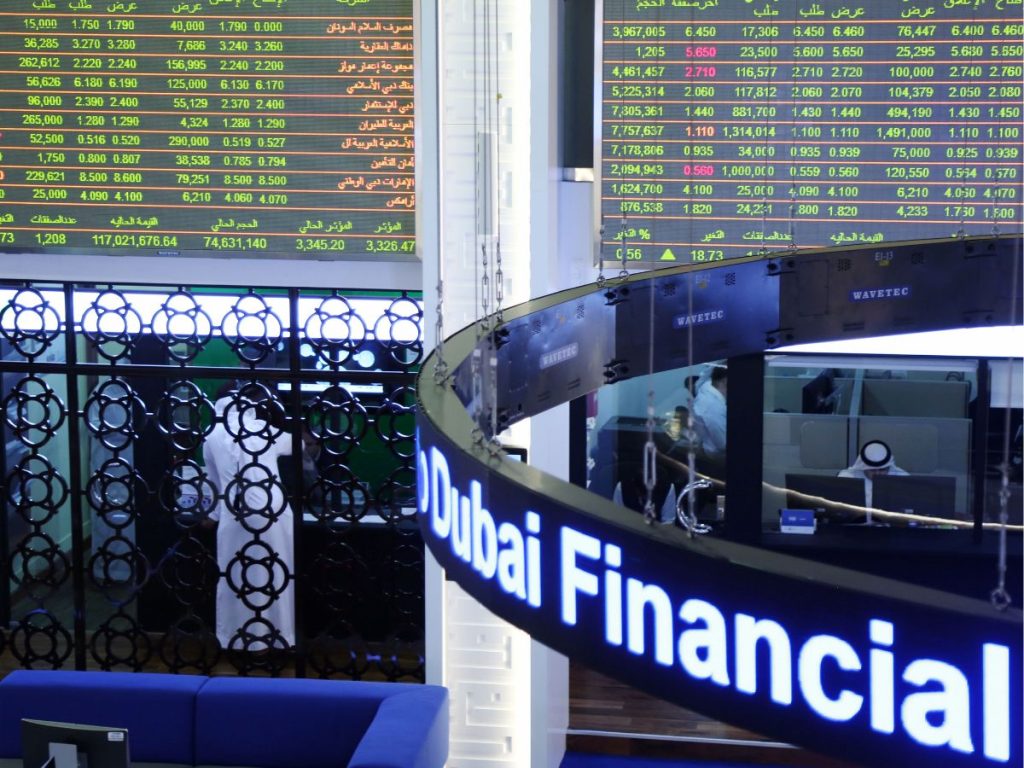
The expectations for GCC equities
Deterrents to our positive investment scenario, and things that keep us awake at night,
include an uncontrolled Middle Eastern geopolitical showdown, or the American
economy tilting into outright recession. Otherwise, GCC equities and bonds are a place
to be. It does help that many credible global analysts, such as commodities guru Jeff
Currie, see the dawn of a commodities super-cycle, which could take oil in its stride. On
this note, gold has just confirmed a significant breakout over its historical high.
“GCC equities and bonds are a place to be.”
Tactically, we expect heightened volatility until the end of the year, and therefore maintain our defensive positioning. This allows us to benefit from still competitive yields on bonds and cash. If rates decrease, as they should, capital appreciation on bond positions would come as a bonus. Within fixed income, a portion should be dedicated to commodities where gold has been our favourite for years. As for the required oil exposure, any GCC asset should indirectly take care of that.
In equities, we continue to find very compelling value in the GCC, with a vocal preference for the UAE, where high-quality earnings cost little as measured by the classic price-to earnings ratio. Within UAE equities, we like the Dubai growth story as exemplified by the local utilities, the Abu Dhabi expansion as carried out by the energy eco-system, and the financials which have been crushing all expectations to the upside. We believe that public offerings could provide more short-term opportunities, and so should the expected upcoming volatility to serve the retail trading enthusiasts.
As a final word, we would highlight our channel checks, which keep signalling uncluttered growth in this neck of the woods.