As Small Medium Enterprises (SMEs) line up in the GCC, some firms are closing the gap between funding and future growth.
Doing so requires a shift in thinking — treating SME finance not as a short-term liquidity problem, but as a strategic question that belongs in the C-suite.
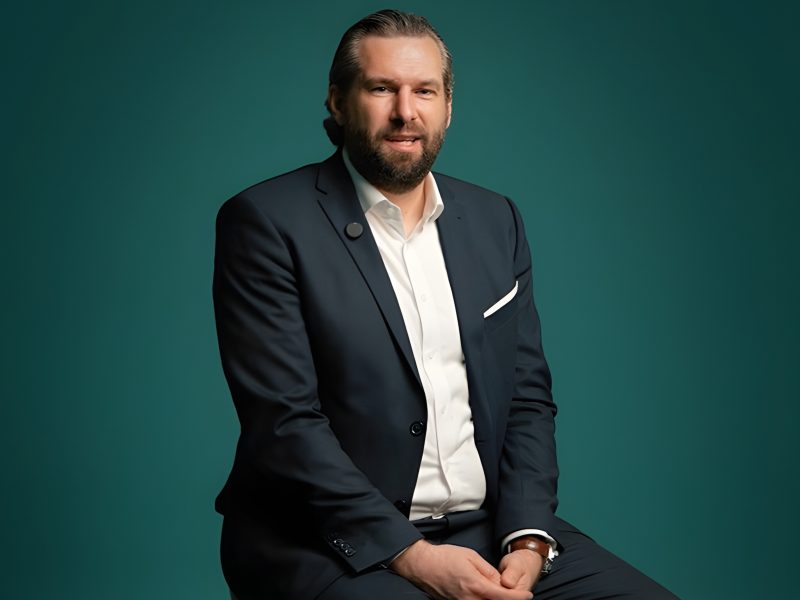
At Beehive Fintech, Peter Tavener recognised that bridging this gap meant moving beyond financial metrics toward long-term planning. Tavener began that shift as CFO at the GCC fintech firm and now drives it formally as CEO.
Founding Beehive Fintech
Question: What made you want to set-up and be part of the C-Suite of Beehive in 2014? How does its ethos align with your own leadership style?
When we started Beehive in 2014, the motivation was very simple: SMEs across the region were being underserved by traditional finance, despite being the backbone of our economies. I had spent years working in financial services and could clearly see the gap between what SMEs needed and what was available to them.
Beehive was built on the idea that funding should be fast, digital, and accessible, without unnecessary friction. That ethos aligns very closely with my own leadership style.
From day one, our goal wasn’t to disrupt for the sake of disruption, but to build trust: with SMEs, with investors, and with regulators. That principle has guided every strategic decision we’ve made and continues to shape how I lead the business today.
Our goal was never disruption for its own sake. It was about building a funding platform SMEs could genuinely rely on.
CFO to CEO: A “Natural Transition”
Question: Before becoming CEO, you were the CFO of Beehive Fintech for 11 years. How have you found the transition from CFO to CEO? What would your advice be to up-and-coming CFOs in the fintech sector looking to become future CEOs?
Peter: The transition from CFO to CEO has been a very natural one for me. As CFO, you already sit at the intersection of strategy, risk, capital, and execution, particularly in a fintech environment. Over the years, I was deeply involved in shaping Beehive’s growth, funding structures, regulatory strategy, and long-term vision.
What changes is the scope. As CEO, you’re no longer just stewarding the numbers; you’re responsible for culture, people, external relationships, and setting direction across the entire organisation. That broader responsibility requires a shift in mindset: from controlling risk to enabling growth while still maintaining discipline.
My advice to CFOs who aspire to become CEOs is to look beyond finance early on. Get involved in product discussions, understand customers deeply, and build strong relationships across the business. The best CEOs don’t just understand numbers; they understand people, markets, and timing.
Beehive’s Operations in GCC Markets
Question: Beehive is headquartered in the UAE yet it operates in Oman and KSA – how do these three markets compare across SME digital finance maturity, regulation, and demand?
Peter: Each market is at a different stage of maturity, which makes operating across them both challenging and rewarding.
The UAE is the most advanced in digital finance adoption. SMEs here are familiar with fintech solutions, regulatory frameworks are well established, and there is strong demand for fast, alternative funding options.
Oman is developing quickly. There is a clear policy focus on SME growth and diversification, but access to finance remains more limited. Demand is strong, and initiatives like the IFC Oman are accelerating the ecosystem’s evolution.
Saudi Arabia is unique in scale and ambition. The market is moving extremely fast, supported by Vision 2030 and a very proactive regulatory environment. Demand from SMEs is significant, but success there requires deep local understanding, strong partnerships, and absolute regulatory alignment.
Future Expansion Plans
Question: Are there any plans to expand Beehive operations across the GCC: Bahrain, Qatar, Kuwait especially Bahrain given the fintech ecosystem in the Kingdom?
Peter: We’re always evaluating opportunities across the GCC, including markets like Bahrain, Qatar, and Kuwait. Bahrain has done a great job of positioning itself as a fintech hub with a progressive regulatory environment.
That said, our approach to expansion is very deliberate. We don’t believe in entering markets simply for presence. Scale, regulatory readiness, capital availability, and SME demand all need to align for expansion to make sense.
Right now, our priority is to deepen our presence and execution in the UAE, Oman, and Saudi Arabia. Once those platforms are fully optimised, we’ll continue to assess other GCC markets where Beehive can genuinely add value.
M&As of Beehive
Question: E& Enterprise owns a majority stake (63.3%) in Beehive. How is E& Enterprise’s expertise in digital transformation guiding Beehive’s growth across the GCC and should we expect any strategic shifts, partnerships, or M&A activity in 2026?
Having e& enterprise as our majority shareholder has been a significant advantage. Their expertise in digital infrastructure, enterprise solutions, and regional scale has strengthened our approach to technology, governance, and growth.
Importantly, they share our long-term view. The focus is on building a sustainable, institution-grade platform rather than chasing short-term wins. That alignment allows us to think bigger about distribution and innovation across the GCC.
In terms of 2026, we remain open to strategic partnerships and selective M&A where it makes sense. Any such move would be driven by clear strategic value: expanding capabilities, strengthening market access, or accelerating growth in priority markets.
Beehive’s Thoughts on IFC Oman
Question: Thoughts on Oman’s IFC and what it means for SME lending firms? How does the launch of IFC Oman change the capital, regulatory and funding options available to SMEs and what should CFOs be doing now to prepare?
IFC Oman is a very positive development for the SME ecosystem. It signals a clear commitment to creating a more structured, transparent, and diversified capital market environment for businesses.
For SME lenders, it opens the door to more institutional capital, greater regulatory clarity, and better alignment between public and private-sector funding initiatives. For SMEs, it means greater access to financing beyond traditional banking.
CFOs should be preparing by improving financial transparency, strengthening governance, and ensuring their reporting and compliance frameworks are robust. As capital markets mature, the businesses that benefit most will be those that are well prepared and institution ready.
Future for Beehive in Next Decade
Question: Forward look for Beehive in Oman & GCC: how could IFC Oman alter the SME financing landscape and what strategic decisions is your CFO and yourself, as the head of strategy, making to position Beehive in Oman and wider GCC SME landscape?
Peter: IFC Oman has the potential to significantly reshape SME financing by attracting more capital into the market and creating clearer pathways between SMEs, lenders, and institutional investors.
From Beehive’s perspective, our strategy is focused on readiness and scalability. We are prioritising strong risk frameworks, disciplined capital structures, and technology that allows us to scale responsibly across markets.
Our goal is to position Beehive as a long-term partner in the GCC’s SME ecosystem: a platform that can adapt to evolving regulatory environments, attract institutional capital, and continue to deliver fast, reliable funding to businesses that drive regional growth.
Stay Up to Date with the Latest Updates at Finance ME!
Analysis: IFC Oman is Carving a Niche in High-Growth Financial Sectors
Property Finder Receives $170M Mubadala Equity Funding and UAE SWF Interest
Saudi Red Sea Global Establishes New Sustainability Standards