The insurance sector in the Middle East is on the edge of transformation, with AI poised to underwrite a new era.
In KSA, for instance, over 50% of customer service interactions in 2023 were conducted with AI, according to data from the country’s General Organisation for Social Insurance.
With a growing array of digital tools and platforms at their disposal, many are now focused on understanding how they can translate AI investments into meaningful business outcomes.
Leadership is Fundamental
Interviews with several insurance leaders in the region highlight that a potentially profound shift like this depends not just on infrastructure or investment, but on mindset, capability and culture at the top.
Technology is only the starting point, but unlocking its real potential rests on whether organisations can ask the right questions, frame the strategic use cases, and drive cultural change to embrace a digitally native mindset across the organization. In fact, the big question for organisations isn’t so much what AI can do, but who can lead the change.
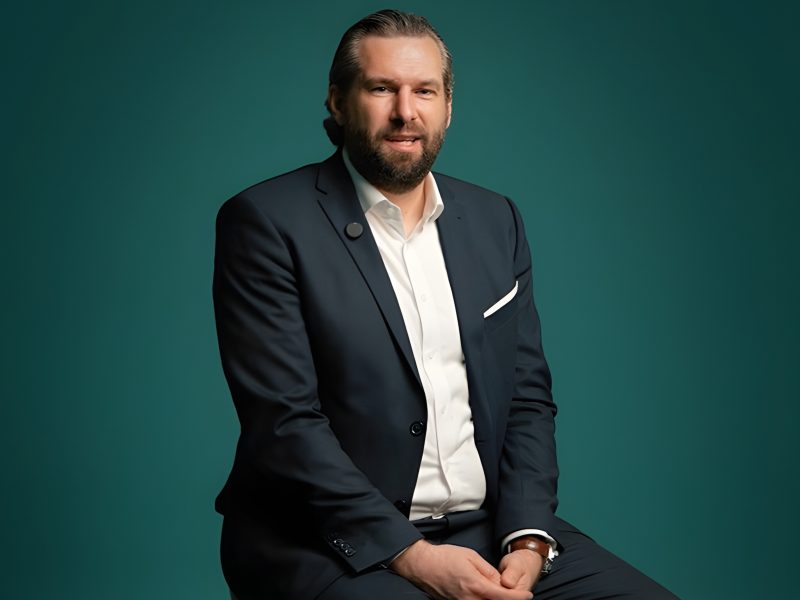
As Martin Rueegg, Group CEO at Liva Group highlighted, the industry is in “a generational transition” and crucially, “resistance (to change) needs to be addressed by the leadership really believing in it.”
From Reactive to Proactive Insurance
Amid region-wide reforms, from KSA’s Vision 2030 to the latest mandate for mandatory health cover in the UAE, the opportunity is clear: organisations who can harness AI well will leapfrog into a more predictive, tailored model of insurance with a lower cost-base.
With the help of AI tools, insurers can now understand individual risk profiles in real time, deliver targeted products and even anticipate customer needs as they progress through different life stages. Insurance then evolves from reactive, good-to-have coverage to an essential life-enhancing service.
At the same time, if not properly integrated into strategy, AI alone will fall short of delivering the competitive advantage organisations expect.
Jason Light, CEO of Emirates Insurance Company, warned that poor alignment often means that “what’s promised is rarely delivered.”
The true differentiator is in having the right leadership vision to dovetail AI transformation into people and business strategy.
The Data Problem is a Talent Problem
Executives across the region acknowledge a common problem that is impacting the rate of adoption and success when it comes to AI: a wealth of data that remains underutilised.
Many insurers are only now beginning to take data management and cleaning seriously despite its critical role as the very foundation for effective AI application.
This is as much a data problem as it is a leadership problem.
The insurance sector is still building the specialised expertise required to mine data, but digital talent pipelines do not grow overnight. Georges Chidiac, CEO at DAMANA Holding, agrees that it is a “challenge to find hybrid talent” who are equipped with both the technical and technology skillsets required for insurance’s next phase of growth.
Insurance leaders need to invest time and resources into talent building early on, so they can capture the value of AI today and in the future.
Nationalisation and the Digital Talent Dilemma
There might be a silver lining with the push for local nationalisation targets across the region. For instance, in the UAE, 50% Emiratisation by 2030 will mean that a significant amount of local talent will now enter the market.
While these talent targets are critical for long-term workforce sustainability and are helping insurers to rapidly grow local talent.
By consequence, near-term capability gaps that leaders must solve, such as in the areas of AI and data science. In KSA, insurance was only formally regulated in 2002 with a suitable legal framework.
Since then, few national professionals have advanced into specialist roles in underwriting, actuarial, or analytics. There was also a common consensus among executives that globally, the insurance market has not evolved digitally as other industries have, making it difficult to find the required digital talent.
Marketing Problems with the Sector
Unlike other financial services sectors such as banking or wealth management, insurance continues to struggle with brand perception, particularly among ambitious young professionals.
To attract next-generation talent and future-proof the industry, Mohamed Ali Bouabane, Group CEO of Salama (Islamic Arab Insurance Company), emphasized the need to reframe insurance as a “purpose-driven, technology-enabled sector” that is just as “dynamic and innovative” as other leading technology sectors.
Addressing the talent challenge at its core demands a focus on developing both talent and leadership. In fact, effective talent management starts from hiring and developing people leaders with the requisite skillsets to mentor and inspire their teams.
At its core, this means investing in the right managers and building a strong, deep, and broad leadership bench across all levels. This then creates a ripple effect where capable leaders spread across the business, fostering high-performing teams of their own.
First, Build the Quality of the Labour Force
Ultimately, the real disruption by AI in the Middle East’s insurance sector will not come from algorithms or big data models; it will come from people.
In a market set to grow into a USD90 billion industry by 2033, insurance leaders who act now to build data-literate, forward-looking talent will not only lead the transformation but set the pace.
Haitham Albakree, Managing Director and CEO at Wataniya Insurance Company, advised that leaders should not be hiring “for today, but to hire for where (they) want to be in five years.” Beyond hiring, businesses should also invest in talent and leadership programs that cultivate the capabilities and cross-functional perspectives: essential for guiding the company in the long-term.
Those who wait may find themselves and their organisations watching from the side lines as others race to define the future of AI-powered insurance.
NOTE: This Op-Ed Reflects the Views of James Raley, a partner in Heidrick’s & Struggles Dubai office and a member of its Global Financial Services Practice
Stay Up to Date with the Latest at Finance ME!
For Whom the Bell Tolls: The Collapse of the Multi-Banking Era
Analysis: How the M&A Became the Gulf’s New Engine of Diversification