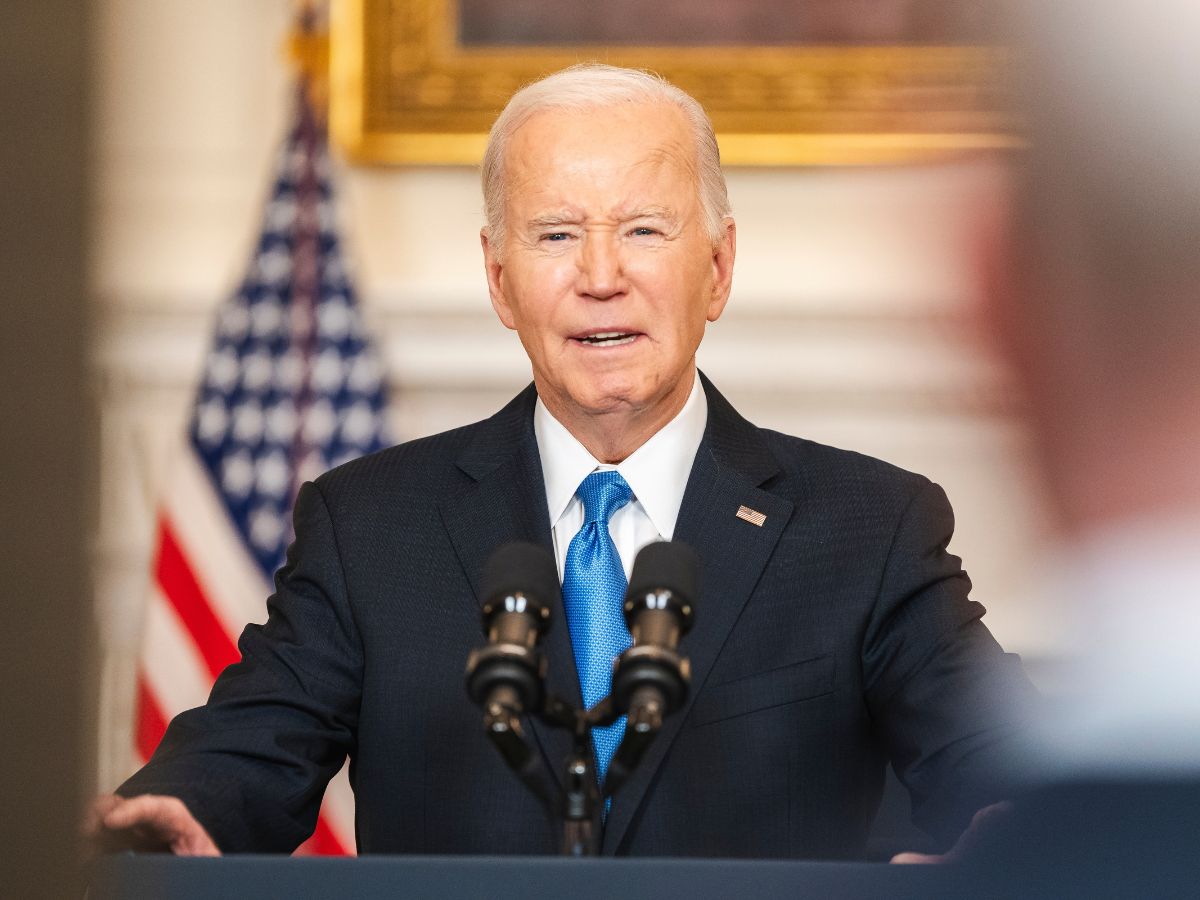
Some thought that the US 2024 Presidential election couldn’t bring more surprises; others, that the writing was on the wall, but President Joe Biden’s announcement that he dropping out of the presidential race—less than a month before the Democratic National Convention—certainly stopped the world on its tracks.
But how did markets react?
As of Monday morning, the immediate market reaction has been muted. Following the news, which had been speculated for days, S&P 500 contracts were higher by 0.5% ahead of the Wall Street open. Cboe VIX October futures rose 0.6% and the dollar traded 0.1% lower. Treasuries gained, pulling the 10-year yield 0.02 percentage points lower to 4.22%.
Meanwhile, Bitcoin rose 0.8% while gold fell 0.1% and the top stocks rose in premarket trading. Meta, Alphabet and Apple gained between 0.8% and 1.3%. Shares of Trump-linked stocks such as Trump Media & Technology Group and software firm Phunware edged 0.6% and 0.2% higher, respectively. Nonetheless, experts still await further moves, as the new Democrat nomination takes shape.
Historically, increased odds of a Trump victory have favoured stock markets. This was the case following his assassination attempt, as well as the face-to-face debate with Biden. However, the current scenario injects uncertainty into the election, likely causing volatility across asset classes. The widespread endorsement of Kamala Harris as a Democratic nominee, from both conservative and progressive sides of the party, might have tilted the odds in favour of the Democrats.
“Historically, a Trump win has favoured stocks, particularly small caps, due to proposed lower taxes and deregulation,” said Vijay Valecha, Chief Investment Officer, Century Financial.
“With Harris emerging as a prominent Democratic nominee, endorsed widely and backed strongly by young people, women, and communities of colour, the race no longer appears straightforward for Trump. This increased political uncertainty is anticipated to weaken the dollar and drive up safe haven assets like gold in the weeks ahead.”
Despite their political differences, Trump and Biden shared many aspects of their policy plans.
“More counties overall did better under Biden, but counties in swing states, especially Michigan and Nevada, did better under Trump,” said Mohamed Hashad, Chief Market Strategist at Noor Capital. “Job growth was widespread under both Trump and Biden, with many more manufacturing jobs created under Biden (762,000 more), manufacturing jobs now at their highest level since the Great Recession.”
During their administrations, Trump and Biden both favoured place-based industrial policies, such as Republican tariffs and Democratic subsidies for semiconductors and green energy; and presided over tight labour markets, giving all workers more bargaining power, which helped narrow long-standing gender and racial gaps in the workforce. Moreover, Trump and Biden alike worsened the federal debt, with the pandemic requiring a lot of emergency spending under both administrations.
In the near term, stocks are predicted to decline. Yet, any downturns can be viewed as potential medium-term buying opportunities, underpinned by a 97% probability that the Federal Reserve will lower rates and ongoing resilience in both economic growth and corporate earnings.
On Monday, China’s central bank unexpectedly cut rates, with the short-term 7-day reverse repurchase rate lowered to 1.7% from 1.8%. Moreover, the markets are also expected to reflect the impact of the large IT outage that took place last Friday, reportedly as a result of a glitch in an update issued by cybersecurity company CrowdStrike.
The outage caused CrowdStrkike’s shares to plunge by 11%.