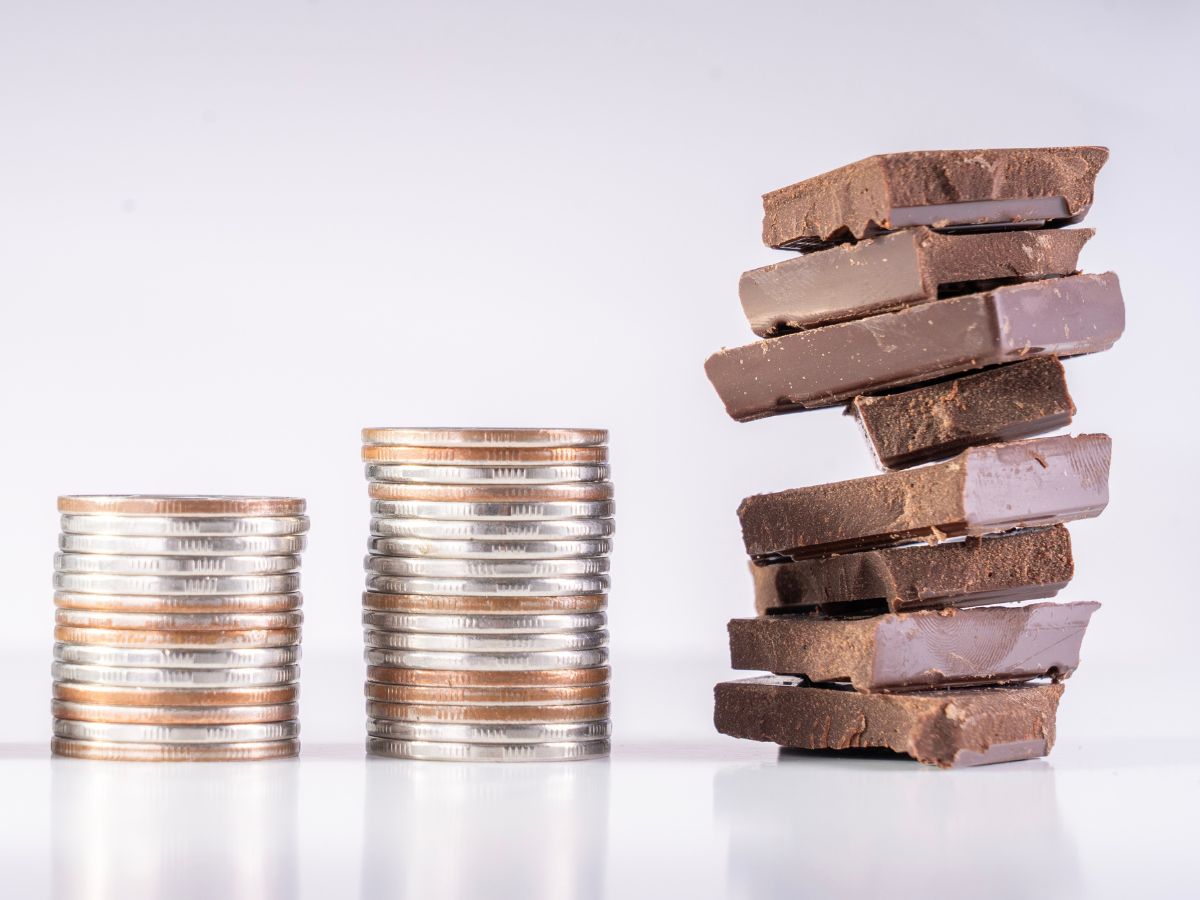
Purchasing a bar of chocolate might soon become an expensive luxury. In the past two months, cocoa futures prices soared, fell and rose again, amidst extreme volatility in the sector. But what are the causes of the changing prices?
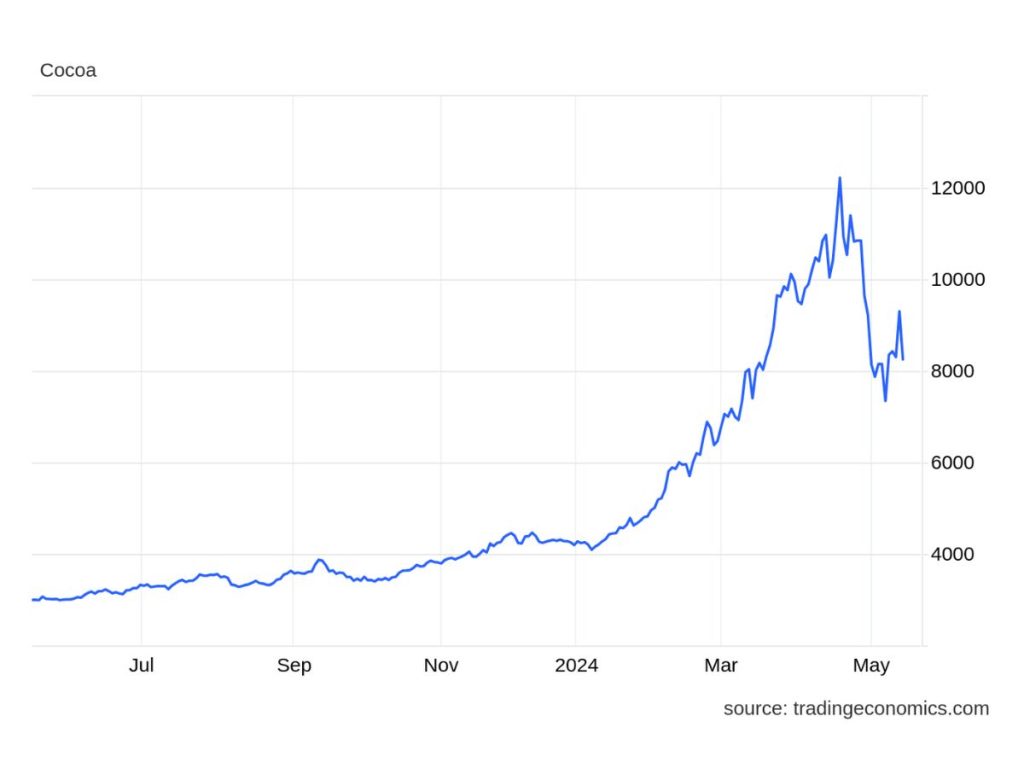
In the realm of food commodities, witnessing a sharp price increase is a rare occurrence—but this is precisely what’s unfolding in the cocoa market. Over the past year, New York cocoa prices have soared by more than 200%, including a notable surge of 97% in 2024 alone. In April, ICE cocoa futures rose to an all-time high of over $10,000.
Prices stayed up for several weeks, before falling 23.1% to $8,505 in the first week of May, recording the worst weekly performance since July 1959, according to Dow Jones Market Data analysis of FactSet data. Even then, prices remain consistently above the $3,000 rate recorded in May 2023.
As chocolatiers report their financial results for the first quarter of the year, the questions on every earnings call were the same: “How will the cocoa market volatility affect chocolate businesses and consumers?” and “Have cocoa prices hit their peak?”
Pests and climate change
The significant uptick in the price of cocoa in April 2024 can be traced to a combination of factors affecting the cocoa supply. This is particularly true of West Africa, particularly Ghana and the Ivory Coast, producers of 80% of the world’s total cocoa beans supply.
“The world faces a third straight year of insufficient cocoa output,” Mohamed Hashad, Chief Market Strategist Noor Capital told Finance Middle East when asked about the key reason behind the increase in the price of cocoa futures. “The [price] rally comes from humble beginnings where small West African farms, which are vulnerable to climate change impact, deal with the complex dynamics of futures markets.”
“The world faces a third straight year of insufficient cocoa output”
Mohamed Hashad
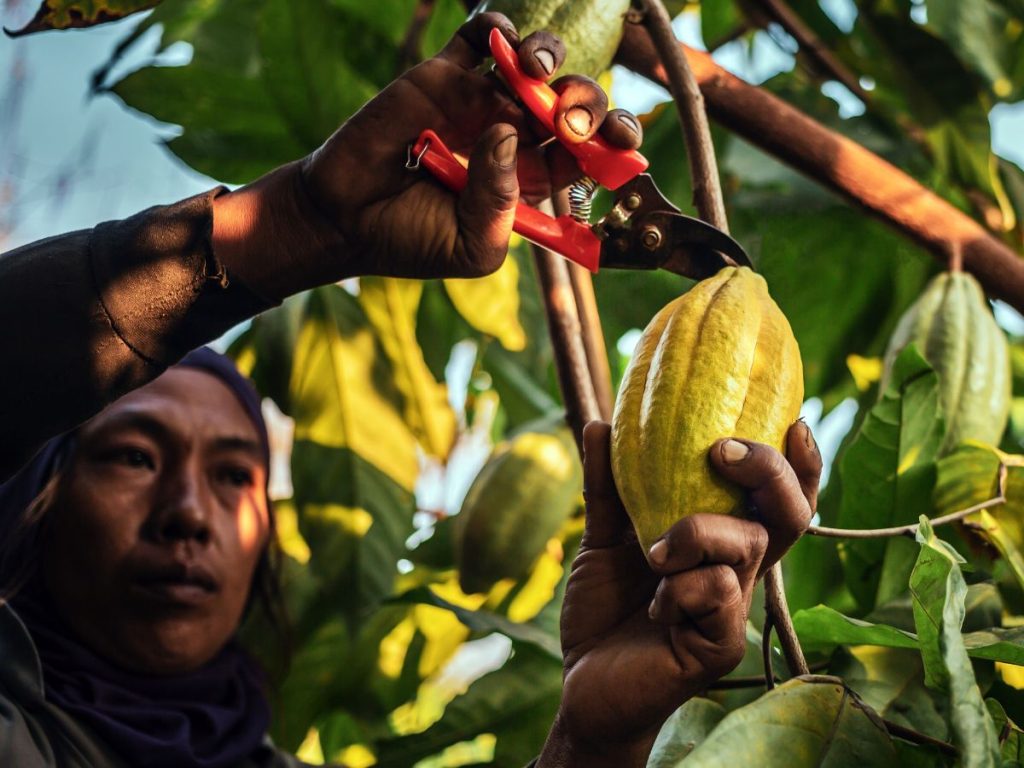
Most crops traded worldwide are grown by big farms, but this is not the case with cocoa. The crop is mainly produced by small independent farmers, who face unprecedented challenges, including climate change, diseases, illegal gold mining and sector mismanagement, and lack the financial tools to protect themselves against these challenges.
“The past year has introduced challenging weather conditions in these countries, particularly intense heat, negatively impacting cocoa production,” said Ole Hansen, Head of Commodities Strategy at Saxo Bank. “Furthermore, the escalating costs of pesticides and fertilisers have imposed financial strains on farmers, making it harder for them to procure these vital components for crop maintenance.”
The total rainfall recorded in West Africa during the second half of 2023 more than doubled the 30-year average. The heavy rains also escalated the spread of pests, such as the swollen shoot virus in the Ivory Coast and the black pod disease in Ghana. As many as 59,000 hectares of Ghanaian plantations are estimated to have been infected with shoot since 2018, according to Reuters. Additionally, major processors have run down inventories due to the rising cost of cold storage caused by higher interest rates.
As a result, the International Cocoa Organization expects cocoa production in the region to decline by approximately 11% in the 2023/2024 season.

Investor speculation
West African governments are responsible for setting the seasonal rate that cocoa farmers are paid. The decrease in cocoa production has led the Ivory Coast to increase the farmgate price for cocoa beans by 50% to $2.48 per kilogram, while Ghana brought prices to $2,480 per tonne. Nonetheless, it is in the global exchanges where prices have truly skyrocketed.
“The unparalleled scarcity of cocoa significantly contributed to the escalating price trajectory,” Hashad said. “Nonetheless, the recent spike, where New York cocoa futures soared by over $1,000 in merely two sessions, prompted speculation about supplementary financial influences shaping the market.”
It is not unusual for traders to use futures contracts to mitigate risks associated with physical goods. They achieve this by taking short positions, which generate profits if prices decline. Should prices rise, their gains from physical holdings surpass the costs of short positions. If prices fall, short positions offset losses from stockpiled cocoa. This hedging strategy is particularly effective when the market fluctuates within a moderate range but it creates challenges in times of volatility.
“Some traders may find it financially difficult if prices rise significantly, requiring additional collateral,” Hashad explained. “They may then choose to close their positions by buying more cocoa contracts, further driving up prices in a self-reinforcing cycle.”
Exchanges are taking steps to mitigate these risks. The Intercontinental Exchange has reduced the amount of cocoa traders can purchase through the London Exchange by 2,500 tons between May and July. Other measures include limiting the amount of cocoa available for delivery to traders and lowering the level at which traders are required to disclose their holdings. These restrictions help regulate the market but cannot stop it.
Chocolatiers take the stage
All eyes are now set on companies in the chocolate industry. Product costs are yet to surge significantly, largely due to major chocolate producers having purchased the commodities in advance and stocked inventory. Nonetheless, the surging cocoa prices will continue challenging chocolate producers globally, impacting their revenues and profit margins.
“While we have only passed on a fraction of the price increase to consumers in 2023, thanks to efficiency programmes, we may need to make responsible adjustments to pricing in the future, given the persistently high cocoa prices,” a Nestlé spokesperson told Finance Middle East.
“We may need to make responsible adjustments to pricing in the future”
Nestlé spokesperson
Analysts claim some manufacturers and retailers have failed to restock inventory, anticipating cocoa prices to drop. This has forced them to re-enter the market and buy cover in the spot market at higher price levels—a cost that can be counteracted through different strategies. These include diversifying supply sources, increasing retail prices, reducing product sizes, optimising operations and promoting items with lower cocoa content in a process known as “shrinkflation”.
In the last year, Mondelez International has increased prices by 12% to 15%, Mars has hiked prices by 15% and Nestlé by 9.5%. Yet, there might still be further price hikes ahead.
Discussing Mondelez International’s Q1 2024 financial results, CEO Dirk Van De Put, admitted the operating environment remains “challenging and dynamic”, while CFO Luca Zaramella claimed “the market is overreacting”. Meanwhile, Michele G. Buck, president and CEO of Hershey’s told shareholders that “lack of liquidity, new regulations and market speculation have all contributed to the record high prices we are experiencing” but stressed Hershey’s is “well-covered for 2024”. Both companies refused to discuss their hedging policies or pricing strategies.
Currently, cocoa prices form about 10% and 20% of Mondelez’s and Hershey’s cost-of-goods-sold (COGS), respectively, Jefferies data read.
“Chocolate manufacturers should also consider utilising artificial intelligence”
Nidhi Jain
Raising product prices has allowed chocolatiers to maintain their annual forecasts for organic net revenue growth and profit. But this is not the only option available to chocolate-makers. Alternatively, companies might look at new technologies for ways to incorporate innovative solutions to improve their vendor selection and better prepare for times of uncertainty.
“While market consensus is that chocolate producers must pass on costs to consumers to mitigate the impact of rising cocoa prices, a plethora of alternative solutions exist,” said Nidhi Jain, commodity specialist at The Smart Cube. “Chocolate manufacturers should also consider utilising artificial intelligence as part of their business strategies to maintain profitability and ensure a regular supply of reasonably priced products.”
Will prices come down?
Businesses and investors have already begun taking action to address the risk of continuing market volatility. To date, chocolate consumers and producers alike have absorbed elevated prices. Nonetheless, private labels are garnering more attention as luxury chocolate brands become more expensive, leaving consumers to decide whether to reduce their purchases of chocolate treats.
“Two key factors that could stall the rally in cocoa prices include a rebound in supply and/or a decline in global consumption sparked by unsustainably exorbitant prices that dent the wallets of both producers and chocolate consumers,” said Vijay Valecha, CIO at Century Financial. “Such a turning point has failed to materialise as of now.”
Cocoa futures have tumbled from their April highs. Analysts are still undecided as to whether the market has peaked and is experiencing a potential price correction. Even if this is the case, consumers and companies have not yet experienced all the results of the domino effect set in motion by poor weather and working conditions in West Africa and exacerbated by futures markets.
In the short term, the price of cocoa will fall from its sky-highs but might remain through the roof compared to a year ago.
The International Cocoa Organisation declined to comment on this story.