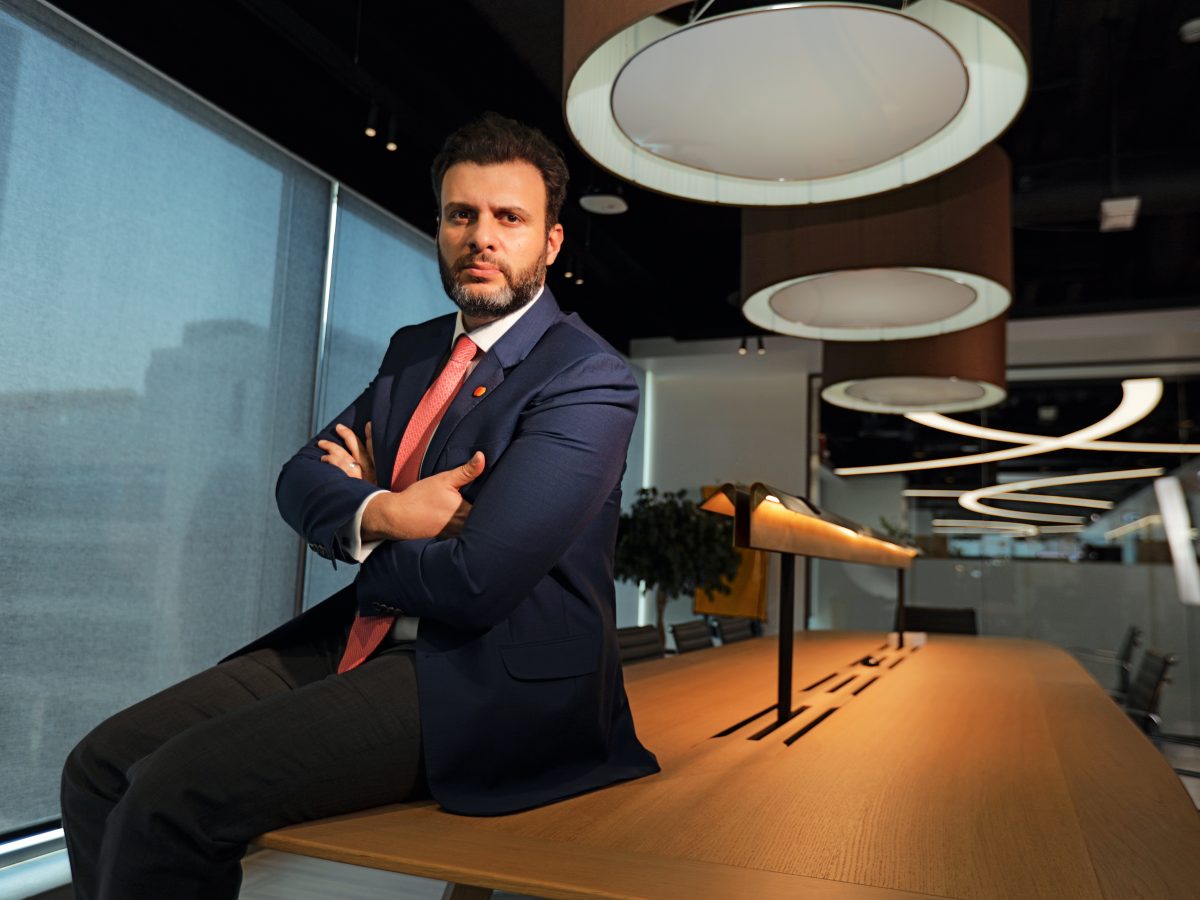
In an era defined by rapid digital transformation, Mastercard is keenly focused on harnessing emerging trends and market dynamics that present promising growth opportunities in the region. Its recent strategic developments are drawing significant attention, particularly the establishment of the East Arabia division, which marks a pivotal shift in a region ripe with potential.
J.K. Khalil, recently appointed Division President of East Arabia at Mastercard, elaborates on the importance of this move. “At Mastercard, we have been driving payment innovation and fuelling financial inclusion in this region for more than 35 years,” he states, underscoring the company’s long-standing commitment to the area. He continues, “To take our transformation journey to the next level, we have optimised our regional network through restructured division operations.”
According to him, the decision to create the East Arabia division reflects a strategic acknowledgement of the growth and potential of the former MENA East cluster, encompassing diverse and dynamic markets, such as the UAE, Qatar, Kuwait, Oman and Pakistan. This initiative is part of a broader organisational redesign aimed at “fast-tracking growth, deepening stakeholder engagement and enhancing our extensive range of capabilities in key markets”.

“Combining the force of scale with our deep local market knowledge, we are now even better positioned to connect and power an inclusive and sustainable digital economy where everyone can thrive,” Khalil notes. This vision is supported by robust partnerships spanning both public and private sectors, crucial for scaling Mastercard’s initiatives to new heights.
Delving into how the company catalyses business growth in the digital economy, Khalil shares that their approach involves providing “digital payment solutions that allow businesses of all sizes to pay and get paid quickly and securely, expand their reach and deliver a seamless experience for their customers”.
This effort is complemented by strategic collaborations to revolutionise B2B payments and enhance financial flows across businesses. “Earlier this year, we partnered with 4thWave, an innovative finance and Banking-as-a-Service (BaaS) digital platform provider, to streamline B2B payment flows,” he adds. “The collaboration will leverage 4thWave’s advanced supply chain finance platform for managing B2B payments to benefit Mastercard’s commercial customers, enabling cashflow for corporate buyers and suppliers.”
The support for small businesses and startups is also a crucial component of Mastercard’s strategy, particularly in fostering the digital capabilities of the burgeoning gig economy in markets like Pakistan. Khalil details initiatives such as the Mastercard Freelancer Digital Account and Card in the country, which helps freelancers and IT professionals access global services and receive payments from over 210 jurisdictions.
He continues, “In the UAE, we collaborated with Aramex and the Ministry of Economy’s The Entrepreneurial Nation to launch our ScaleUp platform, which presented an exciting opportunity for startups and SMEs to pitch innovative ideas for a chance to win AED 250,000, meet with angel investors and gain several other benefits.”
Khalil adds that Mastercard’s latest initiative is its partnership with Abu Dhabi Global Market (ADGM) to digitise SME payment flows.
Addressing the role of fintech companies in local economies, Khalil emphasises their transformative impact. “Innovative fintech players are contributing to the rapid digital transformation that makes people’s lives more convenient, simpler and rewarding,” he states. Mastercard’s support for this sector is encapsulated in their Mastercard Accelerate programme, designed to provide fintech companies of all sizes with an express lane to scale their operations.
“We are actively forging strategic synergies across the region to foster a supportive ecosystem for fintech growth. From our collaboration with the Qatar Financial Centre Authority to explore a Fintech Innovation Lab to enhancing fintech capabilities with Further Ventures in Abu Dhabi, we’re dedicated to enabling fintech companies to flourish and expand,” elaborates Khalil.
The AI edge
As Mastercard steers the course of financial technology, it is leveraging artificial intelligence (AI) to profoundly enhance the efficiency and security of its payment solutions. Khalil shares, “AI is critical to the offerings we provide to our customers. We employ hundreds of data scientists and AI technologists who are dedicated to developing and applying effective and responsible AI.”
This commitment is evident in their approach to safeguarding transactions across their vast network. “AI allows us to protect the over 150 billion transactions that we switch on our network every year from cybercrime and fraud,” Khalil explains, noting that their AI-powered solutions have saved “$35 billion in fraud costs globally in the past three years”.
Beyond security, AI’s role in providing actionable insights is invaluable. “We also use AI to drive better insights — from helping banks decide on the best actions for their cardholders to supporting retailers with real-time personalised offers to creating better predictions and improving measurements by removing bias,” Khalil elaborates. These advancements are integral to fostering partnerships that extend the benefits of AI across sectors.

A landmark initiative is the establishment of the Centre for Advanced AI and Cyber Technology in Dubai, created in collaboration with the UAE Artificial Intelligence Office. “The project aims to enhance AI capabilities and readiness in the region and usher in a new era of transformative technology,” says Khalil, underscoring the strategic importance of this venture.
He adds that Mastercard’s collaboration with First Abu Dhabi Bank (FAB) is another testament to its commitment to AI, which is focusing on “co-creating unique and disruptive products, services and solutions that will revolutionise the customer experience”.
Looking ahead, Khalil reflects on the broader implications of AI in the industry. “AI has become a hot topic that businesses can no longer afford to ignore if they don’t want to miss out on a whole new world of opportunities in the digital economy,” he asserts.
The push towards personalisation, operational optimisation and enhanced cybersecurity are key areas where AI is set to have significant impacts. “At Mastercard, we aspire to become an AI powerhouse with our products and services; that’s why we are ramping up our investments in AI governance, technology and talent,” Khalil shares, detailing the acquisition of companies like Brighterion, RiskRecon and NuData to bolster their capabilities.
“In the Middle East and Africa, we are collaborating with Network International to make our Brighterion AI technology available to over 60,000 merchants across the region,” he explains, pointing out that the cutting-edge solution helps address fraud, declines and chargebacks in order to reduce costs and risk for acquirers.
Driving financial evolution
Shifting the narrative to the broader challenges and opportunities within the region’s payment industry, Khalil observes, “One of the key trends is tokenisation that is reshaping the payments landscape, serving as the foundation for global digital services such as Apple Pay and Google Pay that continue to gain popularity.” He also highlights the transformative role of mobile wallets and the evolution of payment acceptance methods, which are turning digital gadgets into payment devices.
“Connected finance that offers seamless access to financial services across all environments through open banking is another significant development,” he adds, pointing out how a single app can now provide not just payment capabilities but also financial advice, insurance or loans. Additionally, Khalil discusses the growing importance of environmental, social and governance (ESG) principles, driven by consumers’ desire to have a positive impact on society and the planet.
At the heart of Mastercard’s mission lies a powerful commitment to financial inclusion. “For us, financial inclusion is not about having a bank account – it means effectively addressing the inequities in our financial systems to ensure everyone has access to the digital economy,” explains Khalil. He also notes the company’s ambitious pledge to connect 1 billion people and 50 million micro, small and medium enterprises (MSMEs) to the digital economy by 2025.
Highlighting the challenges in emerging markets, Khalil points out the high percentage of unbanked and underbanked populations, juxtaposed with high mobile phone penetration, which presents a unique opportunity. “Our partnerships with leading telcos have allowed us to offer a better payment experience to millions of consumers on mobile money and digital wallet platforms, where they’re already active and engaged,” he says, illustrating how technology is leveraged to bridge the financial gap.
A notable example is Mastercard’s strategic collaboration with e&, which empowers customers in 16 countries across the Middle East, Asia and Africa to make digital payments on global platforms, representing a significant push towards financial inclusion via mobile devices. Khalil also underscores Mastercard’s focus on women’s empowerment, proudly sharing that the company met its goal of equipping 25 million women entrepreneurs with the necessary tools to grow their businesses “two years ahead of the deadline”.
This commitment extends to partnerships aimed at creating employment opportunities for women across MENA, including the impactful Social Innovation Incubator for Women’s Employment with Women Choice. “This year, we expanded the collaboration with two new programs – ImpactHer and EmpowerHer,” Khalil adds, explaining that further initiatives, such as Strive Women in partnership with CARE International in Pakistan, reflect Mastercard’s focused efforts to enhance the financial health and entrepreneurial capacity of women small business owners.
Turning to sustainability, Mastercard integrates ESG principles deeply into its operations. Khalil explains, “Our ESG efforts revolve around the 3 P’s – People, Planet and Prosperity.” He details the steps Mastercard is taking to reduce its carbon footprint, including achieving net-zero emissions by 2040 and implementing zero-waste policies across its facilities. “All our owned properties are LEED-certified and fitted with solar panels,” he notes, highlighting the practical measures being undertaken.
In terms of advancing gender parity and connecting sustainability directly to executive outcomes, Khalil states, “We have formally linked executive compensation to three global ESG priorities – operational carbon neutrality, financial inclusion and gender pay parity.” This approach not only promotes accountability but also aligns closely with Mastercard’s overarching ethical framework.
Khalil provides examples of specific sustainability initiatives, such as the UAE Sustainable Cards Pledge, announced at COP28, which aims to mobilise the nation’s banks to transition to cards made from recycled or bio-sourced plastics by 2025. “This makes the UAE the first country in the world to do so three years ahead of our global target of 2028,” Khalil remarks.
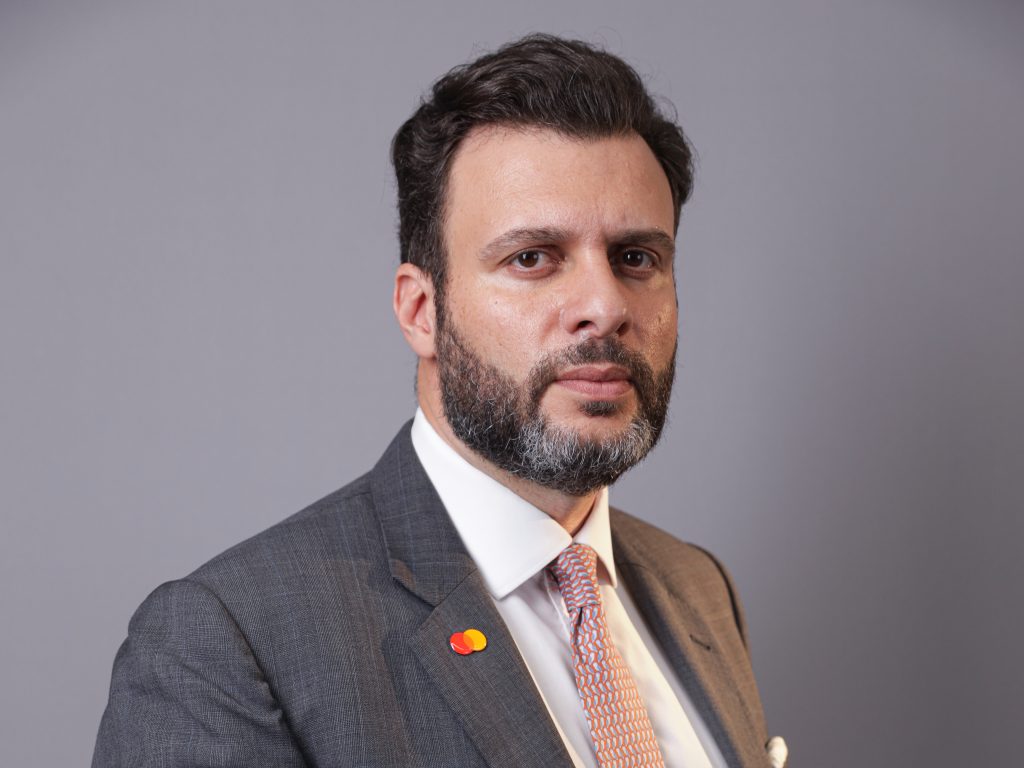
Additional partnerships with regional banks and the introduction of tools like the Carbon Calculator, developed with Doconomy, illustrate Mastercard’s comprehensive strategy to foster environmentally conscious spending habits and corporate responsibility.
Future vision in East Arabia
As Mastercard continues to adapt and innovate, Khalil reflects on the company’s forward-looking strategy, pointing out that cross-border payments are one of the major trends in the region.
According to Mastercard’s Borderless Payments Report 2023, a considerable proportion of the UAE’s population anticipates an increase in cross-border transaction activity. “48% of people in the country expect to send cross-border payments more frequently in the next 12 months,” Khalil notes, highlighting the growing demand for these services.
Another significant trend that the banking giant is capitalising on is the rise of instalment solutions. Khalil adds that this model not only caters to the immediate financial needs of consumers but also aligns with the company’s strategy to introduce flexible payment methods that can adapt to varied consumer preferences and economic conditions.
Reflecting on the company’s vision, which blends ambition with practicality, Khalil summarises that Mastercard is providing communities with fast, convenient, secure and affordable ways to transfer money internationally.
“Our aim is not just to keep pace with global financial trends but to anticipate and shape them and take the businesses and communities we serve to even greater heights through a new structure and focus,” he says in conclusion.