The Middle East is gearing up to transform its public transportation ecosystem by introducing vertical taxis. The idea behind launching vertical or air taxis is to provide a quicker and more secure mode of transport between key destinations.
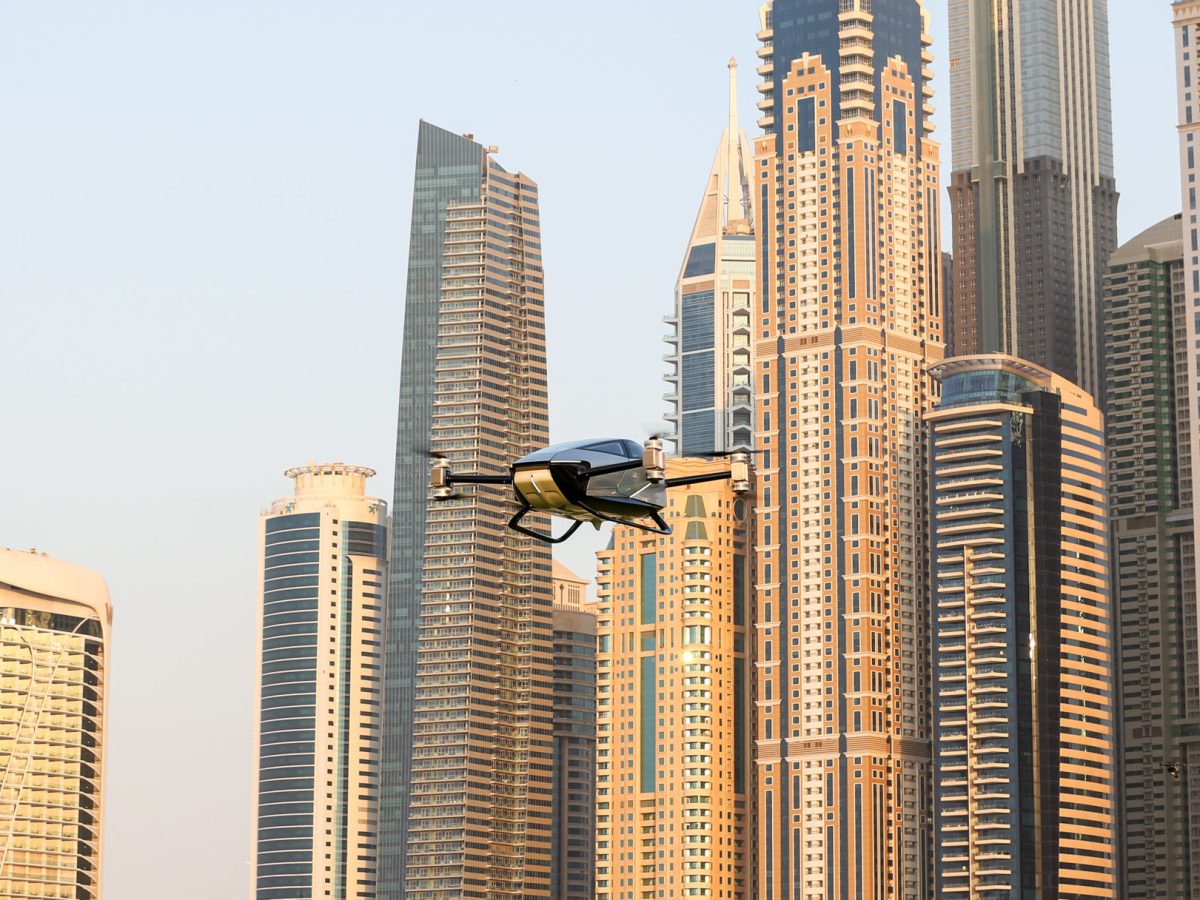
This new kind of transportation will not look like an aeroplane but resemble a massive drone and function more like a helicopter. These vertical taxis, which could carry multiple passengers, will be connected by vertiports across the region.
Experts claim that vertical taxis have the potential to revolutionise urban air transportation in the Middle East by incorporating shared and personal mobility into urban airspace.
eVOTL companies making way
Several companies are seeking to enter the Middle East market by launching electric vertical take-off and landing (eVTOL) aircraft. These aircraft take off and land vertically like helicopters, eliminating the need for runways and other significant infrastructure.
In February, US-based Joby Aviation, a developer of eVTOL aircraft, struck a deal with Dubai’s Road and Transport Authority (RTA) to launch air taxi services in the UAE by early 2026, with plans to kick-start the initial operations in early 2025. This collaboration intends to establish Dubai as a world leader in quick, environmentally friendly, and low-noise air travel.
Last month, the UAE’s tourism heads, during the Arabian Travel Market (ATM) event, said the high-tech electric air taxis will take to the skies in Ras Al Khaimah, the northern emirate of the UAE, by 2027. At the event, Ras Al Khaimah Tourism Authority (RAKTA) and Skyports, a firm spearheading the construction of vertiport infrastructure, signed an agreement. As per the deal, Skyports will build a network of vertiports to link important sites across Ras Al Khaimah in accordance with RAKTA’s Strategic Plan 2030.
Similarly, Saudi Arabia is also considering introducing vertical taxis across the Kingdom. Early this year, Saudi’s General Authority of Civil Aviation (GACA) said it wants to encourage technology like vertical take-off and landing (VTOL) aircraft and unmanned aircraft systems (UAS) to transform the country’s aviation industry. The Kingdom is establishing connections with global partners operating in the advanced air mobility (AAM) space. In fact, some of the agreements with countries like China, South Korea and Singapore are already in the pipeline.
Regulatory approvals
The Middle East’s robust economic foundation and liberal regulatory framework contribute to the growing trend of eVTOL companies expanding in the region.
For instance, Peak Flying Aviation Technology’s eVTOL aircraft recently successfully conducted its inaugural flight at Falcon General Aviation Airport in Al Ain, UAE, after getting approval from the UAE General Civil Aviation Authority (GCAA). This is the first long-distance flight of its kind in the Middle East and the first foreign flight of a Chinese eVTOL weighing more than 2 tonnes.
Likewise, China-based EHang Holdings Ltd has achieved a significant milestone in UAE after its pilotless eVTOL aircraft successfully conducted the first passenger-carrying demo/test flight in Abu Dhabi.
The Middle East is embracing the future of urban air transportation by introducing vertical taxis, aiming to revolutionise travel between key destinations. Several eVTOL companies are entering the market, with agreements and initiatives underway in countries like the UAE and Saudi Arabia. Regulatory approvals signal progress, with successful test flights and partnerships driving momentum towards a more efficient and environmentally friendly mode of transportation in the region.