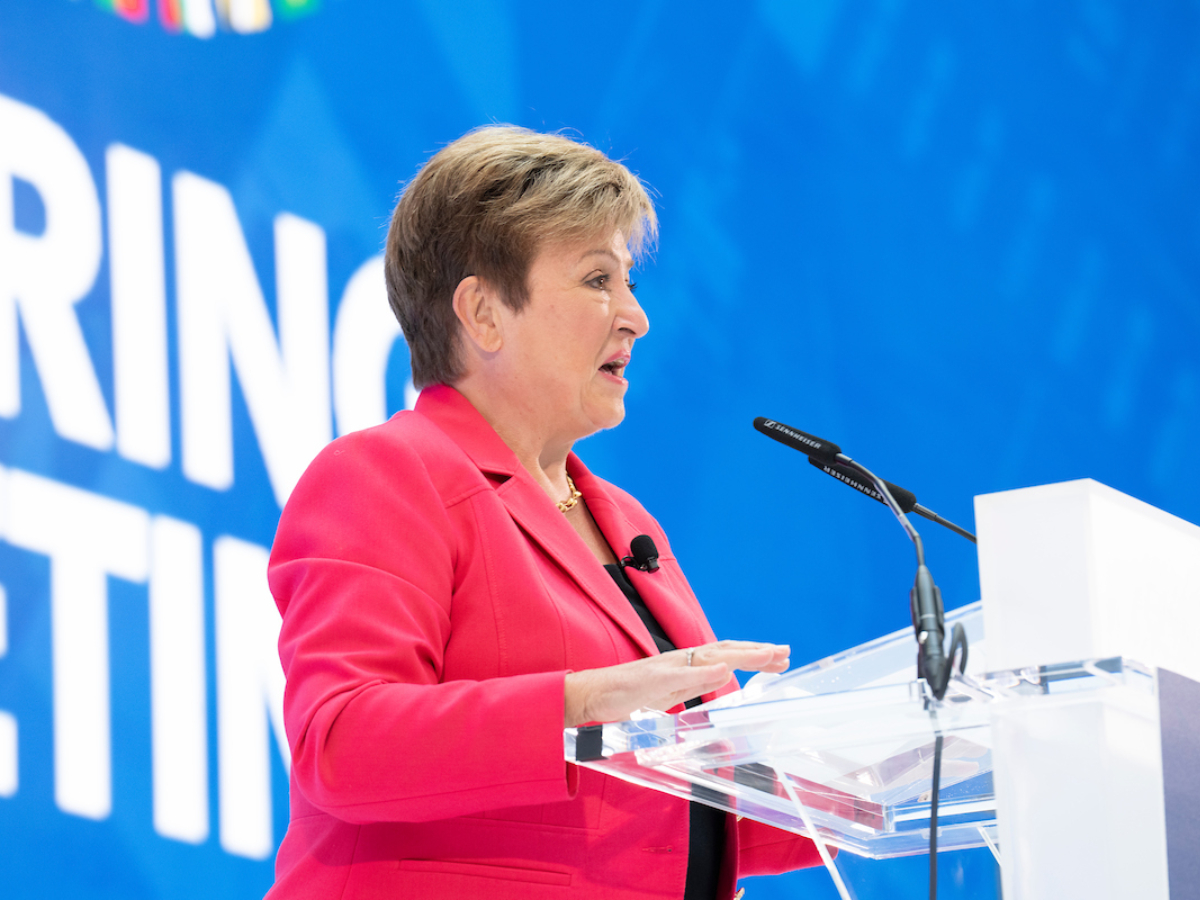
The International Monetary Fund (IMF) announced plans to revise its global growth forecasts downward due to escalating trade tensions and shifts in the global trading system. Despite these adjustments, the IMF does not anticipate a global recession, Reuters reported on Thursday.
IMF Managing Director Kristalina Georgieva attributed the forecast changes to recent US tariff implementations and retaliatory measures from China and the European Union. These actions have introduced significant uncertainty in trade policies and increased volatility in financial markets. Georgieva noted that while disruptions entail costs, the IMF’s new growth projections will include notable markdowns but not a recession.
The IMF’s updated World Economic Outlook, scheduled for release on April 22, will reflect these developments, including higher inflation forecasts for some countries. Georgieva emphasised that elevated uncertainty raises the risk of financial market stress, citing recent movements in US Treasury yield curves as a warning sign.
The IMF had previously projected global growth of 3.3% for both 2025 and 2026. However, the current trade environment, characterised by increased tariffs and protectionist measures, has prompted a reassessment of these figures. Georgieva highlighted that protectionism erodes productivity over the long run, especially in smaller economies, and that moves to shield industry from competition can undercut entrepreneurship and hurt innovation.
In response to these challenges, the IMF urges countries to continue economic and financial reforms, maintain agile and credible monetary policies, and strengthen financial market regulation and supervision. Emerging market economies are advised to preserve exchange rate flexibility, while donor countries should work to protect aid flows to vulnerable low-income countries.
Georgieva also called for cooperation among major economies to reach a trade settlement that preserves openness and restarts a global trend toward lower tariff rates and reduced non-tariff barriers. She stressed the importance of building a more resilient world economy in an era of more frequent and severe shocks.
The IMF’s forthcoming report will provide further insights into the economic implications of current trade policies and the organisation’s recommendations for navigating the evolving global economic landscape.