What if the future of finance were in the hands of gamers?
The global gaming market was valued at $198.40 billion in 2021, and it is expected to reach a value of $339.95 billion by 2027, registering a CAGR of 8.94% in the period ranging from 2022 to 2027, according to data from Mordor Intelligence. The gaming community has also demonstrated the drive to embrace the latest technological and fintech developments, from blockchain to cryptocurrencies, decentralised finance (DeFi), web3 and tokenisation.
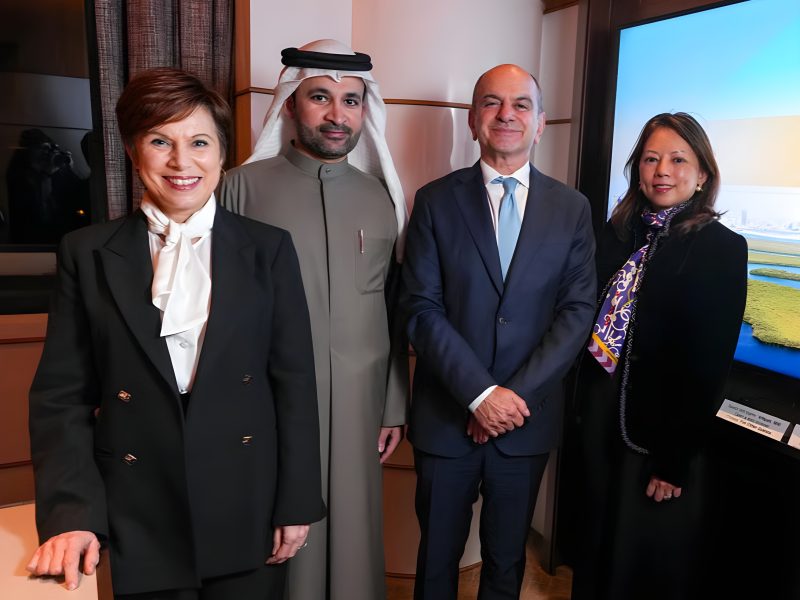
During a panel discussion at ABC Conclave Dubai, Kevin Soltani, CEO of the GIMA Group and Mohammed Yaseen, Founder of the Esports and Gaming Association, discussed the future of gaming in the Middle East, with a focus on the impact of web3.
Gaming in MENA
In the MENA region, Saudi Arabia, Iran, UAE and Egypt have larger gaming populations than France, Sweden, Norway and Denmark, with the number of MENA gamers set to 88 million by 2026, up from 67.4 million in 2023, Mordor Intelligence found. Between 2015 and 2021, $391.74 million was invested across 170 deals in the MENA gaming industry.
These nations are noticing the sector’s growth and are making investments to drive it forward. For instance, Saudi Arabia hosted the inaugural Esports World Cup, offering an unprecedented prize pool of over $60 million, the largest prize pool ever awarded in the history of esports, greatly above the previous record of $45 million set by Gamers8 in 2023. Moreover, Savvy Games Group, backed by the Public Investment Fund (PIF) with a $38 billion investment, has recently made significant acquisitions in the sector, which totalled $6.4 billion.
“In Saudi Arabia, they are doing a lot of huge things,” said Yaseen. “They have huge initiatives.” He contrasted this strategy, on going all-in from the moment a decision is made, to the approach of other countries such as the UAE, which have been scaling the sector and building on it for the past decade.
The Dubai Program for Gaming 2033 aims to create 30,000 jobs, boosting GDP by $1 billion and establishing global gaming dominance. Moreover, the emirate has also introduced the “Dubai Gaming Visa,” aimed at supporting talent, creators and pioneers in the electronic gaming sector, encouraging them to develop their skills and offering investment opportunities to turn innovative ideas into successful projects.
“One billion new dollars in the next eight years—that sounds like a lot,” Soltani noted. “It actually is not that much. Currently, the UAE produces about $250 billion from their gaming ecosystem. So, if you look at it, that’s only about a 5x and that’s a 5x with an open market. How many gaming companies are here? How many game studios are here? How many gave influencer houses or esports companies?”
“Gaming companies are taking note of what’s happening in Dubai and the web3 space”
Kevin Soltani
In addition to the rise of private companies in the gaming and esports sector, the importance of the region’s cryptocurrency ecosystem and the backing it has been receiving from UAE regulators, cannot be understated. This regulatory push is set to give a significant boost to the gaming sector’s market value. “Without exaggeration, I see that [the rise of crypto] as a 10x easily,” Soltani added. “Because if you see these token economies start to work with gaming companies, eSports, tournament operators, in-game currency for new games that haven’t even been developed yet. You’re going to see some amazing things.”
Web2 vs web3
If web2 is the version of the internet that we are familiar with, web3 would take it to the next level, in the form of a decentralised network that shakes up the digital world. However, especially when it comes to gaming, both web2 and web3 still have great opportunities to offer, as they are targeting very different audiences.
“Web2 is still winning,” Soltani said. “Gaming in web2 is not going to go away anytime soon. And I would argue that it better don’t, because gamers, influencers and content creators, they really got interested in crypto and using it in their games.”
Roblox and Fortnite are two of the most obvious examples of extremely successful uses of in-game currencies, Robux and V-bucks, respectively. Both of these companies have achieved valuations in the $30 to $35 billion range, showcasing the sector’s potential. But what happens to their users if the games tokenise? “I think they would lose their user base,” Soltani said. “Because that user base is there to game.”
Game developers have two choices here. On the one hand, they could tokenise their most popular games, driving the move to web3 on a grand scale and taking on the risk—and the potential reward. Alternatively, developers can keep the audiences separately, building instead new products for the new era of gaming. In either case, the gamers are the key.
“Gaming has always been a different form of escape; it’s a hobby,” Yaseen said. “There has been, in the last 10 years, the idea of gaming being this new career, as gaming influencers or in esports. The reason why I think it’s not ready yet is that most of the publishers and developers, their products still appeal to traditional web2 models.”
“No doubt, in five to 10 years, web3 will become a much more mainstream area of gaming”
Mohammed Yaseen
Instead of staying focused on in-game currencies or tokenising existing products, why not build new sources of revenue? Soltani mentioned games such as Roblox allow users to create their own game and have employees that play it instead, creating an in-game economy. However, Yaseen highlighted the importance of maintaining the essence of why people play video games in the first place.
“The positive side is that there are going to be people who are going to come in and find ways to make it fun,” Yaseen added. “Ultimately, it has to be fun. It has to be engaging.”
The future of gaming
Gaming is an intrinsic part of the future of entertainment—perhaps one of its most profitable sides—and countries in the GCC are determined to build upon the opportunity to drive this shift. “I have to believe that gaming companies are taking note of what’s happening in Dubai and the web3 space,” said Soltani. “The opportunity is massive. How many thousands of users jump on to play a game? How many will jump on once a token economy comes into play?”
Thinking about the future of web3 gaming and tokenisation, Yaseen has no doubts. “This market will be there,” he said. “No doubt, in five to 10 years, web3 will become a much more mainstream area of gaming.”