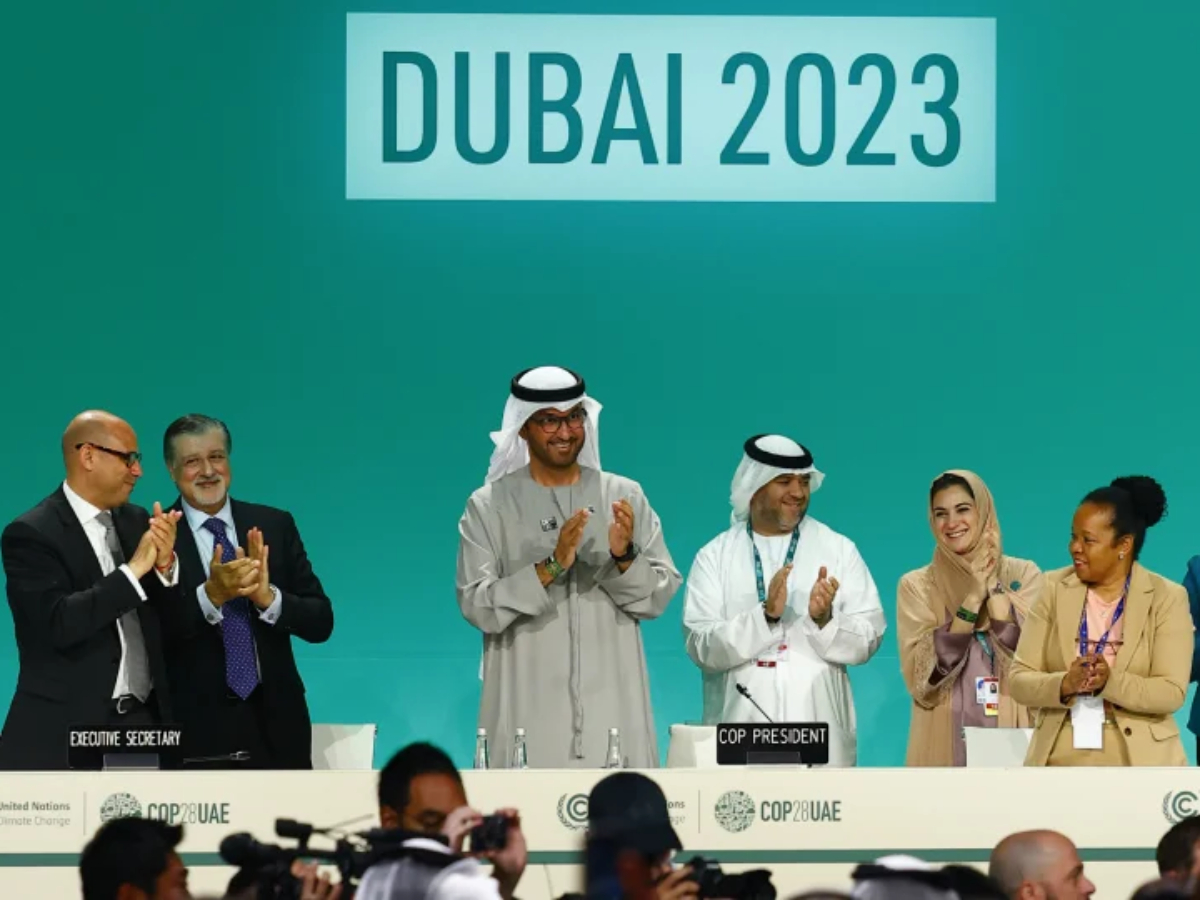
The UN Climate Change Conference, the Conference of the Parties (COP), has been an annual event since 1995. These two-week-long conferences serve as crucial gatherings for global leaders, decision-makers, scholars, and stakeholders to address the pressing climate crisis collaboratively. The 28th Conference of the Parties to the UN Framework Convention on Climate Change (COP28) was held in Dubai, UAE, from November 30 to December 12, 2023. It marked a significant moment in global climate action, initiating a 7-year drive to slash emissions by 43% by 2030, in line with the Paris Agreement’s goal of limiting global warming to 1.5°C.
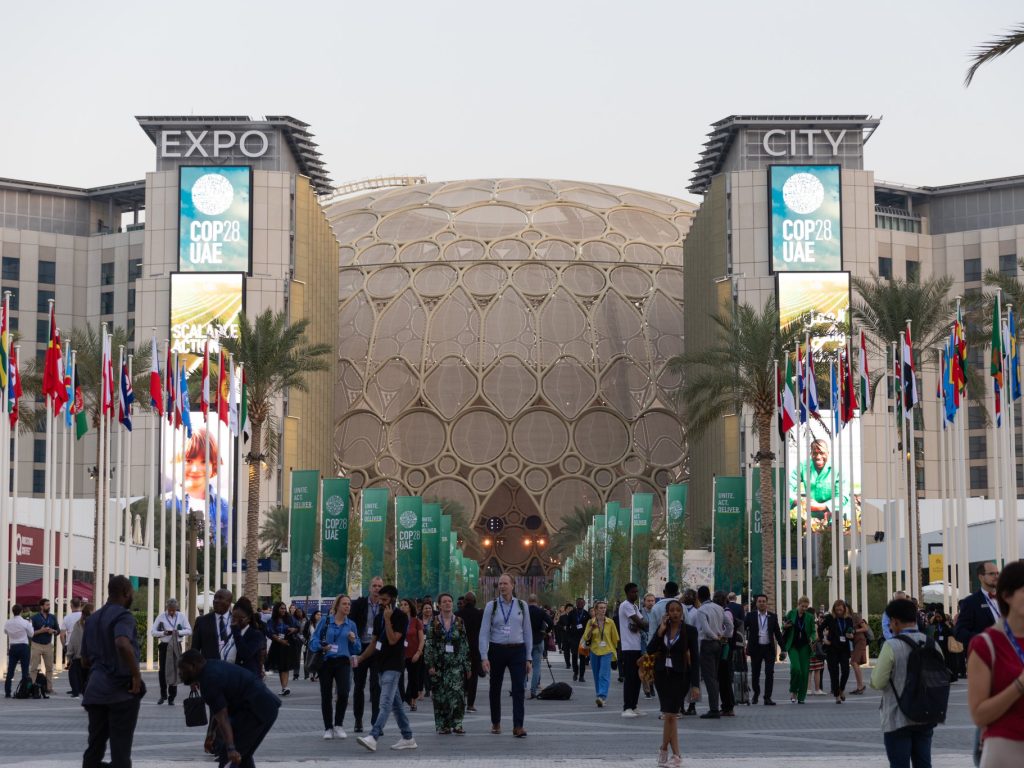
COP28 stood out from its predecessors in several ways. It was the first COP a major oil-producing nation hosted, underscoring the UAE’s commitment to steering the energy transition towards a low-carbon future. At Expo City Dubai, the event showcased sustainability, emphasising the UAE’s innovations in clean energy, circular economy, green mobility, and environmental conservation. COP28 adopted a hybrid format, blending in-person and virtual participation to ensure inclusivity amidst the ongoing COVID-19 pandemic.
The UAE has been pioneering innovative financial mechanisms to accelerate climate action, exemplified by the UAE Sustainable Finance Framework introduced by the Ministry of Climate Change and Environment in 2021. This framework outlines four pillars to mainstream sustainability in financial decisions:
- Boosting the supply and demand for sustainable finance products and green investment projects
- Fostering innovation and collaboration
- Promoting transparency and disclosure
Data from Fitch Ratings indicates that the UAE holds about 19% of the world’s sustainable bonds, amounting to approximately $6.4 billion, marking a 41% increase from the previous quarter. Key issuers include Abu Dhabi National Oil Company (ADNOC), Dubai Electricity and Water Authority (DEWA), Emirates NBD Bank, and Majid Al Futtaim.
The UAE’s initiatives have garnered substantial domestic and international demand for green finance products. Notable successes include ADNOC’s $1.1 billion dual-tranche green bond issuance in November 2021, oversubscribed by over 5.6 times, and DEWA’s $1 billion green sukuk issuance in September 2021, oversubscribed by more than 2.3 times. This strong performance has earned the UAE recognition and accolades in the climate finance arena.
Climate action in focus
Furthermore, beyond its financial initiatives, the UAE has been a trailblazer in climate action in the MENA region. It ratified the Paris Agreement swiftly, submitted its nationally determined contribution (NDC) in 2015, committed to achieving net-zero emissions by 2050, and launched a national hydrogen strategy. Additionally, the UAE has made substantial investments in renewable energy projects worldwide, housing the International Renewable Energy Agency (IRENA) headquarters and collaborating with the Abu Dhabi Fund for Development (ADFD) to offer concessional loans for renewable energy initiatives.

The Intergovernmental Panel on Climate Change (IPCC) suggests that aligning climate and Sustainable Development Goals actions could yield significant long-term economic benefits. However, the developing world requires over $2.4 trillion annually by 2030 to combat climate change, far exceeding donor countries’ committed $100 billion annually. Consequently, COP28 aimed to secure new and additional sources of climate finance, such as carbon pricing, green bonds, blended finance, and private sector engagement.
COP28 witnessed numerous multi-billion-dollar deals forged to expedite the global energy transition and stimulate green growth. The UAE disclosed that over $83 billion was mobilised in the initial five days of the event. Notable finance pledges included UAE banks committing to mobilise Dh1 trillion (around $270 billion) for green finance and a $4.5 billion fund announcement for clean energy in Africa. Additionally, the UAE pledged $30 billion to a new fund supporting eco-friendly projects globally, with $5 billion allocated for the Global South.
Loss and damage fund
Furthermore, a loss and damage fund was established to aid affected nations in resilience-building and recovery, accumulating total contributions of $726 million. Developed countries reiterated their commitment to annual $100 billion funding until 2025, intending to set a new collective goal based on the needs of developing countries. The World Bank pledged to elevate climate-related financing for 45% of its total lending, amounting to a $9 billion annual increase. In comparison, the Asian Development Bank earmarked $10 billion for climate investments in the Philippines from 2024 to 2029.
Charitable contributors, including the Bezos Earth Fund, partnered with the World Bank’s private investment arm for an $11 billion climate financing venture across developing nations. These financial commitments showcased strides in climate finance in scale, diversity, and effectiveness but fell short of bridging the substantial financial gap required for comprehensive climate action.
These examples show how COP28 has advanced scale, scope, diversity, and effectiveness in climate finance. However, more is needed to close the gap between what is required and what is available. Therefore, COP28 also called for continued efforts to mobilise more public and private resources, domestic and international, and ensure efficient and equitable use. As COP28 President Sultan Al Jaber said: “It’s time to transform climate finance and bridge its $ 2.4 trillion gap.