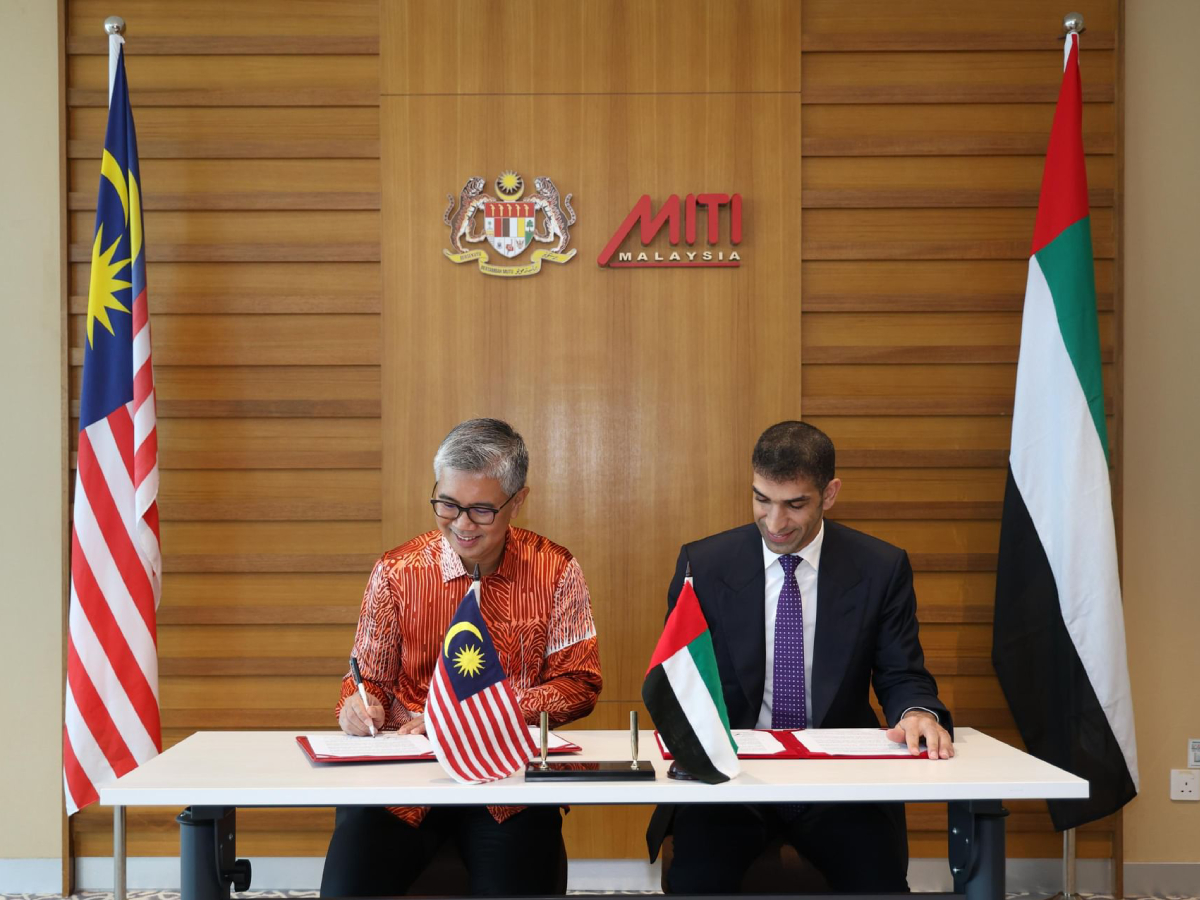
Dr Thani bin Ahmed Al Zeyoudi, UAE Minister of State for Foreign Trade, and Zafrul Aziz, Malaysia’s Minister of Investment, Trade and Industry, confirmed the conclusion of negotiations for a Comprehensive Economic Partnership Agreement (CEPA) between the two nations. The agreement aims to eliminate or reduce tariffs, lower trade barriers, promote private-sector collaboration, and establish new investment pathways.
In 2023, bilateral non-oil trade between the UAE and Malaysia exceeded $4.9 billion. In the first half of 2024, non-oil trade reached $2.5 billion, reflecting a 7% growth compared to the same period in 2023. Malaysia ranks as the UAE’s 12th-largest Asian trading partner and fifth among ASEAN countries, while the UAE is Malaysia’s second-largest trade partner in the Arab world, accounting for 32% of Malaysia’s trade with Arab nations.
“As the fourth-largest economy in the Southeast Asia region, and with economic growth in 2024 set to outstrip forecasts, Malaysia offers substantial opportunity for our exporters, industrialists and business leaders, especially in high-growth sectors such as energy, logistics, manufacturing and financial services,” said Dr Al Zeyoudi.
The UAE’s CEPA programme, which aims to increase non-oil foreign trade to AED4 trillion, continues to expand ties with key markets. Agreements with Indonesia and Cambodia are already operational, helping to accelerate trade with the ASEAN bloc.
“The CEPA is also a strategic lever for UAE-based companies to optimise Malaysia as a gateway into the ASEAN market, which, in turn, will provide tremendous opportunities for our businesses – particularly the SMEs – through integration into regional supply chains, capacity-building and knowledge sharing via the UAE investors,” said Zafrul Aziz.