
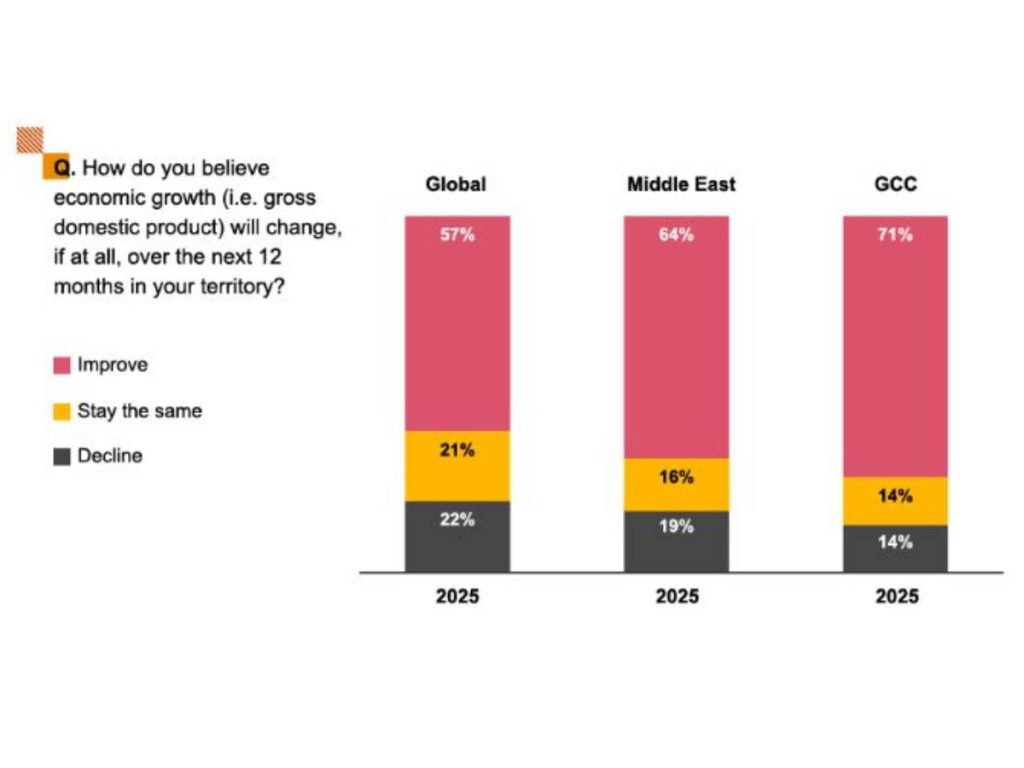
Middle East CEOs are showing strong optimism about regional economic growth and revenue prospects, according to PwC’s 28th Annual CEO Survey for 2025. The survey reveals that 73% of CEOs in the region expect an improvement in economic conditions over the next year, far exceeding the 44% of CEOs globally who share the same outlook. This confidence persists despite global uncertainties and economic headwinds.
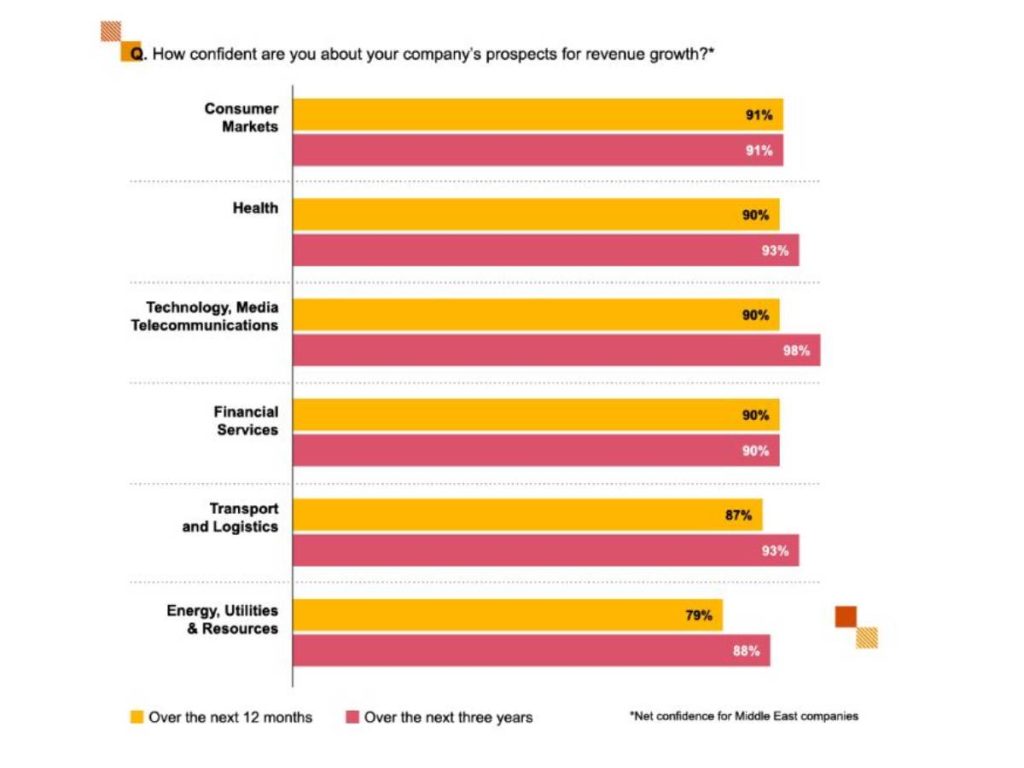
Revenue growth
The survey highlights that 66% of Middle East CEOs anticipate significant revenue growth over the next three years. This optimism is coupled with aggressive hiring plans, as 65% of respondents intend to expand their workforce in 2025. These projections highlight a region-wide commitment to growth driven by strong government-led initiatives in technology, sustainability, and infrastructure sectors.
For instance, the UAE and Saudi Arabia are heavily investing in initiatives such as Vision 2030 and AI-driven economic diversification, aiming to reduce reliance on traditional oil revenues. CEOs in these countries are leveraging public and private sector partnerships to fuel regional and international expansion.
Business reinvention
Despite their positive outlook, 48% of Middle East CEOs are concerned about the sustainability of their businesses without significant transformation. This sentiment reflects a clear understanding of the challenges posed by disruptive market forces and rapidly evolving consumer preferences.
The need for reinvention is especially urgent in traditional industries like energy and manufacturing. CEOs are focusing on integrating new business models, such as adopting circular economy principles, enhancing ESG compliance, and exploring renewable energy technologies. This shift aligns with global trends as businesses recalibrate operations to address financial goals and environmental impact.
Technological advancement
Technological innovation remains a central theme in the region’s growth strategy. A significant 69% of CEOs in the Middle East prioritise technological adoption as a key driver for their business transformation in the next three years. This includes integrating AI, big data, and blockchain technologies to enhance operational efficiencies and customer experiences.
The survey also highlights the role of governments in fostering innovation ecosystems. Initiatives like Saudi Arabia’s National Industrial Development and Logistics Program (NIDLP) and the UAE’s AI Strategy are providing a framework for businesses to experiment with emerging technologies. These programs are expected to attract significant foreign investment while creating new opportunities for regional players to scale operations globally.
Geopolitical and economic risks
Despite their confidence, Middle East CEOs remain acutely aware of the risks posed by geopolitical tensions, inflationary pressures, and cyber threats. Geopolitical conflicts, particularly in key trade corridors, have prompted businesses to invest in risk mitigation strategies, such as supply chain diversification and cybersecurity enhancements.
Inflation remains a key concern, with 60% of regional CEOs citing it as a threat to their growth plans. Businesses are exploring ways to absorb rising costs without compromising their competitive positioning. Cybersecurity also ranks high on the agenda, with an increasing focus on building robust frameworks to safeguard sensitive data and ensure compliance with international regulations.
Talent strategies
The survey highlights the ongoing challenge of attracting and retaining top talent in a competitive market. Middle East CEOs are addressing these concerns by investing in workforce upskilling and adopting flexible working arrangements to meet evolving employee expectations. Programs like Saudi Arabia’s Human Capability Development Program are complementing private sector efforts to develop a highly skilled and future-ready workforce.
PwC’s findings also indicate a growing emphasis on diversity and inclusion. CEOs are increasingly focusing on fostering equitable workplaces to enhance employee engagement and productivity. This trend aligns with global practices as organisations recognise the value of diverse perspectives in driving innovation and resilience.
ESG integration
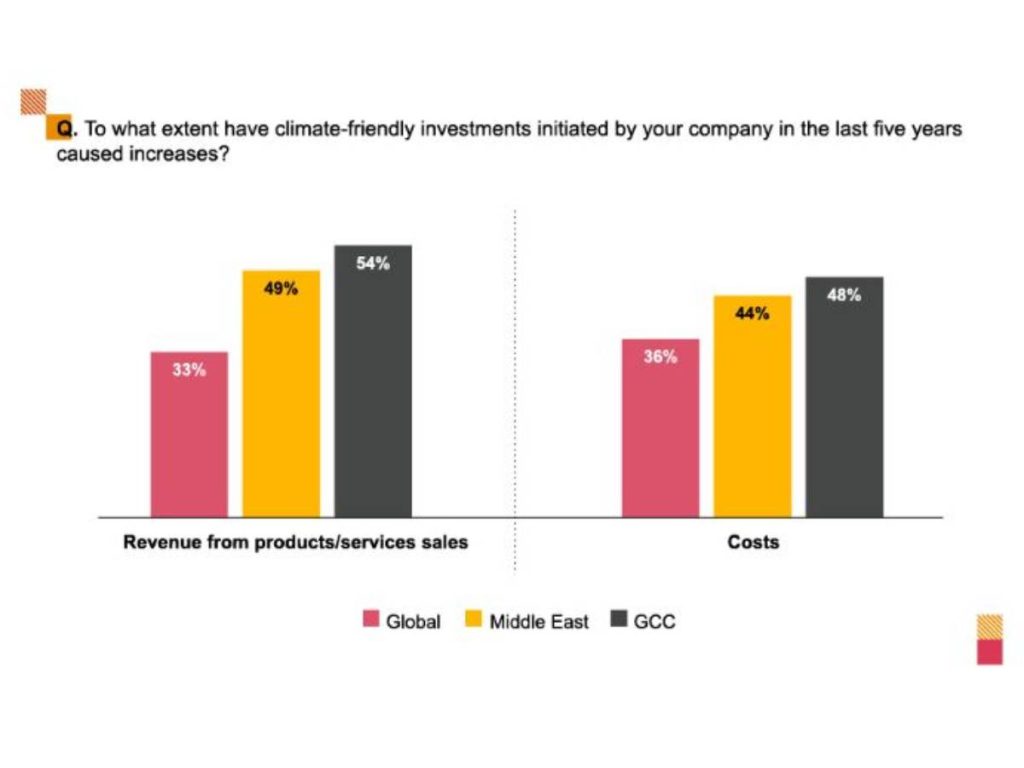
Environmental, Social, and Governance (ESG) factors are becoming integral to business strategies in the Middle East. PwC’s survey notes that CEOs are aligning their objectives with national sustainability goals, particularly in sectors like renewable energy, waste management, and water conservation.
For example, Saudi Arabia’s NEOM and the UAE’s Green Economy Initiative are providing platforms for businesses to embed sustainability into their operations. CEOs are exploring opportunities to innovate in green finance, renewable energy solutions, and sustainable supply chains, ensuring long-term competitiveness in a resource-constrained world.
While confidence in regional growth remains strong, the survey emphasises the critical need for transformation, technological adoption, and resilience in navigating risks. As CEOs prioritise reinvention and innovation, the Middle East is well-positioned to emerge as a hub of global influence.