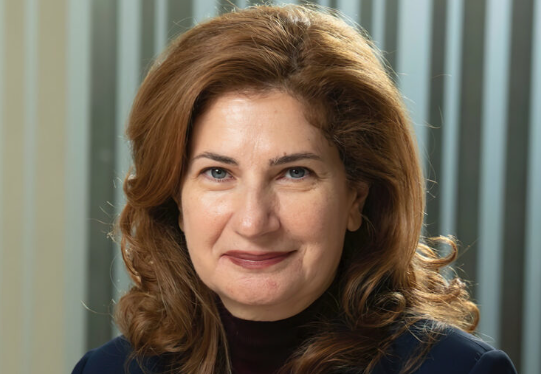
After a diagnosis of multiple sclerosis disrupted her routine in 2017, Marija Grujic found herself stuck between effective therapy in clinics and a lack of support at home. What started as a sketched solution turned into Neuroblast, a home rehabilitation platform co-founded with her husband. Now, from a seed-stage company with working prototypes to pilot runs in clinical settings, Grujic is building toward market expansion from Abu Dhabi. In this interview, she shares why she turned to startups, how the Middle East helped shape her next move, and what it takes to bring medical hardware to market.
What drove you to join the startup world?
My journey into startups began out of necessity and hope. After being diagnosed with MS in 2017, I spent weeks in clinic-based therapy, making real progress under a therapist’s guidance, only to watch my gains vanish at home. I knew there had to be a better way. One evening, I sketched out exactly how my at-home exercises should work: the timing, the feedback, the small celebrations when you hit a milestone, just like a good physiotherapist would do.
Marko, my husband, a hardware and IoT engineer, took that roadmap and built our first motion controller prototype right in our living room.
Suddenly, rehab felt engaging again, and I saw tangible improvement. That “aha” moment—realising that we could recreate clinic-quality support at home—drove me straight into the startup world.
Joining the startup world wasn’t planned—it was the only path to turn a personal solution into a lifeline for thousands of people struggling with MS, cerebral palsy, stroke or post-surgical rehab. That belief—that everyone deserves continuous, motivating therapy at home—has been our north star ever since.
Why did you choose the Middle East as the place to start/expand the business?
We chose the Middle East because it’s rapidly adopting telehealth solutions and has a strong commitment to innovation—MBRIF’s support and events, such as Arab Health, gave us direct access to regional hospitals and investors. Plus, the UAE’s strategic location makes it an ideal hub for reaching both European and Asian markets.”
How would you describe the region’s startup scene in three words?
Dynamic, supportive, and collaborative.
Is there something that has surprised you in your journey?
Honestly, I was surprised by how quickly people embraced our idea. From therapists at Neuromedic who jumped at the chance to pilot our devices to investors in Dubai who immediately saw the value in home-based rehab, every step felt more positive than I’d dared to expect. Even more, I never imagined how motivating it would be to hear from fellow MS patients who said Neuroblast gave them genuine hope. That real-world impact—so many strangers telling me it changed their daily routine—has been the biggest surprise and the most rewarding part of this journey.
What are (in your view) the keys to approaching investors successfully?
Speak to real pain points backed by data and genuine user stories. Investors want to see clear traction—pilot results, early revenues, or credible partnerships—and a roadmap that shows how you’ll scale. Tailor your pitch: understand their focus areas and speak their language, whether it’s health outcomes, tech innovation or return on investment. Finally, be authentic—share your stake and vision so they believe in you as much as they do in the product.
What was the most challenging part of raising funding, and how did you overcome it?
The toughest part was proving that our pilots would translate into scalable sales—early investors wanted hard numbers, not just promising prototypes. We addressed this by conducting focused pilots with selected individuals and designated clinics, gathering quantitative data on user adherence and functional gains, and using that information to refine our financial model and customer acquisition plan.
In addition, government-backed initiatives like MBRIF, of which we are a part of their accelerator program, bridge the gap between proof of concept and market entry. They provide support, mentorship on regulatory and business matters, and introductions to local healthcare networks and investors, helping startups tackle funding, scale operations, and win early customers in new markets.
What is the best piece of financial advice you have received?
“The best financial advice I’ve received is always to plan your runway for at least 18 months—not just 6—so you have the breathing room to hit key milestones without scrambling. It forces you to be disciplined with your burn rate, prioritise high-impact activities, and build contingencies for unexpected delays.
What has been your biggest success and your biggest failure?
My biggest success so far has been turning that first living-room prototype into a validated product used in real clinics—and getting featured by Microsoft Stories. Seeing Motus and Aequa improve patients’ mobility during our pilots proved the concept and opened doors to investors and partners worldwide.
My biggest failure was underestimating the complexity of sensor calibration and firmware integration. In our earliest builds, data drift and lag made the assist feel jerky, and we nearly shelved the project.
My biggest failure was underestimating the complexity and time required for CE-MDR certification, which led to unexpected delays in bringing our product to market.
What is the best quality a leader can have?
The best quality is empathy combined with relentless perseverance—truly understanding your team and users, while never tiring of pushing your product and believing in its impact.
Where would you like to be in five years’ time?
In five years, I want Neuroblast to be the default home rehabilitation platform worldwide—our controllers and exoskeletons help hundreds of thousands of people regain mobility every day. I see us being licensed in major markets (EU, USA, UAE), with the AI-driven exosuit in early clinical use and a thriving developer marketplace featuring specialist therapy modules. On a personal level, I’d like to lead a diverse team of 30+ experts, still deeply connected to our users’ needs, and drive the next wave of innovations in home rehabilitation.