
Startup funding across the Middle East and North Africa (MENA) rose to $2.1 billion in the first half of 2025, up 134% from a year earlier, according to industry data. The increase was largely driven by a rise in debt financing, which accounted for $930 million of the total.
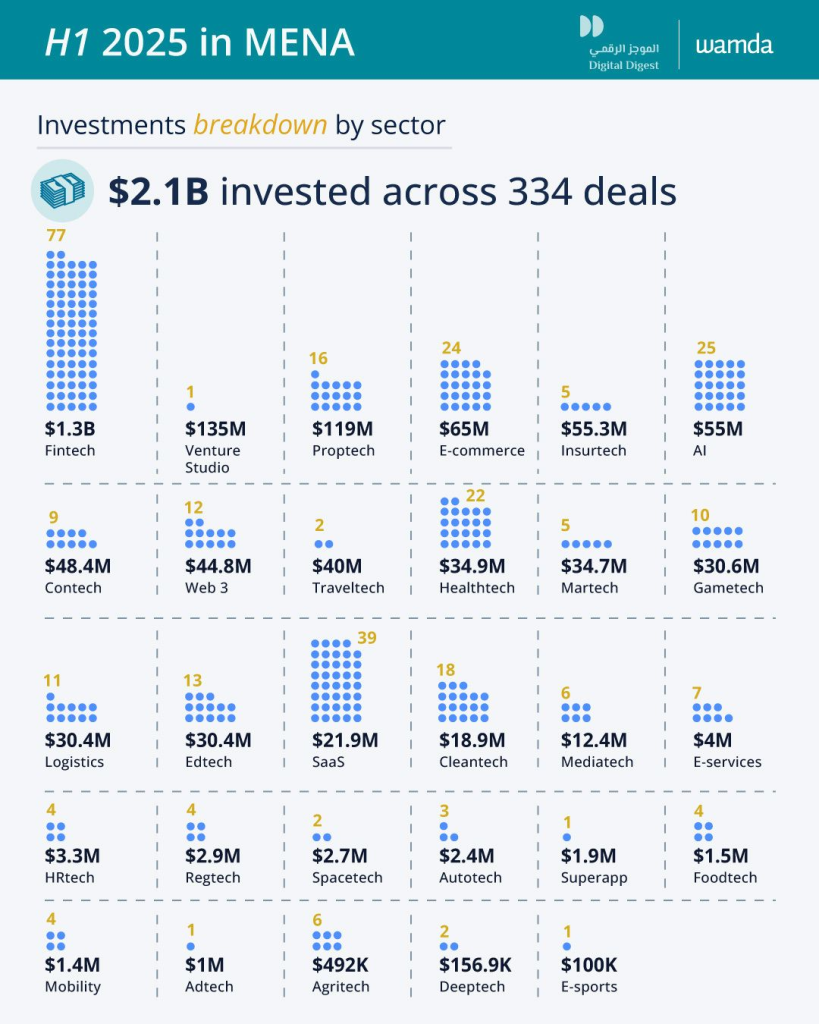
A total of 334 transactions were recorded across the region, with fintech attracting the most capital. In the second quarter, fintech startups secured $170 million across 38 deals, followed by proptech ($77 million) and traveltech ($40 million).
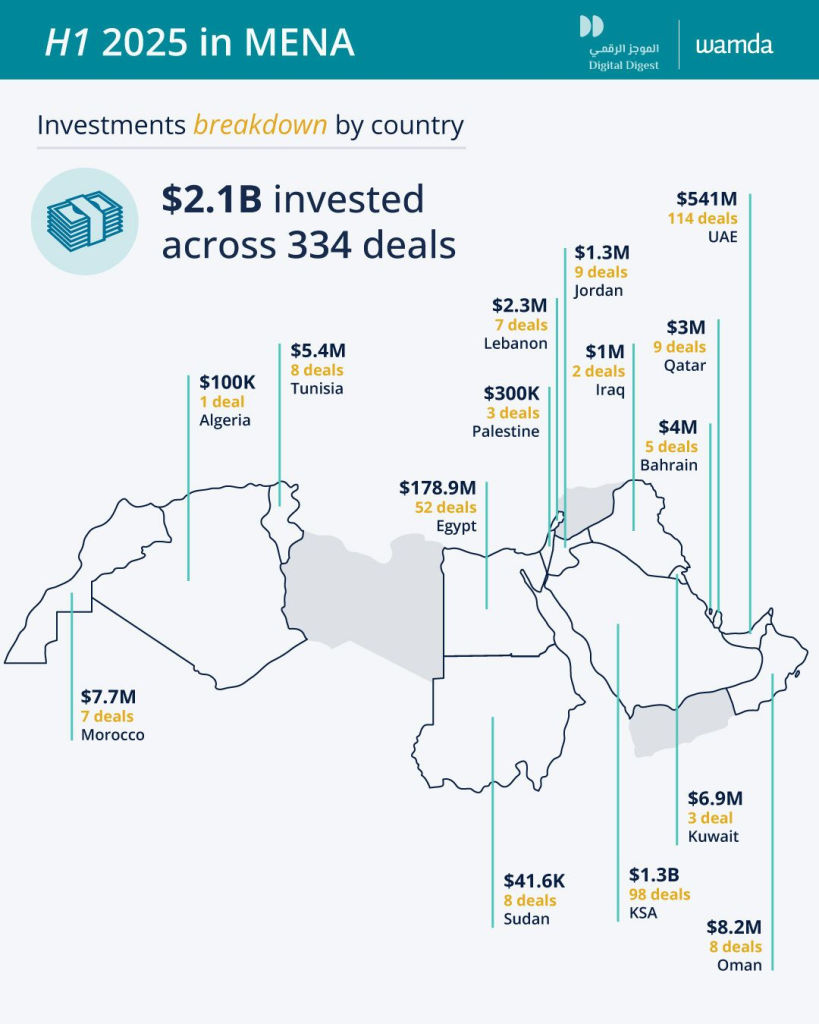
Saudi Arabia accounted for 64% of total H1 funding, with $1.35 billion raised, including $969 million in fintech alone. The UAE followed with $541 million from 114 startups, while Egypt saw $179 million deployed across 52 companies.
Debt represented 44% of overall capital deployed, with several large transactions reshaping the regional investment landscape. JPMorgan backed a debt round for Lendo, marking one of the few instances of foreign institutional capital entering the Saudi fintech sector.
In Saudi Arabia, government-linked funds and policy measures helped accelerate funding activity. Local VCs, including STV, Wa’ed Ventures, and Raed Ventures, led most of the domestic capital deployment.
In the UAE, fintech startups raised $265.8 million, while insurtech, Web3, and AI each saw strong interest. The UAE also reported a lower share of debt deals (19%) compared to Saudi Arabia.
Female-led startups across the region secured $84.5 million from 27 transactions, with mixed-gender teams raising $150 million. Male-founded ventures continued to dominate, capturing close to 89% of total funding.
By stage, early-stage startups led in volume with 67 deals in Q2. Mid-stage companies raised the largest share of capital, with $161 million going to Series A rounds. Three mega-deals helped lift totals in fintech and venture studios.
B2B companies attracted 70% of H1 capital, raising $1.5 billion across 197 deals. Consumer-facing ventures made up the remainder.
Despite volatility in currency markets, commodity prices, and ongoing geopolitical risk, VC activity remained strong, particularly in Saudi Arabia. The region’s funding rebound follows renewed interest from international investors, including those tied to a US delegation visit earlier in the year.