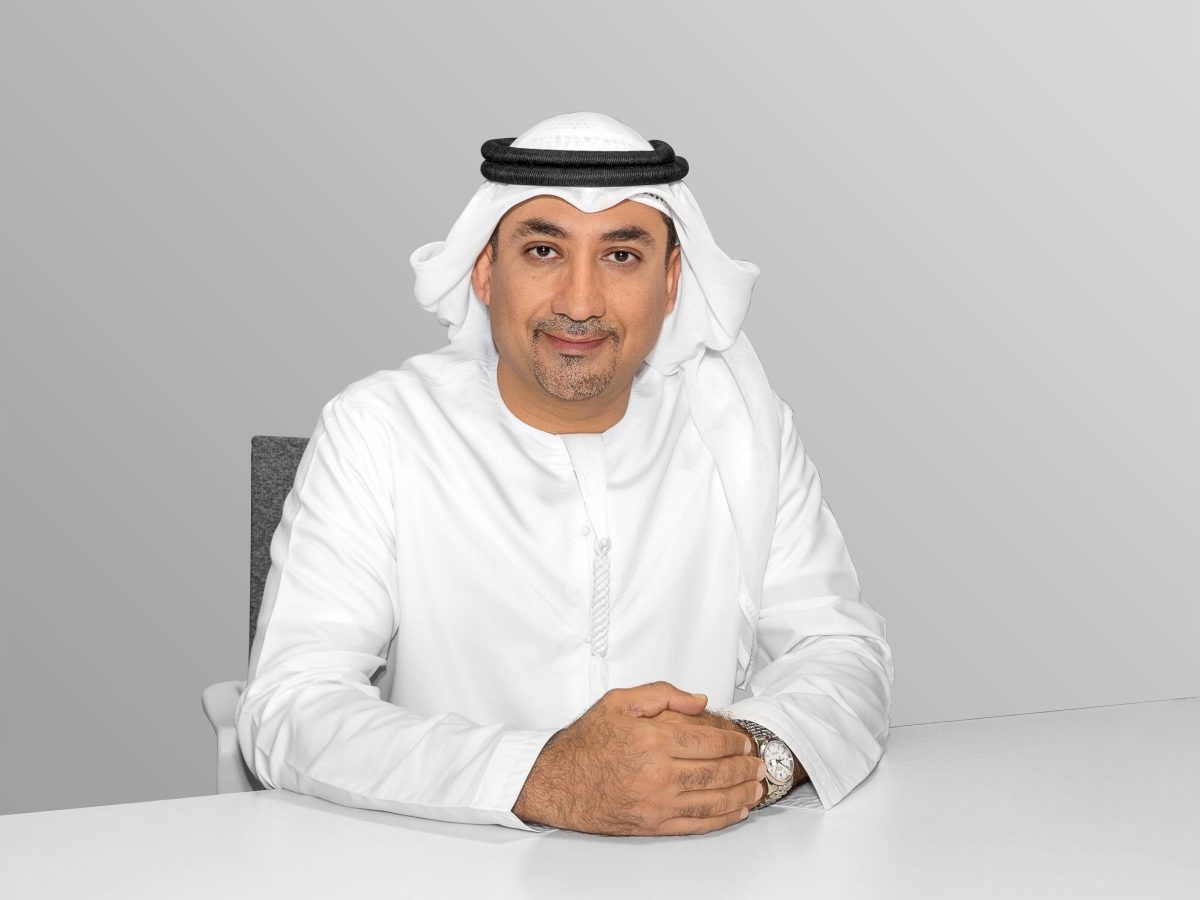
When the UAE Ministry of Finance launched the Mohammed bin Rashid Innovation Fund (MBRIF) in 2016, it set out to create a mechanism that could close two persistent gaps in the startup ecosystem: access to affordable capital and access to deep, targeted support. Today, under the leadership of Shaker Zainal, MBRIF has evolved into a central pillar of the country’s innovation economy, with its mandate channelled through two core programmes.
“The Guarantee Scheme provides high-potential businesses with access to capital via government-backed loan guarantees, while the Innovation Accelerator offers comprehensive non-financial support through tailored mentorship, strategic guidance and connectivity across public and private sectors,” Zainal explained. This dual approach ensures ventures can secure financial resources without equity dilution while receiving structured guidance to refine business models, strengthen governance and expand into new markets.
The selection process is anchored in national priorities, from healthcare and clean energy to transport, education, space and advanced technologies. At the same time, the fund keeps space for emerging fields that could shape the global economy. “When evaluating applications, we assess the uniqueness and transformative potential of their innovation, market readiness, scalability and the strength of the founding team. What’s critical is the ability of the business to generate meaningful economic and social value,” Zainal said.
Ultimately, the more we strengthen this collaboration between the public and private sectors, the better equipped we are to foster a resilient, future-focused innovation economy
Shaker Zainal, Head of MBRIF
Navigating a competitive environment
The UAE’s startup ecosystem is among the most developed in the Middle East, ranked 21st globally and first in MENA in 2025 with a 32% annual growth rate, according to StartupBlink. Government reforms have reduced friction in business licensing, foreign ownership rules and long-term residency options such as the Golden Visa. Yet the operating environment remains challenging for early-stage firms.
“SMEs often compete against larger corporations and established businesses,” Zainal noted. “Challenges such as managing cash flow, affording the cost of living and doing business, and competing for talent are common to startups everywhere.” New layers of legislation, such as the introduction of corporate tax, add further complexity.
Despite these pressures, the market is capital-rich. UAE-based startups raised $541 million in the first half of 2025 alone, an 18% increase from the same period a year earlier. Regional funds, sovereign wealth vehicles and international VCs have consistently channelled capital into fintech, healthtech and proptech, reinforcing the country’s role as a launchpad.
Zainal argues that MBRIF’s role is to help founders capture those opportunities systematically. “A key priority at the outset is to identify where the startup is in their journey, and what is needed to move to the next stage and onwards, thereby enabling them to overcome challenges and make the most of opportunities to grow,” he said.
A framework designed for real gaps
MBRIF’s Accelerator programme runs as a six-month, equity-free journey tailored to each member. The process begins with a diagnostic phase, mapping a startup’s maturity, objectives and pain points, followed by a customised package of mentorship, workshops, coaching and investor introductions. Zainal describes it as “a curated journey tailored to each startup’s stage of development.”
The Guarantee Scheme operates on a complementary track. By providing government-backed guarantees, it enables innovative companies to secure debt financing from partner banks without diluting equity. “This has been particularly instrumental for growth-stage companies that need financial flexibility to scale effectively,” Zainal said. To date, the scheme has facilitated more than Dh43 million ($11.7 million) in guarantees, unlocking substantially larger credit from banks.
Since its inception, the Accelerator has supported over 190 startups from 32 countries, with members raising more than Dh3 billion ($817 million) in follow-on capital. Collectively, these companies have created over 1,000 jobs in the UAE, demonstrating the wider impact on the economy and society.
High-potential innovators over traditional firms
MBRIF’s mandate is clear: support high-potential, innovation-driven businesses capable of delivering long-term value. Yet it also recognises the role of established corporates and government agencies in the ecosystem.
Through our programs, we often connect our members with more established businesses and government entities that are seeking innovative solutions to specific challenges
Shaker Zainal, Head of MBRIF
This connector role helps startups secure enterprise contracts and pilots while allowing larger firms to access new technologies. “It ensures that the innovation ecosystem evolves holistically, with emerging and established entities working in tandem to advance national priorities,” he said.
What makes the Accelerator different
The Gulf is crowded with incubators and accelerators, many tied to universities, corporate sponsors or free zones. MBRIF positions itself differently. It is government-backed, equity-free and offers tailored, sector-specific guidance. “We begin with a comprehensive assessment to understand their development stage, objectives, and growth trajectory. From there, we tailor a support journey that combines mentorship, business coaching, networking opportunities and cohort-based learning,” Zainal explained.
Founders gain access to seasoned mentors, subject-matter experts, regulators, and investors. They also benefit from in-kind services such as legal advisory, marketing support and market access facilitation. Zainal emphasised, “Our goal is not just to prepare them for scale, but to empower them to become global players in their fields.”
Mentorship, networks and measurable results
The design of the Accelerator leans heavily on networks. Startups are introduced to investors, corporates, regulators and peers through curated events and international exposure. Zainal said, “Members benefit from curated networking opportunities that connect them with investors, corporates, regulators, and fellow entrepreneurs, both within the UAE and internationally. This exposure is instrumental in helping them unlock new markets, form strategic partnerships, and secure funding.”
The metrics bear out the approach. Since 2016, MBRIF members have raised over Dh3 billion in additional capital. Ventures like BigDot, an AI-powered customer engagement platform, have scaled into African markets, while Space Point, a UAE-born edtech startup, has expanded into the GCC and Egypt. These outcomes reflect what Zainal calls the “global relevance and exportability of the innovations we help nurture.”
The UAE’s shifting innovation landscape
The UAE’s innovation ecosystem is in a phase of consolidation and internationalisation. Sovereign wealth funds and government-backed entities are increasingly active in venture capital, while free zones and accelerators compete to attract global talent. According to Wamda, MENA startups secured $2.1 billion in funding in the first half of 2025, a 134% year-on-year increase, with the UAE and Saudi Arabia accounting for 85% of total capital and deal volume.
“Through our programs, we equip startups with tailored mentorship and strategic guidance but also open doors to financial opportunities and high-impact networks,” Zainal said. With cohorts spanning 32 countries, MBRIF has embedded itself as both a domestic pipeline and an international gateway.
What makes the UAE attractive to founders
Founders consistently cite policy stability, infrastructure and global connectivity as advantages. “The UAE offers one of the most conducive environments for innovation and entrepreneurship in the region, backed by a future-focused leadership and a strong commitment to building a diversified, knowledge-based economy,” Zainal said.
The ability to own 100% of companies in many sectors, coupled with residency pathways like the Golden Visa, adds further appeal. The UAE’s geographic position, within a four-hour flight to a third of the world’s population, makes it a natural base for regional and global expansion.
Goals for the next three to five years
Looking ahead, MBRIF is preparing to scale its own impact. “One of our primary goals is to continue attracting high-potential entrepreneurs from around the world, positioning the UAE as a preferred destination for innovation and scaling,” Zainal said. The fund is also focused on nurturing local talent and embedding innovation within youth culture.
Equally important will be deepening its role as a connector. “With the continued backing of the Ministry of Finance and our broader network of partners, we are confident in our ability to scale our impact, support visionary founders, and help shape a thriving innovation ecosystem for years to come,” Zainal said.
New initiatives and youth focus
Zainal highlighted a growing emphasis on youth empowerment. “We believe the next generation holds incredible potential to shape the future, and we’re committed to equipping them with the tools, mentorship, and access they need to bring their ideas to life.” Targeted engagement with students, early-stage founders and youth-led initiatives is likely to expand, complementing MBRIF’s work with scale-ups.
The fund is also exploring deeper collaboration with government entities. Initiatives like Pitch@GOV, run with the Mohammed Bin Rashid Centre for Government Innovation, allow startups to address public-sector challenges. Partnerships with the UAE Space Agency and the Mohammed Bin Rashid Space Centre connect ventures to the country’s ambitious space agenda.
Policy frameworks and regulatory agility
As a Ministry of Finance-backed fund, MBRIF acts as a bridge between regulators and innovators. “We believe in maintaining an open, continuous dialogue with policymakers and regulatory bodies,” Zainal said. He advocates regulatory innovation through “sandboxes, pilot programs and flexible frameworks that can accommodate entirely new business models.”
The UAE already leads the region in regulatory sandboxes, particularly in fintech, but the pace of technological disruption will require constant adaptation. Zainal sees regulation as a partner, not a hurdle. “Policy and regulation are powerful tools to unlock the full potential of innovation,” he said.

Measuring social impact
Social impact is embedded in MBRIF’s investment rationale. “Supporting innovations that improve lives, address social challenges, and advance inclusivity is a core part of our mission,” Zainal said.
Examples from the portfolio include Metanoa, an AI-driven platform that helps parents and healthcare providers track and support children with autism, ADHD and speech impairments; Key2Enable, which developed assistive keyboards for people of determination; and MDBX Health, a chronic care platform supporting elderly patients and reducing hospital readmissions. Each reflects the emphasis on inclusive growth and solutions designed for underserved communities.
Ensuring global competitiveness
Selection is rigorous and oversubscribed. “We carefully evaluate through the many applications in order to ensure we accept only the most innovative, most high-potential options,” Zainal said. Competitiveness, however, is cultivated throughout the journey. Mentorship, cross-border connections and in-market pilots are designed to give founders the confidence and capacity to expand internationally.
“The results speak for themselves,” Zainal stated, pointing to BigDot and Space Point as cases where UAE-born innovations have translated into exportable models. For MBRIF, success is measured not just in capital raised or jobs created but in how ventures compete globally.
With its tenth cohort launched in 2025, MBRIF has cemented itself as a platform for scaling ideas into businesses that matter. Its model, public guarantees paired with tailored acceleration, reflects a pragmatic understanding of what founders need most.
The ecosystem data suggests its timing is right: MENA venture funding is accelerating, regulatory frameworks are opening, and global investors are increasingly active in the Gulf. The UAE’s goal of positioning itself as a global innovation hub by 2031 will rely on both policy continuity and institutions like MBRIF that bridge vision and execution.