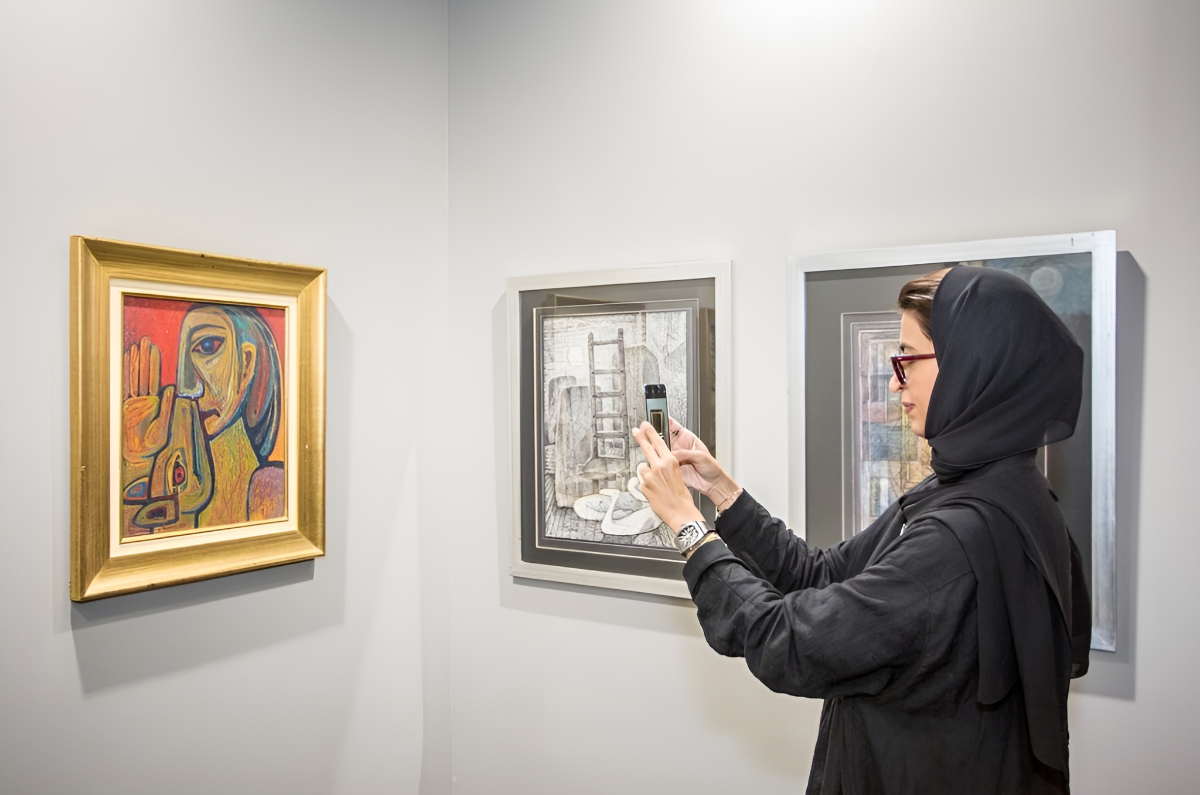
The lighting is calibrated. The conversation is careful. The champagne is doing its job. But watch closely enough and the room starts to confess. Someone lingers a beat too long in front of a piece they cannot explain. Someone else moves fast, chin up, wallet open – they already know. A couple debates in low voices whether the large canvas will work above the dining table, which is really a debate about something else entirely.
Art Dubai is full of these small, legible moments. And for anyone who works with wealth, they are worth paying attention to, because what people do with money in a gallery is often more honest than what they do with it in a boardroom.
Most investment decisions arrive wrapped in the usual language: allocation, returns, downside protection, the whole reassuring grammar. Art bypasses all of that at the point of purchase. It asks a different question, not what will this deliver, but what does this mean to me?
For a long time, art sat in the financial conversation as an eccentric cousin. Admired, sometimes insured, occasionally inherited, rarely treated as a serious clue to how a client thinks. What people buy in rooms like these now tells you a great deal about their appetite for risk, their sense of identity, and their view of time. A conventional portfolio can tell you how cautious someone is.
A collection can tell you what they believe in.
Portfolios are Becoming Autobiographical
Wealth has always had an aesthetic dimension, but it used to stay politely in the background. The serious work happened in the portfolio. The personal flourishes came later. That order has reversed.
Many affluent buyers in the UAE do not approach art as a decorative afterthought. They approach it as a way of placing themselves in a larger story, one that may involve heritage, migration, regional pride, or simple conviction. The buyer lives in Dubai, does business in London, summers in Mumbai, and feels emotionally drawn to artists whose work speaks to the Middle East or South Asia.
That creates a collector who is globally mobile but not culturally generic.
Plenty of buyers still care about reputation and resale. Nobody becomes indifferent to value merely because the setting is more beautiful. Yet the decision is also being made against a sense of self. Portfolios are becoming more autobiographical. They are being built to also say something.
Risk Becomes Visible with Art
Traditional finance likes to imagine that risk is best understood through numbers. Markets, however, are moved by confidence, narrative, and belief. Art makes that easier to see because the transaction is so visibly an act of conviction.
When someone backs an emerging artist, that is not so different from backing an early-stage founder. There is incomplete information, a strong narrative component, and a belief that the market will eventually catch up to the intuition. When someone buys a widely established name, the instinct is different – closer to a defensive allocation. It says preservation matters. Recognition matters.
Art fairs are more informative than they look. What moves early, who steps forward decisively, which geographies are drawing fresh attention – all of this tells you something about money, not only about art.
Illiquidity is Not the Villain
People are increasingly willing to lock capital into things that carry emotional or cultural weight.
Art sits in that category. So do certain collectibles and private holdings that families intend to hold and eventually transfer, rather than trade. The question is no longer whether every asset must be liquid. The question is whether liquidity has been intelligently arranged elsewhere.
Every asset in a portfolio does not have to do the same job. Some are there to grow. Some are there to defend. Some are there to outlast a lifetime. Art rarely belongs in the emergency bucket. Good structuring protects it from becoming a source of stress. Poor structuring turns a prized holding into a liquidity problem.
When the Gallery Lights Go Off
Most of the interesting questions around art and wealth have nothing to do with the purchase itself. They arrive later, quietly, and usually without warning.
A painting bought at a fair in March may, by December, sit at the centre of a custody conversation nobody anticipated. Insurance value and estate value may tell completely different stories about the same object. A family that agrees on everything else may discover, around a single inherited work, that they do not agree at all.
None of this is glamorous, which is exactly why it tends to be ignored until it becomes urgent. The financial portfolio gets structured meticulously. The deeply personal asset worth just as much often does not.
Art Dubai, in that sense, is not just a fair. It is a very well-lit window into where wealth is heading, less concerned with accumulation for its own sake, more interested in what is worth keeping and why.
What matters in rooms like these is not only who buys, but who understands what ownership will mean a year later, or a generation later.
Stay Up to Date with the Latest Updates at Finance ME
EDGE’s Rodrigo Torres on Risk, Sovereignty and Defence Finance in a Multipolar World