

As Qatar accelerates its fintech ambitions, the focus is shifting towards the infrastructure needed to scale innovation.
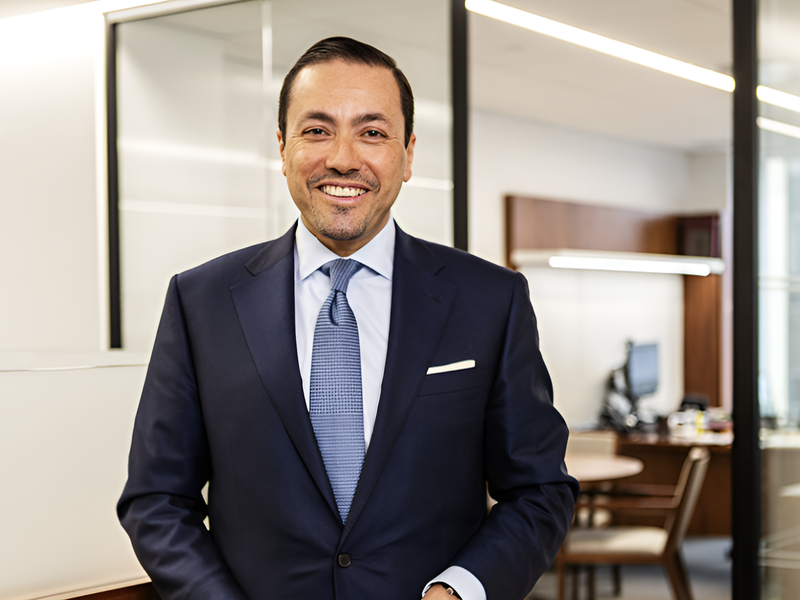
I sat down with BKN301 CEO and Founder Stiven Muccioli to discuss why Qatar’s fintech sector will be built on digital infrastructure driven by a new generation of fintech is being built on cloud-native, modular banking infrastructure, with fewer legacy dependencies than in Europe.
You have built and scaled technology and financial services businesses across multiple markets. What convinced you that Qatar was ready for a new approach to fintech and digital banking infrastructure?
Qatar’s clear commitment to modernising its financial sector through its National Vision 2030 is a major draw to this market. The Central Bank’s fintech strategy links financial technology with attracting foreign investment, developing local skills, improving efficiency in financial services, and building a more knowledge-based economy.
That shows that fintech is being treated as part of the country’s wider economic development, rather than as a standalone technology trend.
That ecosystem is quickly building momentum; in the first half of 2026 alone, the Qatar Financial Centre registered 1,135 new firms, including 65 in fintech.
The opportunity now is to make sure that the financial data-infrastructure develops at the same pace as the ambition. If every innovation requires another layer of technology to be bolted on, that complexity eventually becomes a brake on progress. The underlying systems determine whether that progress can be sustained and Qatar is addressing that much earlier than many other mature markets did.
BKN301 operates at the intersection of the Mediterranean and Gulf. What have you learned from building financial technology across these two regions that is informing your approach to Qatar and the wider GCC?
What I’ve learned from building financial technology across these two regions is how modern, modular banking infrastructure enables financial institutions to innovate at speed and scale without overhauling existing systems.
Many European neobanks are still reliant on legacy infrastructure owned and operated by traditional banks. Rigid, complex infrastructure contracts can make every new product launch a high-cost, high-stakes endeavour. For example, a challenger bank looking to roll out a new savings product can face delays because its core infrastructure provider cannot provide the necessary integrations.
Across MENA, a new generation of fintech is being built on cloud-native, modular banking infrastructure, with fewer legacy dependencies, helping financial institutions bring services to market faster and adapt more easily to changing demands.
This is an example to banks and fintechs weighed down by legacy systems that modernisation does not have to mean starting from scratch, with more flexible platforms able to plug into existing infrastructure and introduce services without requiring institutions to tear everything down.
What does Al Faisal Holding bring to BKN301 that is difficult for an international fintech to build on its own and how important is local institutional access when scaling financial infrastructure in the GCC?
Al Faisal Holding brings established relationships and a depth of local market knowledge that might take and international fintech years to build independently. It’s experience across sectors including hospitality and real estate also provides valuable insight into how established businesses in Qatar operate and what they need from financial infrastructure
Technology must fit into the realities of the Qatar market, existing systems, and the priorities of financial institutions.
We combine that local expertise with BKN301’s financial infrastructure and digital banking capabilities, shortening the path from technology to services that institutions can put into use.
You have described the future of financial infrastructure as AI-powered, cross border and scalable. What does that look like in practice, and where do you see the biggest opportunities for AI to reshape financial services?
A bank should be able to connect its existing systems and use the resulting information to make better operational decisions. And as it expands into another market, that infrastructure should accommodate local requirements while retaining the same underlying capabilities.
I see some of the biggest opportunities for AI in compliance and risk. During onboarding, for example, AI can help review customer information and flag inconsistencies, while in transaction monitoring, it can identify unusual activity, giving teams context when deciding which cases need attention. That reduces the time spent gathering information from disconnected systems.
To do that effectively, getting the data right comes first. Banks often already hold the information they need, but it sits in different systems and formats.
Platforms that connect existing banking systems can bring financial data and workflows into a governed environment where AI can support operations under the institution’s control. I would judge its value by how well teams are able manage the growing data and how useful is it for them to while making future decisions.
The GCC has become increasingly competitive in fintech, with the UAE and Saudi Arabia attracting significant capital, talent and innovation. Where do you see Qatar carving out its own position in the regional fintech landscape?
I see Qatar carving out its own position alongside the UAE and Saudi Arabia by building expertise in specific areas where the regulatory foundations are already being put in place. Tokenisation is a good example of this.
The QFC’s Digital Assets Framework establishes a legal basis for tokenisation and recognises property rights in tokens and their underlying assets within the QFC. That gives businesses a foundation for developing services around tokenised assets.
Then, the opportunity lies in making those assets usable within established financial operations. Institutions need to understand how ownership is recorded and transferred, and how those processes connect with their existing systems. Businesses that can address these practical requirements could help turn the framework into commercial activity.
For Qatar, developing that expertise locally could create opportunities to serve institutions across the GCC and give Qatar a greater role in the region’s development of tokenised finance.
What are the biggest barriers to creating genuinely cross-border financial services across the GCC and how can technology help overcome them?
The biggest barriers are fragmented banking systems and the difficulty of maintaining consistent control across different regulatory environments.
As institutions expand across the GCC, they need to connect with different banking providers and meet the requirements of each market. When payments, compliance and financial data are managed through disconnected systems, that becomes a lot harder to coordinate. Teams can end up working with separate views of the same activity, for example, making it more difficult to monitor operations and respond when something needs attention.
Technology can help by connecting those systems and giving institutions a consistent view of their financial data, while building compliance controls into day-to-day operations.
For me, the most important consideration is whether an institution can enter another market without creating another layer of complexity. The infrastructure needs to accommodate different providers and regulatory requirements while allowing the business to manage its operations coherently as it grows.
Looking ahead three to five years, what would success for BKN301 and AFH FINTEQ look like, and what role do you believe Qatar can play in the next generation of financial infrastructure across the GCC?
I would assess success through the results our clients achieve.
In other words, institutions using the infrastructure in their everyday operations, bringing new services to market faster, reducing integrations costs and handling growing transaction activity without the same increase in operational workload.
For BKN301, it would demonstrate that our approach to financial data infrastructure supports that expansion while giving institutions control over how they operate.
Qatar will play an important role in that, as a market where this approach is developed and proven with institutional clients, then extended across the region. Building that capability locally would also create a stronger base of expertise for future financial services businesses.
Over the next three to five years, I would like our work to show how a partnership rooted in Qatar can support institutions well beyond its market.
Stay Up to Date with the Latest Updates at Finance ME
EDGE’s Rodrigo Torres on Risk, Sovereignty and Defence Finance in a Multipolar World
ADNOC Distribution’s Ali Siddiqi: “Growth, Growth and Growth”