
The forex introducing broker has traditionally occupied a relatively straightforward position in the trading ecosystem: attract clients, introduce them to a brokerage and earn from the activity that follows.
Yet as competition for retail traders intensifies, that model is becoming more demanding. Acquisition is only one part of the equation. Reputation, broker infrastructure, client retention and the economics of distribution increasingly determine whether an IB can build a durable business.
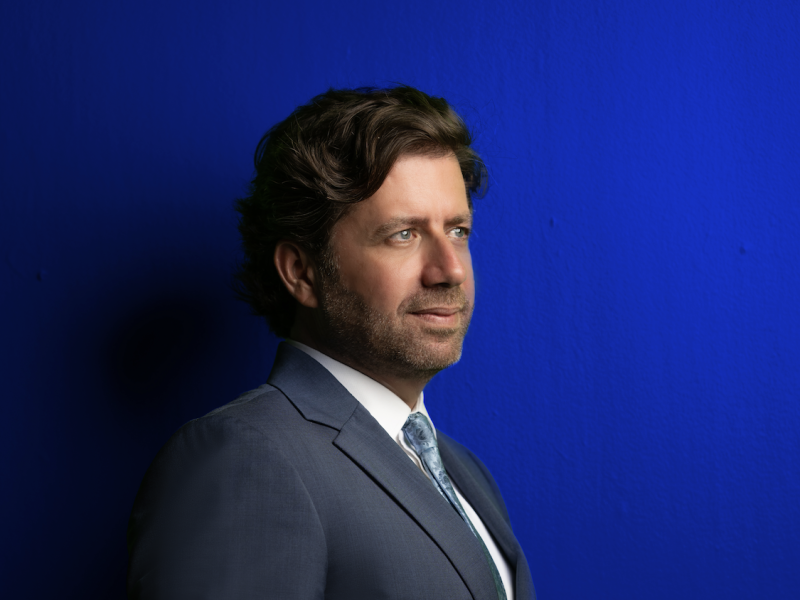
Niklas Freihofer, whose career has spanned financial services, entrepreneurship and brokerage ownership, spoke to Finance Middle East about how IBs can build more durable businesses in the forex market after making the transition from forex to entrepreneurship.
Global FOREX Market
The market behind that distribution model is substantial.
Global foreign exchange turnover reached $9.6T per day in April 2025, up from $7.5T three years earlier according to the Bank for International Settlements’ latest Triennial Central Bank Survey.
While the figure covers the global FX market rather than retail IB activity specifically, it illustrates the scale of the underlying market.
Five Core Principles
The strongest IBs often converge around five principles.
The first is that credibility comes before conversion. An IB can generate attention through advertising, social media or an existing network, but attracting a trader and retaining that trader are different challenges.
Freihofer said: “The strongest partners build reputations around consistency, knowledge and the quality of the relationship they maintain with their audience.”
In forex, where potential clients are frequently exposed to aggressive marketing and exaggerated claims, an IB who wants to build for years rather than months has to become someone clients associate with clarity and reliability rather than simply another source of promotions.
Beyond Commission
The second lesson is to choose the brokerage relationship carefully.
Freihofer told Finance Middle East that an IB should look beyond commission structures and consider the experience their clients will have after an account is opened, because poor execution, weak support or difficult withdrawals ultimately affect the reputation of the person who made the introduction.
His experience building a rapidly growing brokerage has reinforced how closely those reputations are connected.
“An IB may not control the platform, operations or customer service, but clients often associate the entire experience with the person who introduced them, making the choice of brokerage a strategic decision rather than a simple commercial arrangement,” the entrepreneur said.
Distribution is a Business
The third principle is understanding that distribution is a business. Freihofer has spent much of his career close to sales and commercial growth, and he believes successful IBs should approach client acquisition with the same seriousness that founders apply to building companies.
That means understanding conversion, retention, communication, acquisition costs and the quality of the audience being developed. The strongest IBs do not rely entirely on individual relationships or temporary bursts of attention because they build repeatable systems around how prospects are educated, converted and supported.
Long Term Relationships Demand Trust
The fourth lesson is to think beyond the first deposit. Freihofer believes the industry can become too focused on acquisition metrics while overlooking the quality of the relationship that follows, even though long term economics are often determined by whether clients remain active and continue seeing value in the service.
An IB who constantly has to replace dissatisfied clients may still generate volume, but the underlying business becomes increasingly difficult to sustain.
Building a community where the relationship survives beyond the initial account opening and where clients continue engaging because they trust the information and experience around them is stronger than leading with the transaction.
Building Beyond the Brokerage
The fifth principle is to build an identity that can survive beyond one brokerage.
An IB who becomes known only for one platform or one offer can unintentionally limit their future value. A stronger position is to become known for knowledge, relationships, professionalism and the ability to understand the broader financial industry, allowing credibility to remain valuable even if partnerships or market conditions change.
That philosophy reflects IBs progression.
Freihofer’s experience grew as client introductions became a foundation for understanding distribution, financial products, client behaviour and ultimately how financial companies themselves are built.
Success in Forex
Today, perspectives of successful FX IBs come from having moved from the commercial edge of the industry into company ownership and large scale operations.
Building multiple businesses, including a brokerage experiencing significant global growth, gives a nuanced view of forex that extends beyond the individual trader or IB relationship into infrastructure, leadership, product design and international expansion.
For IBs, the most successful careers make a similar intellectual transition. They stop seeing themselves merely as people who introduce accounts and begin thinking like entrepreneurs responsible for a reputation, a customer base and a business that should become more valuable over time.
That distinction may ultimately determine who lasts in an industry where opportunity can appear quickly but credibility takes considerably longer to build.
The most valuable IB relationships are not simply built around volume, but around trust, commercial discipline and the ability to create something that continues growing long after the first introduction is made.
Stay Up to Date with the Latest Updates at Finance ME
EDGE’s Rodrigo Torres on Risk, Sovereignty and Defence Finance in a Multipolar World
ADNOC Distribution’s Ali Siddiqi: “Growth, Growth and Growth”