The UAE’s transition from a regional market into a global treasury hub has fundamentally rewritten the rules of real estate. Beyond the headline sales figures, the industry is witnessing a change of guard. The market has left behind the era of the speculative builder, making way for analytical strategists who understand that capturing sustained foreign direct investment requires engineering a project’s financial architecture just as rigorously as its physical structure.
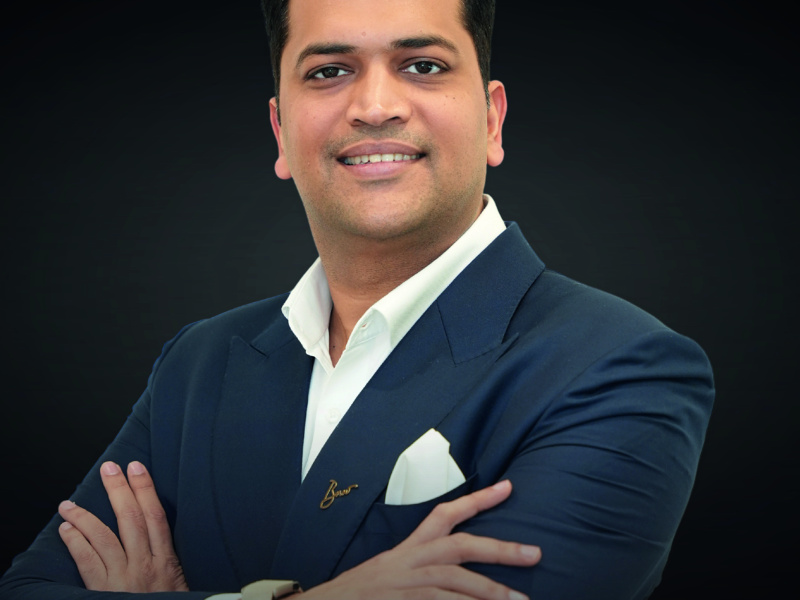
At the forefront of this shift is Dr. (CA) Ankur Aggarwal, Chairman and Founder of BNW Developments.
A Chartered Accountant by trade, Dr. Aggarwal looks at property development through a distinctly analytical lens. For him, a high-rise is not simply concrete and glass; it is a synchronised financial model designed to de-risk cross-border capital.
Dismantling the Friction of Distance
Among the region’s most active capital arteries is the India–UAE investment corridor. For decades, cross-border real estate acquisitions were weighed down by the practical friction of opaque construction timelines, variable title transfers, and the logistical headache of remote asset management.
When international high-net-worth individuals and family offices deploy capital thousands of kilometres from home, macroeconomic optimism is not enough. What they require is operational governance.
“Cross-border buyers are not taking speculative bets on glossy brochures anymore,” Dr. Aggarwal explains. “They are sophisticated allocators. Their first priority is capital preservation. They want to know that their funds are legally ring-fenced, that construction milestones are verified by independent authorities, and that delivery timelines are bound by transparent statutory oversight.”
Dr. Aggarwal points to the UAE’s mature regulatory architecture as the foundation of this investor confidence. Frameworks governing project escrow accounts have transformed off-plan development across the country. Because developer cash flows are tied directly to audited on-site construction milestones, capital cannot be over-leveraged.
For international allocators, this institutional discipline turns an overseas property purchase from an act of faith into a structured investment.
Engineering Trust from the Balance Sheet
Under Dr. Aggarwal’s leadership, BNW Developments approaches master planning with the rigour of an institutional asset manager. The company has taken high-conviction, concentrated positions in rapidly expanding corridors, most notably across Ras Al Khaimah’s Al Marjan Island and the emerging commercial node of RAK Central.
Rather than relying on marketing velocity, Dr. Aggarwal insists that investor security must be hardwired into project mechanics. That strategy relies on integrating development tightly with sovereign infrastructure goals, guaranteeing complete audit transparency at every construction phase, and de-risking post-handover operations through tier-one hospitality partnerships like Radisson Blu and Tonino Lamborghini.
“If you want overseas capital to feel comfortable, you have to solve the problem of distance after handover day,” Dr. Aggarwal says.
“When an investor knows their asset is maintained under rigid international hospitality standards, with turnkey management and global leasing networks in place, the uncertainty disappears. You are offering them a standardised, liquid asset class rather than an unmanaged liability.”
Capturing the Emerging Frontier
BNW’s broader strategic bet lies in yield arbitrage. While core metropolitan markets offer capital preservation and liquidity, emerging growth zones provide a powerful dual engine of elevated rental yields and rapid capital appreciation.
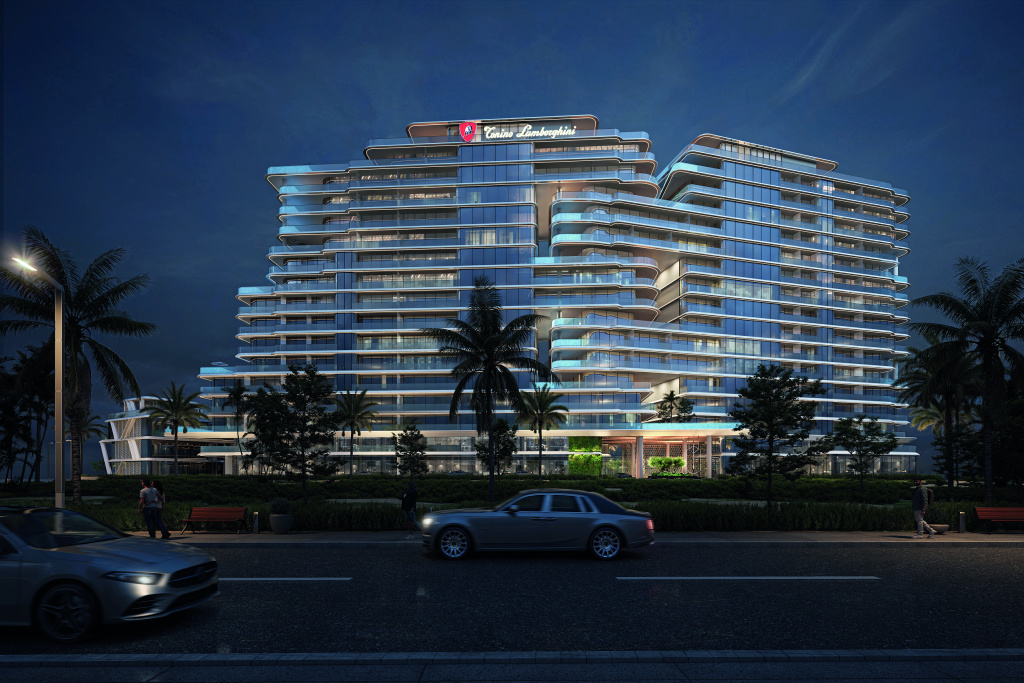
Ras Al Khaimah’s economic trajectory offers a prime example of this dynamic. The arrival of multibillion-dollar integrated resorts alongside expanding economic free zones has created structural demand for high-end residential supply.
Recognising this momentum early allowed BNW to secure prime land positions and offer early-mover entry pricing to cross-border investors before institutional liquidity fully re-rated the market.
“Timing an emerging corridor is a maths problem,” Dr. Aggarwal notes. “You study state infrastructure commitments, track tourism capacity, analyse the supply pipeline, and move ahead of proof. When private capital builds in direct alignment with government vision, long-term capital preservation is already built into the asset.”
The New Architecture of Real Estate
As the UAE’s property landscape continues to institutionalise, the line separating real estate development from structured finance has effectively vanished.
Material price indices, global interest rate shifts, and international compliance standards demand financial engineering as much as physical construction.
For Dr. Aggarwal, that shifting landscape plays directly to his strengths. The real estate market of the coming decade will not be won on spectacle or launch-day momentum alone; it will belong to leaders who recognise that investor trust is a measurable financial outcome built on balance-sheet discipline.
By treating escrow governance, audited milestone reporting, and operational precision as fundamental design requirements, BNW Developments is doing far more than adding landmarks to the skyline.
It is engineering the institutional bridges that transform cross-border capital into enduring value, proving that when quantitative rigour underpins every foundation, investor confidence ceases to be a variable and becomes a certainty.
Julius Baer Appoints Roy Zaatar as Managing Director
EDGE’s Rodrigo Torres on Risk, Sovereignty and Defence Finance in a Multipolar World
ADNOC Distribution’s Ali Siddiqi: “Growth, Growth and Growth”