
Historically, a luxury nameplate was real estate’s silver bullet. You secured the licensing rights to a heritage marque, priced in an automatic premium, and watched international capital flow in on reputation alone. In a buoyant, expanding market, that shorthand was often enough to clear an entire inventory, even before the first shovel met the ground.
That era is closing fast.
With the global pipeline projected to surpass 160,000 units by 2030, the novelty of a brand name is no longer a protective moat. When high-end developments across major metropolitan hubs routinely carry luxury badges, a nameplate is no longer an automatic differentiator.
Instead, the entire market is being forced into a far more disciplined phase, one where sophisticated investors must look past sales gallery gloss and treat branded residences as distinct, operationally intensive assets that stand or fall on the mechanics of their long-term management.
De-Risking the Cross-Border Check
To understand why this asset class commands institutional and private wealth across the UAE, one must look at the immense practical friction of cross-border ownership.
When an investor allocates capital into a market thousands of kilometres away, their greatest hazard is never macro volatility alone; it is operational entropy. Inconsistent facility maintenance, erratic tenancy turnover, opaque service billing, and the sheer logistical headache of remote asset management can quietly destroy property value over time.
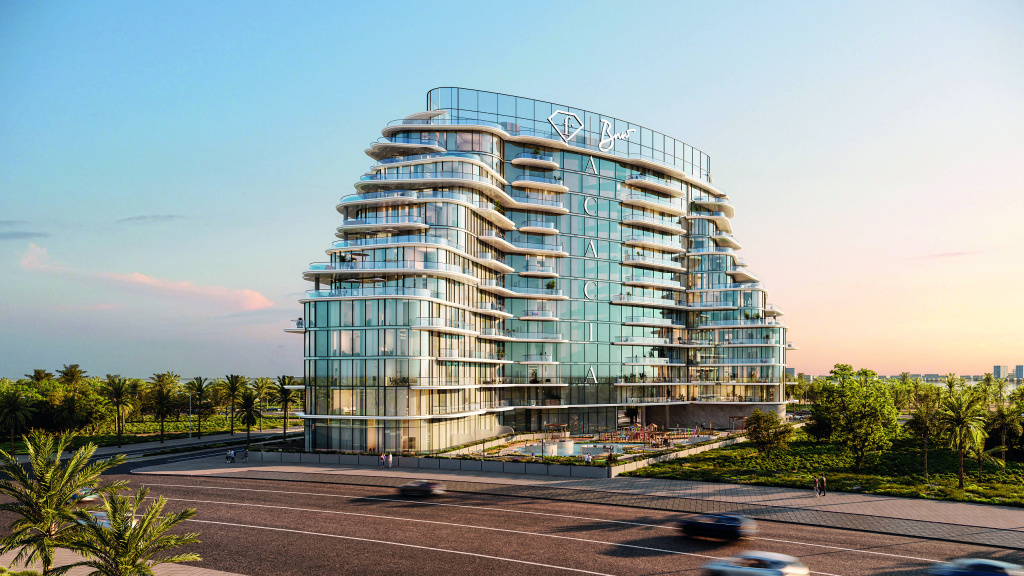
An institutional hospitality partner removes that uncertainty by standardising the asset from the ground up. An overseas buyer knows that a residence run under rigid, audited operational guidelines will look, function, and perform five years down the line with the exact same precision it possessed at completion.
This operational framework transforms private real estate from a speculative square-metre play into a professionally managed income instrument. Buyers are not simply paying for a gold-leaf badge in the lobby; they are paying for predictable governance, institutional asset protection, and ultimate peace of mind.
The Post-Handover Test
Yet the fatal mistake many private and institutional buyers continue to make is assuming that the brand alone guarantees commercial performance.
The true test of a branded residence never happens during the launch campaign; it begins on handover day, the moment marketing momentum gives way to operational reality.
Because purchasers pay a significant entry premium, the underlying asset must clear a far stricter financial hurdle rate. If high service charges, perpetual brand royalties, aggressive operator splits, and restrictive rental-pool mandates erode net returns, that initial entry premium quickly becomes an anchor around the property’s secondary market liquidity. Capital allocators must therefore apply a rigorous underwriting framework before committing funds.
That discipline begins by stripping away the branding entirely on day one. A rigorous investor must underwrite the raw real estate first: if the architectural efficiency, natural light, spatial layout, micro-location, and core engineering do not stand firmly on their own merits as prime unbranded property, no luxury crest will rescue the asset when the market turns.
From there, one must interrogate the legal and operational architecture of the partnership itself. A long-term, tightly bound operating agreement backed by transparent performance benchmarks creates lasting institutional stability, whereas a loose, five-year marketing licensing deal with zero operational teeth merely creates an expensive future liability.
Finally, the focus must shift entirely from headline figures to net cash-flow realities; impressive average daily rates and peak seasonal yields mean very little if bloated operational overheads and aggressive maintenance reserve funds quietly cannibalise the owner’s net yield.
The Road Ahead
The next chapter of the luxury property market will not belong to developers using brand recognition to mask ordinary real estate, nor to investors who treat branded units as passive trophies.
It will belong to capital allocators who demand operational accountability, and to developers who integrate genuine hospitality ecosystems into their core design, creating properties that are measurably easier to manage, lease, and liquidate across market cycles.
Branded residences have outgrown their promotional infancy. The brand may open the door, but it is the underlying operating model that preserves the capital.
The time has come for investors, asset managers, and developers across the region to raise the underwriting bar, scrutinise the contractual fine print, and hold the asset class to the institutional standard it deserves.
Stay Up to Date with the Latest Updates at Finance ME
Julius Baer Appoints Roy Zaatar as Managing Director
EDGE’s Rodrigo Torres on Risk, Sovereignty and Defence Finance in a Multipolar World
ADNOC Distribution’s Ali Siddiqi: “Growth, Growth and Growth”