

Al Masraf’s summit on Islamic finance highlighted two key trends: rising demand for Islamic finance and its growing application beyond domestic banking.
While Islamic finance is often positioned as a solution for unbanked and underbanked populations, its principles of ethical and accessible finance are increasingly being applied beyond borders.
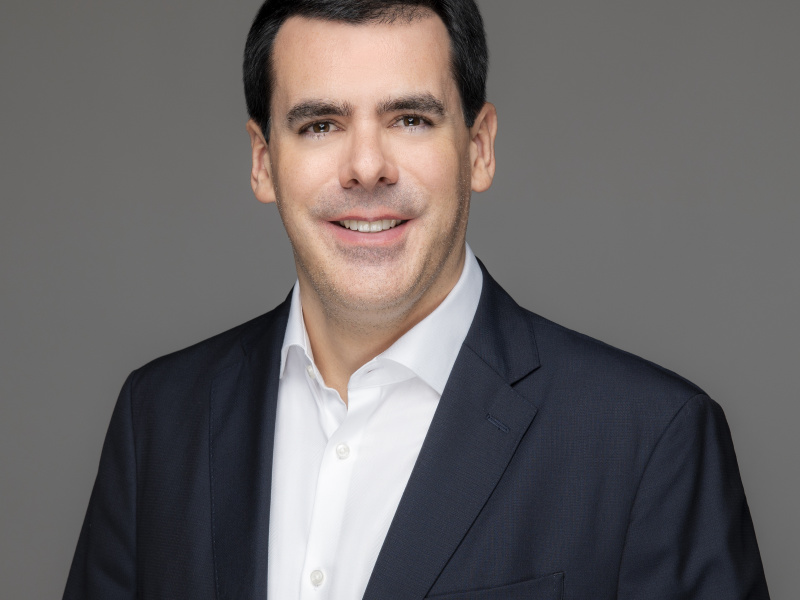
I spoke with the CEO of Al Masraf (Arab Bank for Investment and Foreign Trade), Fuad Mohamed, at the UAE Islamic Finance and Halal Industry Strategy 2025–2031 to discuss Al Masraf’s operations, unique offering to (un-)banked populations and its mission to offer Islamic trade finance between emerging trade corridors in the GCC and North Africa.
Trade Finance as Infrastructure
In 2026, trade routes are changing rapidly and so is the financial infrastructure needed to support them.
For banks, the opportunity extends beyond financing individual transactions. As Gulf firms forge new links between the UAE and international markets, they require working capital, guarantees, documentary credits, liquidity management and payment infrastructure to move goods across borders.
Demand for credit lines is therefore placing trade finance at the centre of Al Masraf’s strategy.
North Africa
The UAE bank has been strengthening its relationships with financial institutions in North African markets.
Connecting Abu Dhabi to markets in the Maghreb and Sahel aligns with UAE investment trends across the African continent.
The UAE was the fourth largest investor in Africa, besides China, the U.S. and EU-27 (2019-2023), despite its market size.
Financing the Corridor
Yet trade routes depend on more than market size, ports, and physical infrastructure.
Importers and exporters also need banks capable of managing the financial risks created when buyers, suppliers and goods are separated by borders and payment cycles.
Al Masraf’s conventional trade-finance offering covers imports, exports, guarantees, financing and supply-chain requirements across domestic and international markets. Its documentary-credit products are designed to provide suppliers with payment assurance while mitigating risks for buyers.
UAE-North Africa Commerce
That creates a direct link between the bank’s trade-finance strategy and the evolution of UAE–North Africa commerce.
For Fuad Mohamed, CEO of Al Masraf, the underlying objective is ultimately to make the banking relationship easier for its customers across all markets.
“We have one important objective, which is how to make our lives and our journey with the bank easier and how to provide users with what they need in the future while preserving their financial goals,” said the CEO.
That becomes particularly important when a business is operating across multiple jurisdictions, currencies and counterparties.
According to Al Masraf, the bank has “stood in the forefront promoting joint economic ventures among its partners the UAE, Libya and Algeria.” The bank’s ownership structure is shared between sovereign entities across all three jurisdictions.
The bank is aiming to reduce friction around each transaction rather than providing unbanked populations with capital availability per se.
Islamic Trade-Finance Opportunity
Yet connecting jurisdictions with credit lines demands ethical and accessible solutions, tailored to regional demographics, which Islamic trade finance offers.
Al Masraf offers Murabaha letters of credit, Wakala Murabaha letters of credit, documentary collections, Wakala Murabaha direct purchase, shipping guarantees and Kafalah-based guarantees.
For businesses importing goods, raw materials or machinery, the bank’s Wakala Murabaha direct-purchase product is structured to provide working capital, with Al Masraf purchasing goods from the supplier and selling them to the customer on deferred terms at an agreed selling price incorporating the bank’s profit margin.
That gives Islamic trade finance a practical role within the wider commercial corridor. Rather than sitting separately from trade activity, Shari’ah-compliant financing supports the underlying movement of goods and working capital between buyers and suppliers.
The same applies to guarantees. Al Masraf’s Islamic banking operation uses Kafalah structures for guarantees and shipping guarantees, providing a Shari’ah-compliant mechanism for meeting contractual obligations in trade transactions.
Transactions to Trade Ecosystems
The longer-term opportunity is to connect individual transactions into a wider financial ecosystem.
“This connection between shareholders, stakeholders, investors and the developed national economy and its improvement is important” says Mohamed.
That places trade finance within a larger question: how can banks help businesses participate in the development of the markets around them?
Technology as the Connective Layer
Digital transformation becomes relevant when viewed through this trade-finance lens.
The question is not simply whether a bank has digitised its services, but whether technology can make cross-border commerce faster, more transparent and easier to execute.
“So you need to understand how you want to build your framework, how you set your goals, and how you execute them properly. Technology is used to achieve this.”
That philosophy is reflected in Al Masraf’s broader digital strategy. The bank says its digital transformation initiatives have improved operational efficiency and customer experience, while its trade-finance platform provides corporate customers with online banking access alongside dedicated relationship management.
A delayed document, guarantee or payment can hold up an entire transaction. Digital processes therefore have the potential to reduce friction at precisely the points where cross-border commerce becomes most complex.
Building the Next Trade Corridor
The emerging UAE–North Africa relationship is ultimately about more than individual transactions. It is about creating the financial links that allow companies to trade more efficiently across the region.
For Al Masraf, that means combining its conventional trade-finance capabilities with an Islamic banking proposition designed around the requirements of Shari’ah-compliant commerce.
The bank’s Islamic corporate-finance offering already extends beyond trade documents to working-capital finance, Murabaha goods finance and other Shari’ah-compliant structures.
The next phase for the bank is less about replacing existing banking infrastructure than extending Islamic finance across new markets and commercial relationships for ethical, accessible and meaningful relationships.
As Mohamed put it:
“How can we improve the project we already have?”
Stay Up to Date with the Latest Updates at Finance ME
Julius Baer Appoints Roy Zaatar as Managing Director
EDGE’s Rodrigo Torres on Risk, Sovereignty and Defence Finance in a Multipolar World
ADNOC Distribution’s Ali Siddiqi: “Growth, Growth and Growth”