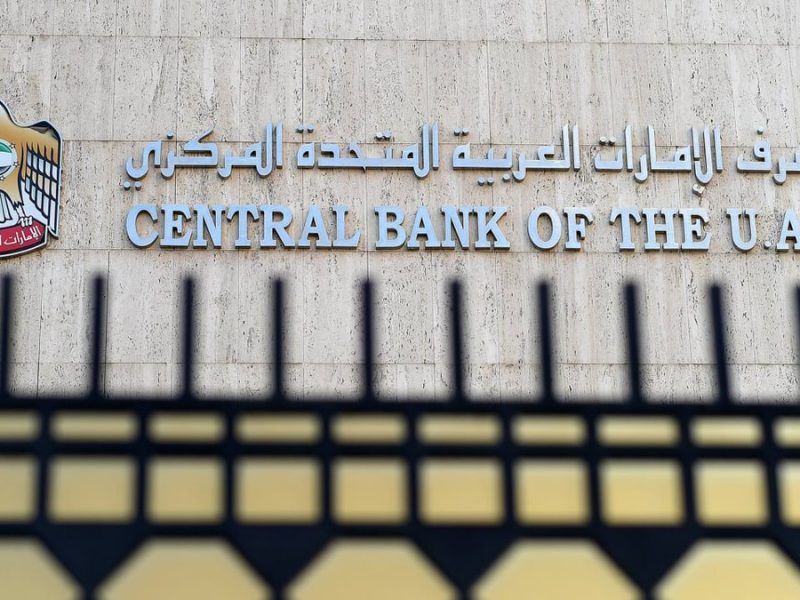
When undersea cables in the Red Sea were cut earlier this month, the impact rippled quickly across financial services. Microsoft confirmed its Azure cloud traffic was rerouted through alternative paths, producing higher latency for users in the Middle East until connections stabilised. For banks whose operations depend on those same routes, the disruption translated into slower transaction processing, API and payout timeouts, and degraded access to systems hosted internationally.
“Such a cut immediately increases latency and congestion on routes between Asia, the Middle East, and Europe,” said Achraf Drid, Managing Director at XTB MENA. “During the incident, Microsoft confirmed Azure traffic through the Middle East was rerouted, with users seeing higher latency until paths stabilised. For banks whose traffic depends on these routes, this can manifest as slower transaction processing, API/payout timeouts, and degraded access to internationally hosted systems, depending on their redundancy and peering. Similar subsea cable failures have previously taken banks offline in parts of Africa, stressing the sector’s exposure to backbone disruptions. As a result, such outages can generate millions of dollars in losses, so resilient routing and multi-provider connectivity are critical.”
A large, prolonged internet failure from multi-cable damage in the Red Sea/Suez chokepoint would pose a systemic operational risk to regional financial markets
The Red Sea corridor is one of the most heavily trafficked routes for internet capacity globally. According to TeleGeography, about 15 cables converge through the Bab el-Mandeb Strait and funnel northward through Egypt. This concentration means damage to even a handful of systems can disrupt a large portion of traffic between Europe and Asia. The September 6–7 cuts, which affected the SMW4, IMEWE and FALCON cables, forced rerouting that raised latency by hundreds of milliseconds on some banking applications.
Will this affect your remittances?
For remittance flows, which form a crucial part of cross-border finance in the Gulf, the slowdown was immediate. “When internet bandwidth degrades, transactions face higher latency and intermittent connectivity issues, leading to delays and timeouts rather than total failure,” Drid explained.

“Recent large-scale disruptions have shown slower cloud app performance and rerouting-induced latency, which can postpone settlement and cash-out. If such conditions persist, some users may revert to informal transfer systems. Because informal flows aren’t systematically recorded in the balance of payments, they may not bolster official FX metrics or reserves to the same degree as formal channels.”
The incident has drawn attention to the redundancy built into financial networks. Banks maintain multiple layers of contingency to ensure that payments and customer services remain available when terrestrial connectivity falters. “Banks engineer their infrastructure for resilience, and regulators require them to identify important business services, set impact tolerances, and test that they can run through severe but plausible outages,” Drid said. “To keep connectivity up, redundant networks are used to prevent major outages. Core payments/messaging are protected via redundant SWIFT connectivity that supports high availability. At the edge, branches and ATMs add LTE/5G failover and VSAT/satellite as last-resort bearers so cash-out and basic transactions continue when terrestrial paths are impaired.”
The risk is magnified by geography. The Red Sea and Suez corridor is uniquely concentrated and geopolitically sensitive. “A large, prolonged internet failure from multi-cable damage in the Red Sea/Suez chokepoint would pose a systemic operational risk to regional financial markets,” Drid noted. “The corridor is unusually concentrated; 15 cables traverse Bab el-Mandeb, and a substantial share of global traffic funnels through Egypt, so concurrent faults can degrade cross-border payments, trading access, and cloud-hosted banking systems. The latest cuts forced Azure to reroute and raised latency on Middle East routes, demonstrating the mechanism by which market connectivity slows even when service doesn’t fully fail. Compounding the risk, repair capacity is constrained, industry assessments put median restoration around 40 days, and conflict-adjacent waters can stretch timelines further, making multi-week impairments plausible.”

Restoration of damaged subsea infrastructure is complex, requiring specialist ships to identify and repair faults, often in waters subject to geopolitical tension. Industry sources indicate average repair times of around five to six weeks, though in contested areas, delays can extend much longer. This creates a window in which financial institutions must operate with reduced efficiency, with consequences for payments, settlements and market access.
Drid pointed to the broader implications. “The disruptions could last for weeks while repair operations are ongoing. In the meantime, traffic is being rerouted, causing higher latency and congestion. As a result, normal operations in a broad set of sectors could see slower connections and transactions. While this incident could affect connectivity temporarily, it could drive more effort to build a more resilient infrastructure.”