Bitcoin has often been touted in finance as “digital gold” due to its limited supply and increasing demand. However, a deeper dive into the comparison reveals that while Bitcoin and gold share some similarities, they fundamentally differ in several key aspects, making the claim that Bitcoin is the “new gold” somewhat misleading.
Volatility vs. stability
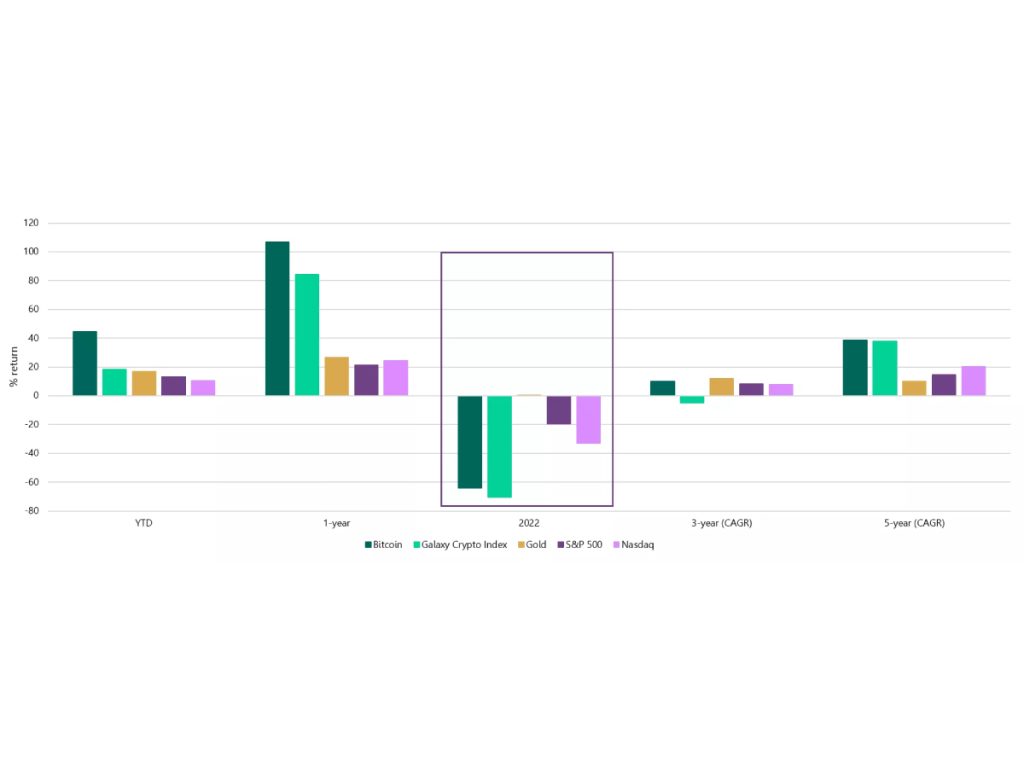
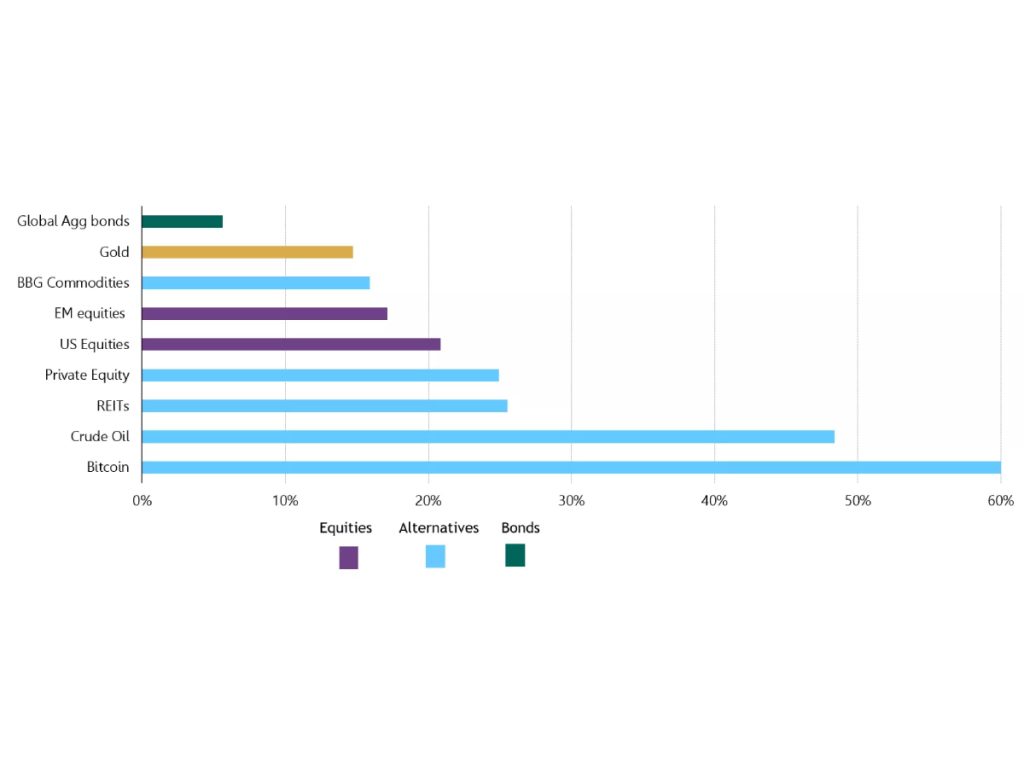
Gold has been the cornerstone of wealth preservation for centuries, maintaining its value through wars, financial crises and technological revolutions. In contrast, Bitcoin’s price has been marked by extreme volatility, undermining its role as a stable store of value. Joseph Cavatoni Senior Market Strategist, North America and John Reade, Senior Market Strategist, Europe and Asia from the World Gold Council highlight, “Gold’s stability over millennia contrasts sharply with Bitcoin’s short-term speculative nature. Investors seeking refuge during economic uncertainty may find Bitcoin’s price swings unsettling.”
This volatility is not just a temporary issue but stems from Bitcoin’s relatively nascent status as a financial asset. The cryptocurrency market is still developing, and regulatory clarity remains uncertain, contributing to Bitcoin’s unpredictable price movements. In contrast, gold’s value is underpinned by a deep, liquid market that has matured over centuries.
Institutional trust and usage
Another key differentiator is the institutional trust that gold commands. Central banks worldwide hold gold as a part of their reserves, recognising its enduring value and liquidity. While gaining acceptance, Bitcoin has not yet achieved the same level of institutional endorsement. “Gold is a trusted asset, deeply embedded in the global financial system. Bitcoin, though promising, is still navigating the complexities of institutional adoption,” notes the World Gold Council’s analysis.
Gold’s institutional usage extends beyond central banks. It plays a vital role in various industries, from electronics to jewellery, further solidifying its intrinsic value. Bitcoin’s value, on the other hand, is derived almost entirely from market speculation and its perceived utility as a decentralised digital currency.
Environmental and regulatory concerns
The environmental impact of Bitcoin mining has also sparked significant debate. The energy-intensive process required to validate transactions on the Bitcoin network has been criticised for its carbon footprint. In contrast, despite its environmental challenges, gold mining has established practices and regulations that aim to minimise ecological harm.
“Bitcoin’s environmental concerns are becoming increasingly relevant, especially in an era where sustainability is at the forefront of investment decisions,” Cavatoni and Reade noted.
Moreover, Bitcoin faces an evolving regulatory landscape that could impact its adoption and long-term viability. Governments worldwide are grappling with how to regulate cryptocurrencies, and any unfavourable regulation could significantly affect Bitcoin’s value. Gold, by contrast, is well-regulated and widely accepted as a legitimate asset class.
Liquidity and market dynamics
Liquidity is another critical factor that distinguishes gold from Bitcoin. Gold’s vast and liquid market allows for large transactions with minimal price impact. Bitcoin’s market, though growing, is still relatively small and can experience significant price fluctuations with large trades. “Gold’s liquidity is unmatched, offering investors a stable and reliable market. Bitcoin’s market dynamics, however, are still maturing and can be susceptible to volatility,” stated the World Gold Council’s strategists.
While Bitcoin has shown potential as a new form of digital asset, it falls short of being the “new gold.” Its volatility, lack of institutional trust, environmental concerns, and evolving regulatory environment make it less suitable as a long-term store of value compared to gold. For now, gold’s position as a time-tested asset remains unchallenged, providing stability and security that Bitcoin has yet to achieve.
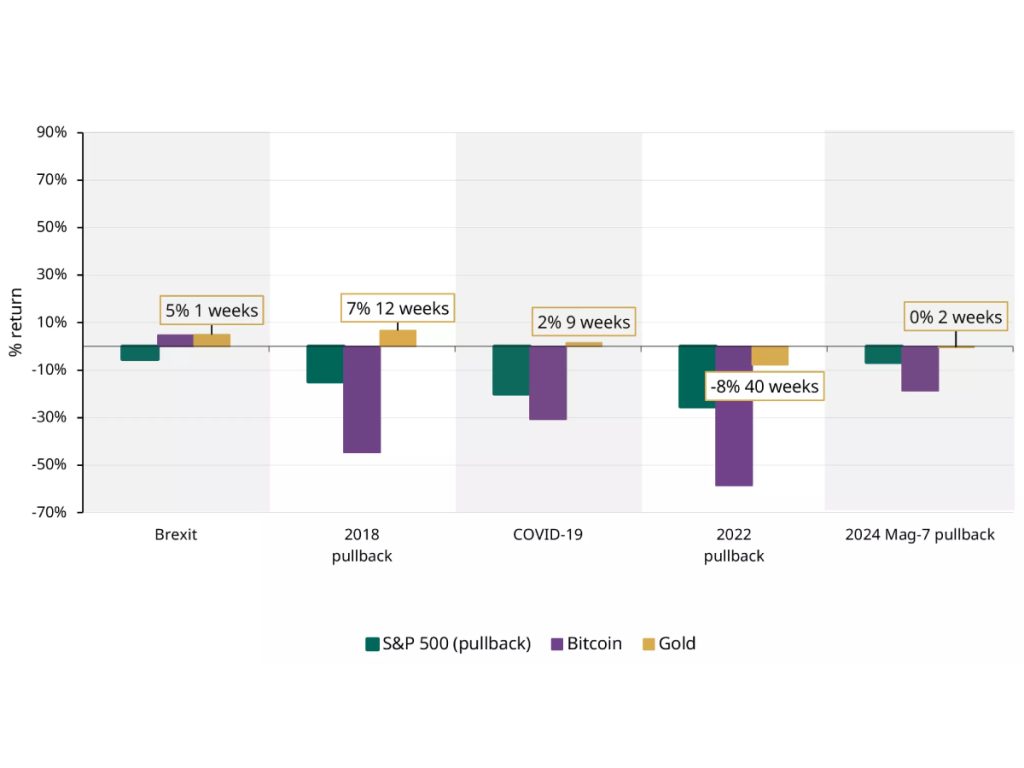
“It is critical to remember, and a point amplified during the week of August 5th, that to truly be a safe haven asset, the right kind of performance during significant market drawdowns is key,” Cavatoni and Reade explained. “What you can find is that once established, bitcoin has not demonstrated the same characteristics as gold at those critical moments. When you expect protection against significant market moves, bitcoin tracked risk assets.”
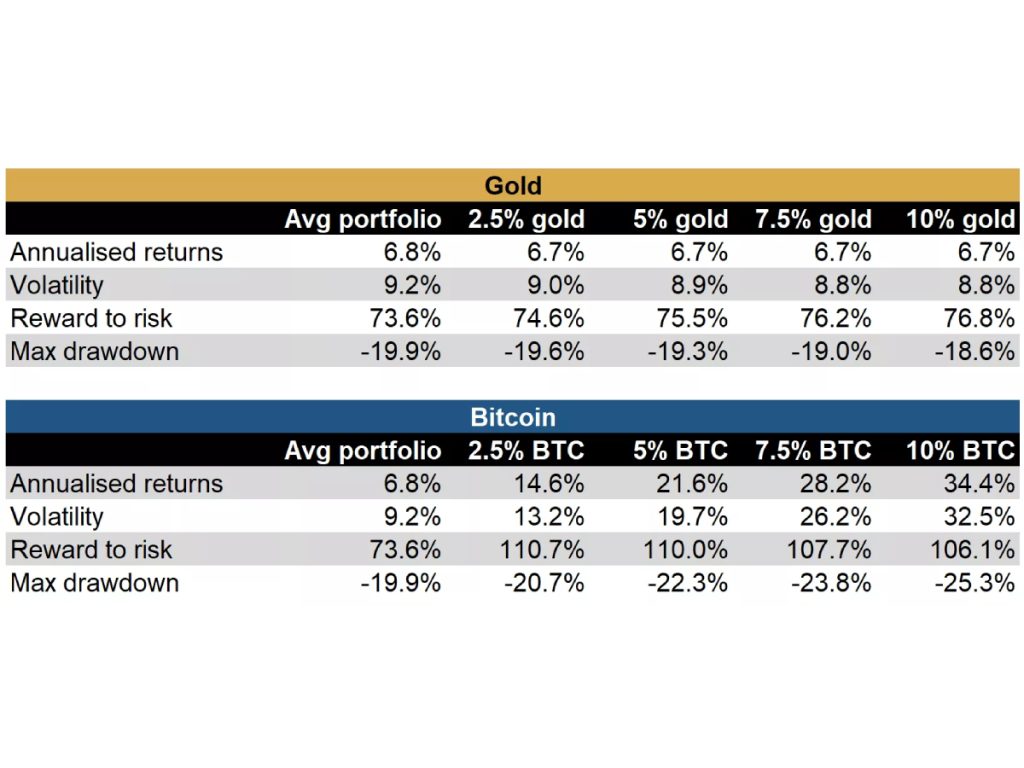
Allocating gold to the portfolio increases risk-adjusted returns at any allocation level. Holding it for the past decade (rebalancing as required) would have increased the risk-adjusted returns and lowered volatility.
Allocating bitcoin to a portfolio and holding it for the past decade (rebalancing) would have increased the risk-adjusted return at a certain level, in this case 2.5%. However, beyond that allocation level, the portfolio volatility would have been higher, drawdowns greater, and the risk-adjusted return would have deteriorated.
The debate over Bitcoin and gold will likely persist as the financial world evolves. However, for those seeking a reliable store of value, gold’s millennia-long track record speaks for itself.