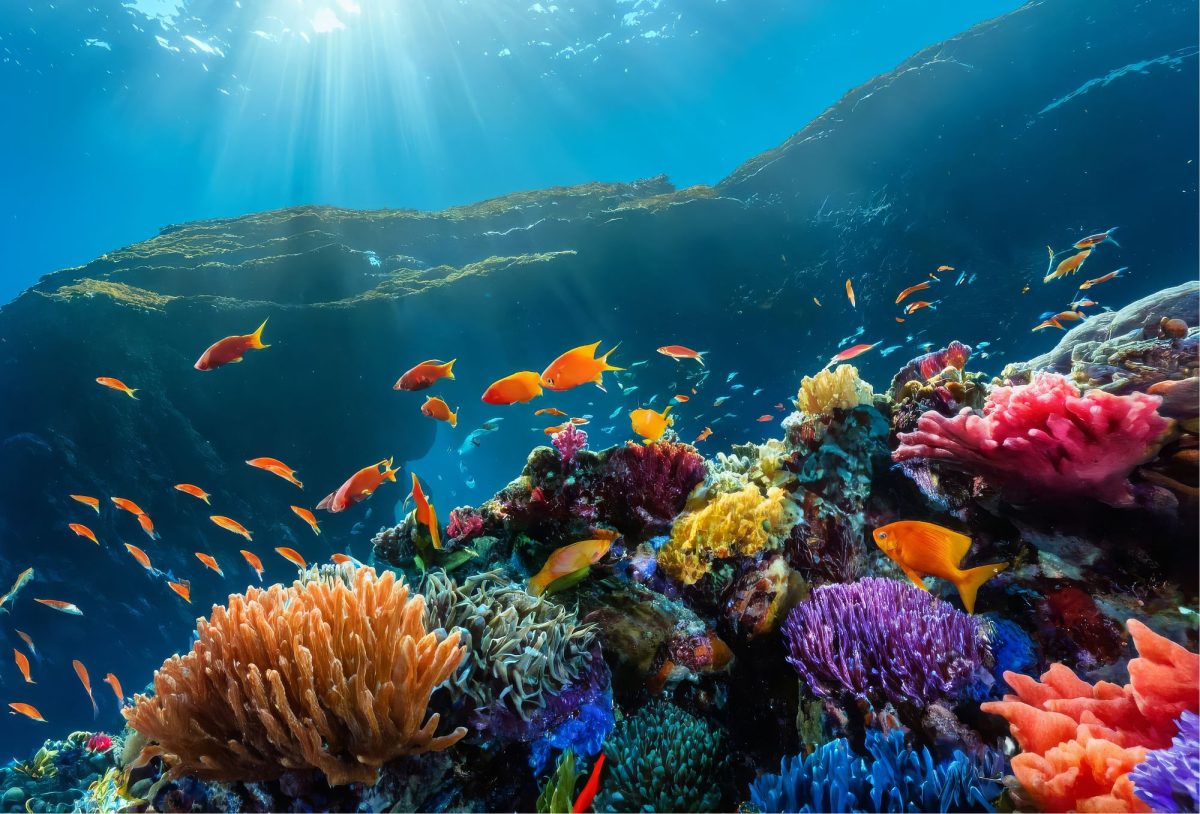
What if there were no more fish in the sea? In 2022, a team of researchers found that, without a significant reduction in greenhouse gas emissions, approximately 90% of all marine life will be at risk of extinction by 2100.
Over twenty thousand species could be lost, while human lives and livelihoods would be at great risk. In the words of oceanographer Dr Sylvia Earle, “No ocean, no life”.
Enter blue finance. Much like “green” investments, “blue” initiatives allocate funds towards projects that focus on water and wastewater management, marine ecosystem conservation and restoration, sustainable shipping, eco-friendly tourism and offshore renewable energy, among others. Not only are these strategies aimed at reducing carbon emissions and helping businesses meet their ESG targets; but they also contribute to boosting and protecting the ocean economy, becoming vital for the wellbeing of the world at large.
The value of the blue economy is expected to reach $3 trillion by 2030 and employ 40 million people, according to OECD estimates. With that level of GDP contribution, were it a country, the blue economy “would effectively be a G7 nation, somewhere between Italy and Japan,” said Tongai Kunorubwe, Head of ESG, Fixed Income at T. Rowe Price.
As a result, governments and investors are increasingly aware of the imperative of supporting marine ecosystems, the financial benefits of doing so and the debt owed to the Earth’s oceans—as well as that they can generate.
The ocean economy, at risk
Colour theory could tell you there is no green without blue, and the sample applies to sustainability efforts. Over 70% of the Earth’s surface is covered by water and UN Water has even claimed that “climate change is primarily a water crisis”. Yet, green business and financing initiatives often forget to include ocean conservation projects.
“Investment will be critical to unlock the ocean’s vast potential.”
Sabrin Rahman of HSBC Middle East

“When people think about climate finance, they don’t necessarily automatically think about water and the oceans,” said Pushkala Ratan, Asia Climate Finance Lead and Global Blue Finance Lead at the International Finance Corporation (IFC). “It’s a wide gap in terms of financing, but a very urgent and important one, that needs to be addressed.”
The reasons for investing in the blue economy are “simple, but hugely compelling”, Kunorubwe stressed. Climate change continues to make front-page news internationally, exemplified by extreme weather events like Hurricane Milton. This rise in global temperatures is warming up the oceans, the same bodies of water responsible for absorbing 25% of global CO2 emissions and 90% of the excess heat generated by humanity, as per NOAA figures. Furthermore, marine life such as mangroves, coral reefs and seagrasses act as buffers to storm surges. Protecting the ocean, therefore, is a climate-change prevention measure, and one that is starting to receive its due attention.
“There’s definitely been an increase in investment,” reflected Alexandra Dempsey, CEO of the Khaled bin Sultan Living Oceans Foundation (KSLOF). “Providing capital for marine conservation while also offering a return on investment—that was definitely not something nearly as, for lack of a better word, ‘sexy’ in the 80s and 90s as it is now.”
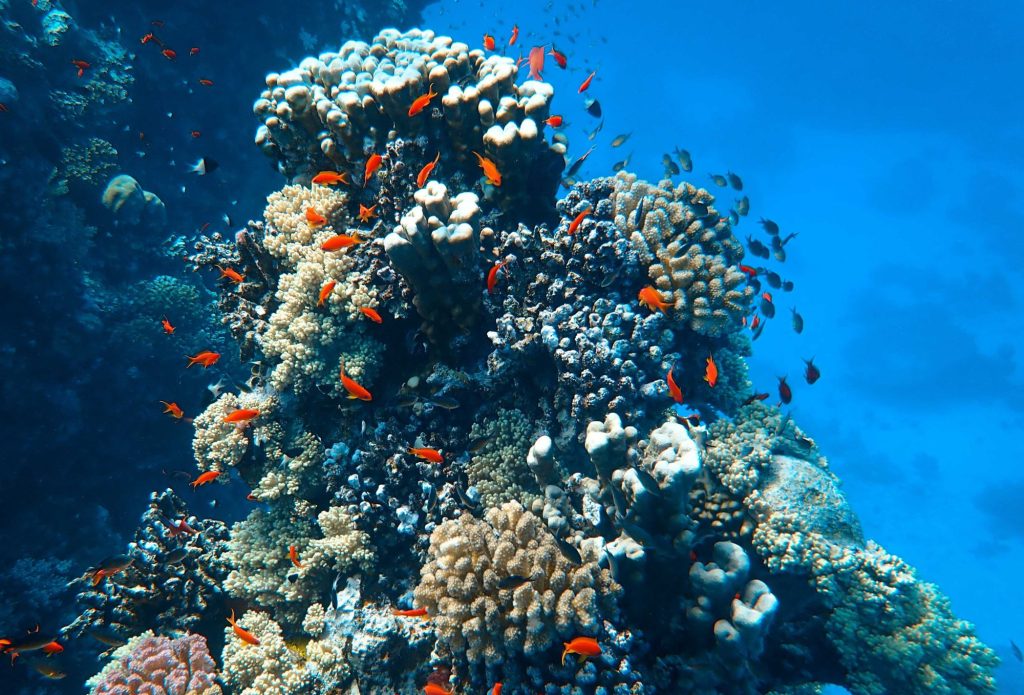
Oceans are indispensable natural assets, offering vast economic, environmental and social benefits. Nevertheless, Life Below Water remains the least funded of the UN’s Sustainable Development Goals (SDGs). Currently, public, philanthropic and development financing towards this SDG amounts to $25 billion per year. Yet, meeting this goal, as well as the Kunming-Montreal Global Biodiversity Framework target “30×30” to conserve at least 30% of the planet by 2030, would require at least $170 billion per year until 2030. Thus, the financial gap is as wide as the ocean.
“I believe, as a society, we are unlikely to advance our emissions reduction and biodiversity goals with an underfunded blue economy,” Kunorubwe said.
Sabrin Rahman, Head of Sustainability for MENAT at HSBC Middle East, agreed. “Despite the growing threats it faces, the ocean offers a vital ally in combatting the climate, biodiversity, and food security crises, and in building a more resilient, nature-positive and net-zero aligned economy,” she said. “Investment will be critical to accelerate the shift from extractive and polluting business models towards sustainable and regenerative alternatives, and to unlock the ocean’s vast potential.”

“When people think about climate finance, they don’t necessarily automatically think about water and the oceans.”
Pushkala Ratan of IFC
Climate change is set to cause 14.5 million deaths and $12.5 trillion in economic losses worldwide by 2050, according to estimates by the World Economic Forum. Left unchecked, ocean stressors alone could cost the global economy $400 billion annually from the same date. At the moment, two billion people globally do not have access to safe drinking water, whilst 46% of the world’s population lacks adequate sanitation services, causing 1.4 million preventable deaths a year—a figure in which women and girls are at a “disproportionate disadvantage”.
Protecting the oceans is a life-or-death endeavour—and one that needs funding.
Is the ocean profitable?
Blue finance is also becoming an exciting business opportunity. McKinsey & Company has reported that two-thirds of companies currently face significant risks related to water, including physical, regulatory and reputational. Thus, investors are increasingly being drawn towards blue economy projects that promise both environmental and financial returns.
“Blue investments have the potential to provide competitive returns at the same time as supporting environmental sustainability,” said Rahman. “While some capital is already flowing to sustainable blue economy sectors, many traditional industries such as ports, shipping and energy, as well as fishing and aquaculture, need capital to accelerate the shift to new regenerative and net-zero aligned models.
“At the same time, scaling finance for marine protection and restoration can preserve the ecosystem services on which vital ocean sectors depend, while investments in adaptation can reduce physical and financial risks for coastal communities and their assets.”
Banks themselves are increasingly investing in blue. HSBC’s Water Programme provided $150 million in funding to over 70 local projects across the world between 2012 and 2020. As part of its Global Climate Solutions Partnership, a $10 million 5-year philanthropic programme, the bank also invested in more than 50 coastal conservation and restoration programmes. Meanwhile, IFC has partnered with T. Rowe Price to increase access to finance for blue projects in emerging markets. As part of the project, both parties have pledged to invest $75 million in the strategy.
“It’s been very exciting to build this together,” said Ratan. “These kinds of funds are very important to address scale. It’s really about building platforms like these which gets a large amount of financing to where it’s actually needed.”
“We are unlikely to advance our emissions reduction and biodiversity goals with an underfunded blue economy”
Tongai Kunorubwe of T. Rowe Price

Kunorubwe reflected on the types of projects that form the strategy. “We have identified a variety of sustainable, financially viable blue economy opportunities. These range from investments in water supply and water sanitation, through to financing coastal climate adaptation and resilience, through to sustainable shipping and port logistics, to mention a few.”
As global awareness of environmental risks increases, blue investments are likely to attract more and more private and institutional investors. With adequate management, these projects can deliver stable returns, reduce climate-related risks, and drive the growth of marine economies. But more capital is still needed. Internal research by IFC and T. Rowe Price found that around $90 billion worth of ‘blue’ projects are available in emerging markets. Currently, only $5 billion of financing is geared towards investments categorised as ‘blue’.
Behind blue bonds
The bond market is by far the largest securities market in the world—and it’s turning blue. Given its size, the amount of capital the bond market can provide to create real-world change in the blue economy is significant. Additionally, its appetite for new projects, as well as re-financing existing ones, could be the difference that paves the part towards the blue transition.
“Capital markets, and the bond market in particular, have a critical role to play in funding clean water and sanitation, alongside investments in healthy oceans and riverine bodies,” Kunorubwe said. He believes blue bonds are “an excellent tool to fund blue economy initiatives”, while Rahman described them as “one of the most promising emerging mechanisms to unlock new sources of finance from global capital markets for investment in the ocean”.
In 2018, the Republic of Seychelles made history by launching the world’s first sovereign blue bond—a pioneering financial instrument designed to support sustainable marine and fisheries projects. The bond, launched in collaboration with the World Bank, raised $15 million from international investors and demonstrated the capital market’s appetite for such offerings.
Since then, IFC has dedicated ample efforts to fostering the growth of the global blue finance market. In the past four years, the organisation has provided more than $1.9 billion dollars in blue loans and bonds to private institutions, including subscribing up to $100 million in the first blue bond issued in the Philippines and mobilising and anchoring a $300 million blue loan for Indorama Ventures, in Thailand, in another country-first.
“It is a wide spectrum of projects and institutions,” Ratan added. “We are proud of all of them, and they’ve all been pioneers, in terms of being the first countries within the asset class.” The partnership with T. Rowe Price was also a landmark moment, considered the world’s first Blue Bond Strategy. Kunorubwe said, “By partnering on this innovative strategy, T. Rowe Price and IFC are sending a clear message to the market on the importance of mobilising capital needed to make meaningful progress towards achieving the SDGs.”
The sector is indeed gaining traction, with the Climate Bonds Initiative reporting a 163% increase in the blue label being used across the thematic bond universe, pushing the size of the outstanding market to nearly $6.4 billion. “That’s tremendous if you look at it from a year-on-year basis,” said Ratan. She stressed how, in addition to the financial and ESG benefits, “having more guidance on eligibility has been an important trigger for a lot of this to happen”.

“Blue finance will play a critical role in securing funds for conservation work, from the blue whales to the sea turtles to the coral reefs.”
Alexandra Dempsey of KSLOF
The potential of blue bonds is very exciting, but these issuances are not without challenges. The need to build capacity among investors and issuers, scale de-risking mechanisms, and create supportive regulatory frameworks are all parts of the equation. “A few years ago, we realised that there was a very big gap in the market and one that needed to be addressed,” Ratan recalled, stressing how blue bond investors and issuers “really had nothing that they could go to and use” in terms of standards.
IFC’s Guidelines for Blue Finance, published in 2002, bridged this gap by establishing project eligibility criteria for blue issuances and loans, in line with ICMA’s Green Bond and Green Loan Principles, as well as the SDGs. In September 2023, The Philippine Securities and Exchange Commission (SEC) became the first regulator to issue blue finance guidelines, which were based on IFC’s standards.
“There’s a lot of potential,” Ratan said. “The funding gap is still huge and enormous, and we think that there’s a lot left to be done. But the positive news is that I think there are a lot of people recognising this. There are lots of markets, countries, investors, issuers, that are working towards blue and will continue to do so.”
The GCC’s ocean connection
Think of the Middle East and you’d likely picture a desert. Yet, the region has always been heavily reliant on the ocean for both trade and sustenance, with fishing and pearl diving being major sources of revenue and food. As a result, the GCC’s historical and cultural connections to its marine environments run oceans deep.
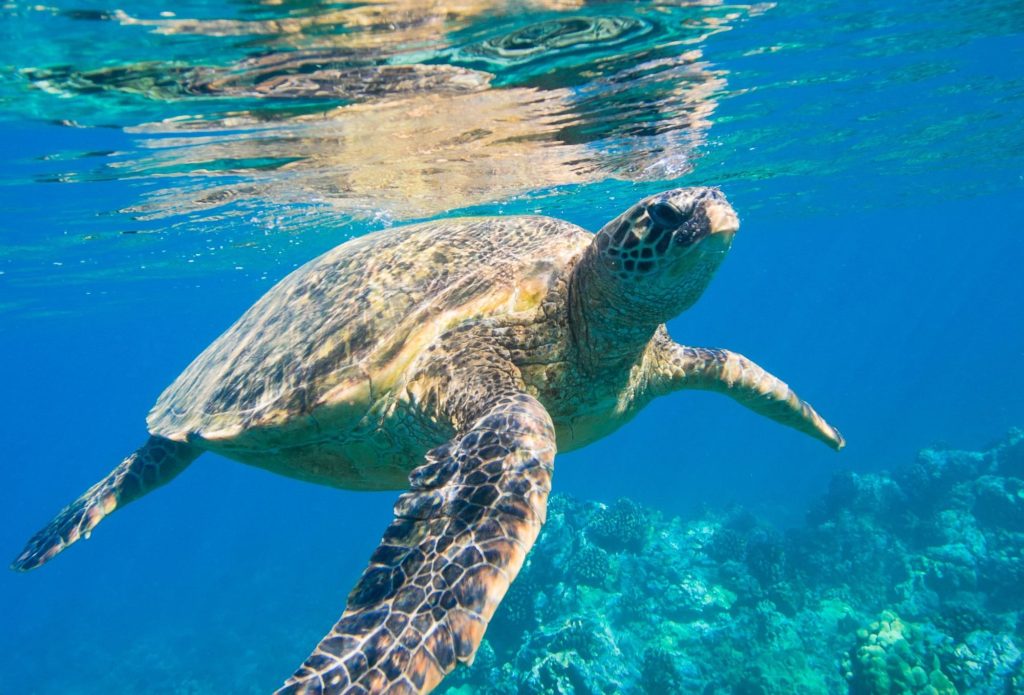
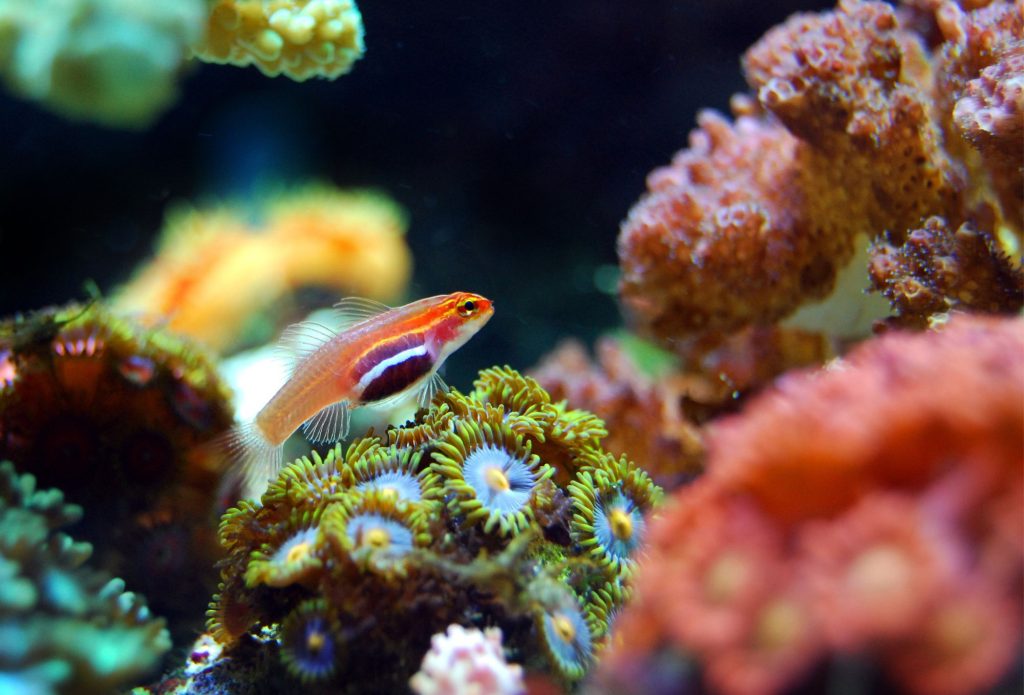
The region also boasts precious aquatic ecosystems. Oman’s beaches host five out of the seven species of sea turtles that annually migrate to the Arab Peninsula and lay their eggs. Abu Dhabi boasts one of the largest humpback dolphin species. Dugong, the inspiration for mermaids, is often found off the coasts of Saudi Arabia, Bahrain, Qatar and the UAE. Saudi Arabia’s coastline alone is the eighth largest community of coral reefs in the world, covering around 6,600 square kilometres.
“Today, these coastal areas face increasing threats from climate change, including sea level rise, coral bleaching, and more frequent and severe storms,” said Rahman. “Given these vulnerabilities, and as these economies diversify and mature, there is likely to be a growing emphasis on investing in and protecting these vital marine ecosystems. This could pave the way for innovative financial instruments like the first blue bond issued out of the Middle East, aimed at both environmental protection and economic sustainability.”
The GCC is already a region known for its bold leadership on climate action. In 2020, the UAE became the first MENA country to join the Global Ocean Alliance, an international association of nations aiming to protect at least 30% of the world’s oceans by 2030. Since then, Egypt, Saudi Arabia, Jordan and Qatar have also joined the initiative. In addition, the UAE Water Security Strategy 2036 aims to reduce the total demand for water resources by 21% and increase the water productivity index to $110 per cubic metre. The nation also has 16 marine protected areas, covering 18.4% of its terrestrial territory and 12.01% of its marine territory.

“The UAE has shown that with the right vision and investment, it’s possible to tackle even the most pressing environmental challenges, including water security,”
Alex Guy of A1RWATER
“The UAE has shown that with the right vision and investment, it’s possible to tackle even the most pressing environmental challenges, including water security,” said Alex Guy, Founder and CEO of A1RWATER. The company, headquartered in Abu Dhabi, stands as one of the many examples of the growth of businesses in the region that seek sustainable solutions to water-related challenges. Its new state-of-the-art facility in Dubai International City (DIC), is poised to produce over 100,000 daily litres of drinking water from air humidity.
“Investing in water is no longer just an environmental concern—it’s a sound business strategy,” Guy added. “For investors, the blue economy represents one of the most strategic opportunities of our time.”
Saudi Arabia is also a paradigmatic example of blue dedication. Under the Saudi Green Initiative, the Kingdom has committed to protecting 30% of its terrestrial and marine area by 2030, aligning with the “30×30” target agreed to in the Kunming-Montreal Global Biodiversity Framework. The country was also the starting point for the KSLOF’s Global Reef Expedition, a 10-year assessment of global reefs. Through rapid reef assessments, the foundation mapped over 65,000 square kilometres of reef habitats in 16 different countries. Moreover, KSLOF has also recently partnered with the Saudi Red Sea Authority, which was given a mandate to establish a mechanism that ensures the protection of the marine environment, while utilising best international practices to develop navigational and marine and tourism activities.
“The development of the coastline of the Saudi the Saudi coastline of the Red Sea, has just been phenomenal to watch happen,” said Dempsey. “I had a phone call early this morning with a ministry that’s been newly created, specifically looking at the preservation and conservation of coral reefs and sea turtles.” Reflecting on the region at large, she said. “It’s definitely a hotbed for climate-based solutions.”
The future of blue finance
The Earth´s future will be blue or will not be. Financial institutions have a fundamental role to play in financing the climate transition and linking together investors and projects that can pave the way for a more sustainable tomorrow. Over the past decade, the issuance of sustainable debt has surpassed $ 4.4 trillion cumulatively. In the next five years, investors are expected to expand their focus on blue finance, driven by the need to address climate change, biodiversity loss and the sustainable use of ocean resources.
“Innovations in financial products, alongside stronger regulatory support and partnerships, will further enhance the sector’s attractiveness,” noted Rahman. “As demand for sustainable investments grows, blue bonds may become more of a mainstream tool, offering both environmental impact and competitive financial returns.”
“With these new financial instruments, rising investor demand for sustainable investments and strong international policy support, blue finance will play a critical role in securing funds for conservation work, from the blue whales to the sea turtles to the coral reefs,” Dempsey added. “They’re all home to the same ocean.”
From textiles to food and beverage, mining, technology, pharmaceuticals and energy, water underpins every sector of the economy as well as being vital for human survival. For investors, ocean and water-related initiatives are creating a more resilient and profitable tomorrow for businesses worldwide—and for themselves—while addressing a critical global crisis. The sector’s financial outlook is bright, paving the way for the blue future the Blue Planet ought to have.