International Monetary Fund (IMF) Managing Director Kristalina Georgieva has called on China to accelerate structural reforms and move away from an export-led economic model, citing the need for more balanced and sustainable global growth.
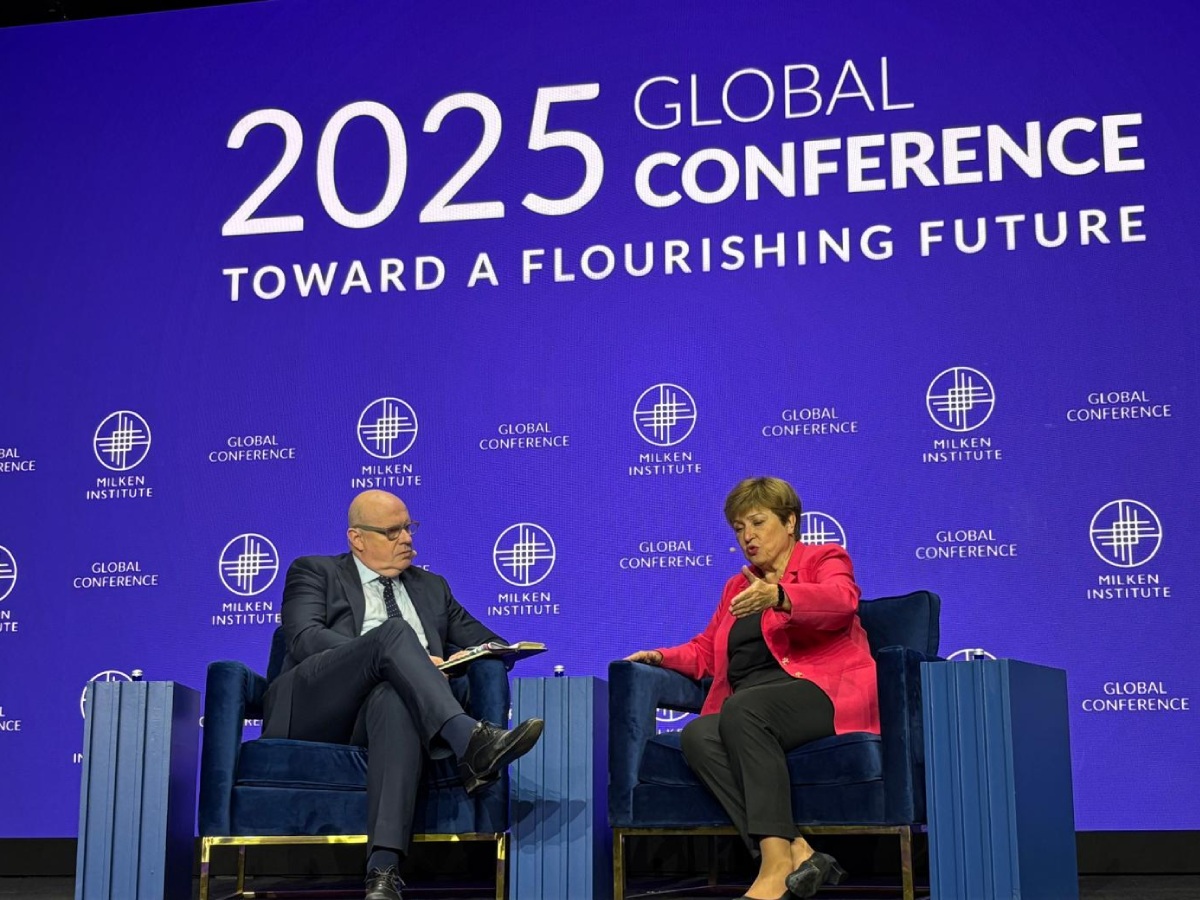
Speaking at the Milken Institute Global Conference in Beverly Hills, Georgieva said the IMF has been “very vocal” in urging China to rely more on domestic consumption. She pointed to the real estate slowdown, demographic pressures, and subdued private sector activity as areas that require policy attention.
“We would like to see China being more dynamic in moving from a heavy investment- and export-reliant model to one that is driven by domestic consumption,” Georgieva said. “That means addressing the property sector, reducing excessive state involvement, and expanding the services economy.”
The comments come amid growing concern in Washington over China’s economic policies and their impact on global trade. US Treasury Secretary Scott Bessent, in a recent letter to the IMF, urged the Fund to return to its core mandate of surveillance and to adopt a firmer stance in assessing China’s currency practices and state-driven distortions.
Georgieva acknowledged that progress on reducing state dominance in China’s economy remains limited. “It’s not easy. It’s not fast. But we need to stay engaged,” she said.
She also warned that rising trade barriers, including new tariffs being considered by the US, could have inflationary effects domestically and deflationary spillovers abroad, particularly in China and other large exporters. “What may look like a domestic decision ends up being a global issue,” she said.
China’s economy grew 5.3% in the first quarter of 2025, but analysts have flagged weak household spending and lingering deflationary risks. At the same time, youth unemployment and private-sector investment remain below pre-pandemic levels. The IMF recently projected China’s GDP growth would moderate to 4.6% by 2026 as structural challenges persist.
Georgieva said the global economy continues to face fragmentation risks, with countries drifting into “geoeconomic blocs” that could reduce efficiency, innovation, and resilience. She urged policymakers to focus on cooperation, especially on climate finance, digital infrastructure, and debt sustainability in emerging markets.
Asked about IMF engagement with low-income countries, Georgieva pointed to the Fund’s Resilience and Sustainability Trust, which has already approved more than $6 billion in long-term funding tied to climate and pandemic resilience.
She added that the IMF remains focused on reforming its governance structure to reflect the growing role of emerging economies, including China and India, in the global financial system.
“We are in a world that is very different than it was 30 years ago. Institutions like the IMF must evolve to reflect that,” Georgieva said.
The Milken Institute Global Conference is an annual gathering of policymakers, investors, and business leaders focused on finance, innovation, and development.