


Inflation is easing faster than expected but has yet to be fully defeated, International Monetary Fund (IMF) chief Kristalina Georgieva said, urging central bankers to carefully calibrate their decisions on cutting interest rates to incoming data.
Georgieva noted a significant decline in headline inflation for advanced economies, dropping to 2.3% in the final quarter of 2023 from 9.5% just 18 months earlier.
This downward trend is anticipated to continue into 2024, potentially paving the way for rate cuts by major central banks in the latter half of the year, she told an event hosted by the Atlantic Council think tank.
“On this final stretch, it is doubly important that central banks uphold their independence,” Georgieva said, urging policymakers to resist calls for early rate cuts when necessary.
“Premature easing could see new inflation surprises that may even necessitate a further bout of monetary tightening. On the other side, delaying too long could pour cold water on economic activity,” she said.
Georgieva said next week’s World Economic Outlook would show that global growth is marginally stronger given robust activity in the United States and many emerging market economies, but gave no specific new forecasts.
She explained that strong labour markets, an expanding labour force, strong household consumption, and an easing of supply chain issues were helping the global economy’s resilience. However, she said there were still “plenty of things to worry about.”
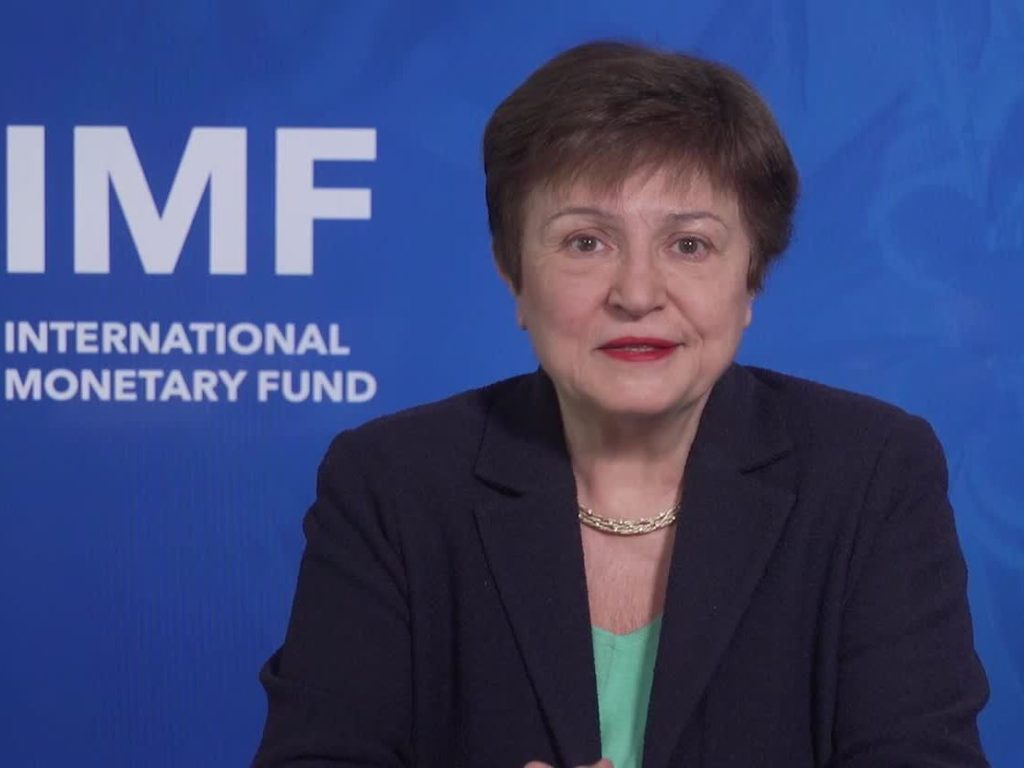
“The global environment has become more challenging. Geopolitical tensions increase the risks of fragmentation and, as we learned over the past few years, we operate in a world in which we must expect the unexpected,” Georgieva stated.
She said global activity was weak by historical standards, and prospects for growth had slowed since the global financial crisis of 2008 and 2009. The global output loss since the start of the pandemic in 2020 was $3.3 trillion, disproportionately hitting the most vulnerable countries.
Georgieva said the US had seen the strongest rebound among advanced economies, helped by rising productivity growth. Given the lingering impact of high energy prices and weaker productivity growth, Euro area activity was recovering more gradually.
Countries like Indonesia and India were faring better among emerging market economies, but low-income countries had seen the most severe scarring.
Given a significant and broad-based slowdown in productivity growth, the IMF’s five-year outlook for global growth was just above 3%, well below its historical average of 3.8%, she said.
“Without a course correction, we are heading for ‘the Tepid Twenties’—a sluggish and disappointing decade,” Georgieva said, urging continued vigilance to restore price stability, rebuild fiscal buffers and jumpstart growth.
These reforms, including strengthening governance and promoting gender equality in the labour market, could significantly boost output. Furthermore, Georgieva highlighted the potential benefits of policies to accelerate the green and digital transition, which could foster investment, job creation, and economic growth.
However, Georgieva also acknowledged the risks associated with artificial intelligence, citing an IMF study indicating potential job displacement in both global and advanced economies.