Four years ago, RAKBANK found itself at a crossroads.
As a mid-sized player in one of the world’s most competitive banking markets, it had a choice: compete on scale and pricing, or pivot decisively toward relevance, speed, and trust. It chose the latter.
Choosing Relevance Over Scale
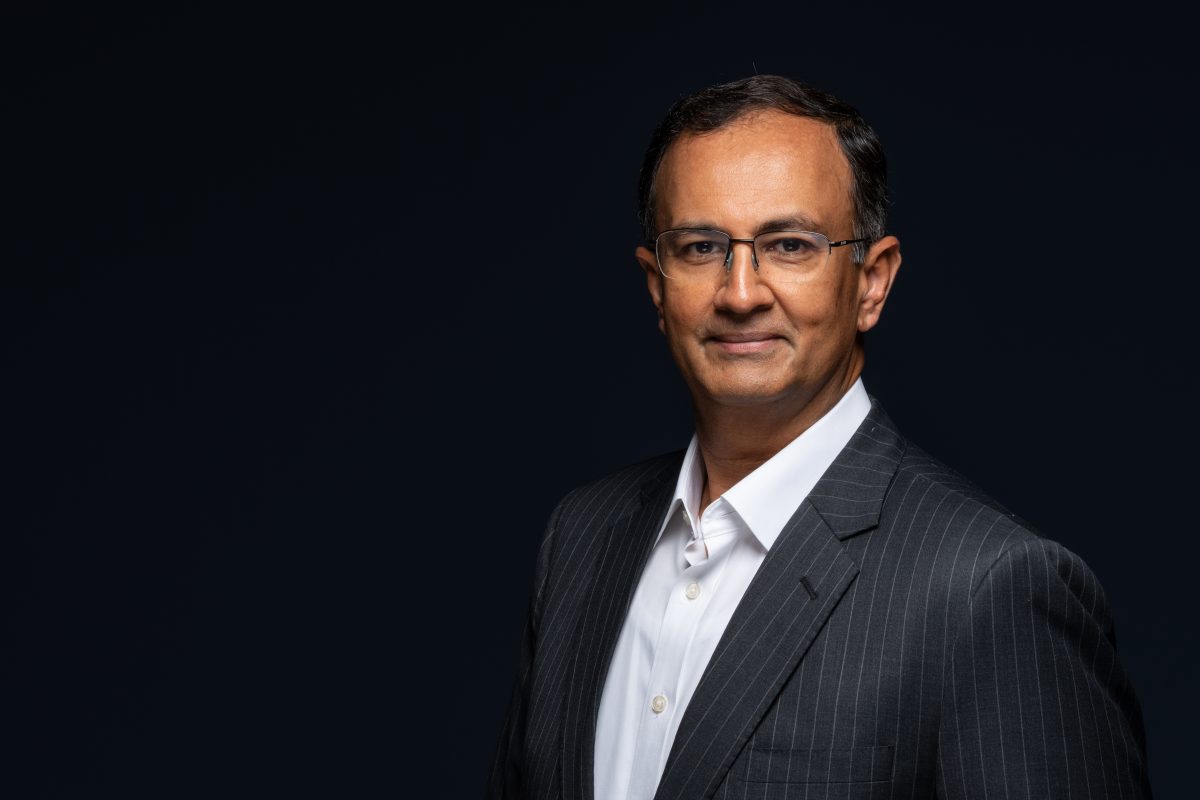
Under CEO Raheel Ahmed, the Ras Al Khaimah-based institution has undergone a quiet transformation that’s turning heads across the industry.
What was once a traditional retail-focused bank is now emerging as a case study in how incumbents can reinvent themselves without losing sight of the fundamentals.
From its digital-first service redesign and AI-powered assistant Rai, to its deepening role in SME lending and embedded finance, RAKBANK is showing what reinvention looks like from the inside out. The result is a bank that’s leaner, faster, and far more connected to the needs of a new customer generation, while still grounded in principles of trust, human service, and regulatory resilience.
Built for Speed, Anchored in Trust
When Raheel Ahmed took the helm at RAKBANK in early 2022, he was stepping into a market in motion. The UAE’s financial sector (already among the most sophisticated in the region) was undergoing a structural reset. Customers were demanding real-time, digital-first experiences.
Regulators were tightening standards around data governance, AML, and cybersecurity. And new entrants, both fintech and digital-first banks, were challenging the status quo with faster, leaner offerings.
Defining the Strategy From First Principles
Rather than react to the disruption, RAKBANK sought to define its future from first principles. “We understood early on that the future of banking would be defined by three things: trust, innovation, and customer experience,” says Ahmed. “We shaped our strategy around them.”
Making Customer Experience Measurable
That strategy has led to a fundamental reshaping of how the bank operates, beginning with the customer experience.
RAKBANK’s Mission Zero initiative, built around zero errors, zero complaints, and zero delays, now defines internal performance metrics across the organisation. The bank runs a 24/7 command centre, with real-time dashboards tracking everything from digital onboarding to service requests and transaction monitoring.
“Delivering awesome customer experience became the core of who we are,” Ahmed says. “Today, we attempt to identify and resolve all services proactively.”
Speed Without Compromising Resilience
But speed isn’t enough without resilience. In parallel, RAKBANK has doubled down on compliance, financial crime prevention, and data security.
The bank has heavily invested in AI-driven risk engines, real-time fraud alerting, sanctions screening, and advanced monitoring tools, all designed to meet rising regulatory expectations and safeguard the integrity of the wider UAE financial system.
Competing in a Digitally Mature Market
The evolution comes as the UAE banking landscape itself becomes more data-led, regulated, and digitally mature.
From the launch of real-time payment platform AANI to growing adoption of open finance principles, the country is building infrastructure designed to match, or exceed, global standards.
Ahmed sees this shift not as a challenge, but as an opportunity. “We see ourselves as both a beneficiary and a disruptor,” he says. “We adopt national innovations early, like instant payments and digital onboarding, while challenging the market with smarter and faster experiences within our own ecosystem.”
AI as an Enabler, Not a Gimmick
One of the clearest examples of that approach is Rai, RAKBANK’s AI-powered digital assistant embedded within its mobile app.
It now supports more than 270,000 active users, offering human-like conversations and instant support across a range of services, transforming what used to be manual, time-consuming interactions into frictionless, 24/7 experiences.
Why Trust Still Wins?
But Ahmed is quick to challenge any over-simplification of the market into incumbents and digital challengers.
“All banks today are highly digital,” he says. “Being well-established or digital-first is not a guarantee of success. The winners will be the players with a clear business model, a strong customer proposition, and the ability to sustain themselves.”
That emphasis on sustainability, both in customer relationships and internal culture, is a recurring theme. While many institutions focus exclusively on tech, Ahmed sees agility and trust as the real differentiators. “What keeps me awake is not technology,” he says. “It is the culture and agility of our team.
If your teams become slow to react, everything else falls behind.”
Trust, too, remains a critical asset, often underestimated in a world obsessed with speed and scale. “No matter how advanced your app is, every customer wants to know their money is safe and they can reach a human being when it matters,” he says.
“Knowing there is a place you can walk into when you need advice or support is often a determining factor in how people choose their bank.”
The result is a model that blends digital efficiency with human reassurance—one that positions RAKBANK not just as a tech-enabled bank, but as a trusted financial partner built for the long game.
The Bank that SME’s Built
In a region known for its mega-projects, sovereign wealth, and multinational banking giants, RAKBANK’s most strategic asset isn’t scale. It’s focus. And nowhere is that focus more apparent than in the bank’s deep commitment to SMEs.
“SMEs are central to what we do at RAKBANK,” says CEO Raheel Ahmed. “We are the go-to bank for small and medium businesses in the UAE.”
That’s not a marketing line. The bank disbursed over AED 10 billion in SME loans this year alone, earning it Euromoney’s SME Bank of the Year award.
Reinventing SME Lending
Yet beyond capital, RAKBANK is increasingly shaping how small businesses access services, make decisions, and grow. In doing so, it’s playing a larger role in the country’s broader diversification agenda.
“Lending has always been at the heart of SME growth, and it will remain a core pillar of our strategy,” Ahmed says. “But the next chapter is about evolution.”
That evolution includes a rethinking of credit models. Rather than rely on traditional underwriting alone, RAKBANK is using AI, transactional data, supply chain linkages and other alternative datasets to assess risk. The goal: to reach previously underserved businesses and make credit access smarter, faster, and more inclusive.
At the same time, the bank is embedding lending solutions directly into e-commerce, accounting, and logistics platforms, meeting SMEs where they already operate. It’s part of a wider strategy to integrate banking into the fabric of business activity, rather than treat it as a separate layer.
“Lending will become seamless, integrated, and powered by the digital footprints SMEs create every day,” says Ahmed.
That thinking extends to day-to-day operations, where the bank’s award-winning mobile app offers services built around SME realities: rapid FX payments in 25 currencies, Payment Links for remote collections, bulk bill payments, and embedded fraud prevention.
RAKBANK customers have sent money to more than 190 countries in just the last three months, a small but telling indicator of the international reach of the UAE’s SME community.
Preferential pricing codes and embedded rewards further deepen customer loyalty while helping SMEs reduce overheads. “SMEs win when they can move money fast, securely and at the lowest possible cost,” Ahmed says.
But even as the digital toolkit expands, RAKBANK is leaning into a less transactional, more relational approach to SME banking—one that blends products with education, insight, and community.
The bank launched the SME Souk podcast to provide real-world guidance and founder stories, and its SME Confidence Index has become a valued source of sentiment data across the business community. These platforms reflect a deeper ambition: to evolve from lender to advisor. “We believe SMEs grow when knowledge grows,” Ahmed says. “This is one of the ways our role is evolving.”
This dual-track approach, digital enablement and knowledge-sharing, is closely aligned with national priorities. The UAE’s We the UAE 2031 vision calls for an economy that is diversified, sustainable, and innovation-driven. With over 17,000 founders supported in 2025 alone, RAKBANK is directly contributing to that vision’s real-economy goals.
It’s also reshaping what success looks like for a mid-sized bank. Instead of chasing the scale of regional heavyweights, RAKBANK is doubling down on depth: being the default financial partner for the country’s most dynamic business segment. “Our role is not only to finance SMEs,” Ahmed says, “but to equip them with the tools, data and confidence to grow sustainably.”
In a region where small businesses are increasingly driving economic momentum, that role is not just strategic. It’s essential.
Human Capital, Infinite Mindset
Behind RAKBANK’s transformation is a set of strategic investments, digital architecture, AI tools, compliance frameworks, but at the centre of it all is something less quantifiable: people.
“I would describe my leadership style as open, curious, and people first,” says CEO Raheel Ahmed. “Culture only becomes real when you live it every day, not when it is written in a slide deck.”
That emphasis on people runs deep, from the top levels of governance to frontline innovation. Under Ahmed’s leadership, the bank has reoriented itself around a leadership model that’s open, curious, and adaptive.
He describes his goal as building a “liquid organisation”, one capable of evolving quickly, reallocating talent fluidly, and learning faster than the market shifts.
Diversity of Thought as a Growth Engine
“I believe in diversity of thought because the best ideas come when people with different experiences feel safe to challenge and contribute,” he says. “Everyone deserves one voice in the room, no matter their title or tenure.”
Emiratisation as Capability Building
That inclusive mindset underpins RAKBANK’s approach to Emiratisation, where the bank is investing in future leaders rather than just ticking hiring boxes.
Its She Tech programme offers Emirati women hands-on training, project exposure, and mentorship in IT, helping build a new generation of technologists in a field still short on female representation.
Meanwhile, internal mobility is giving high-potential UAE Nationals pathways to bigger roles. “We are proud of the Emirati colleagues who’ve stepped into leadership through internal programmes and fresh graduate intakes,” Ahmed says. “They are driving the kind of innovation that moves us forward.”
Partnering to Accelerate Innovation
The same future-focused mindset applies to the bank’s partnerships. Rather than try to build everything internally, RAKBANK follows a build-partner-buy model, combining the scale and governance of a conventional bank with the speed and specialisation of fintech players.
“Partnering with FinTechs has been a significant accelerant for us,” Ahmed says. “It gives RAKBANK access to emerging technologies, new ideas and specialised talent that complement our internal strengths.”
That model is paying off. The bank launched the UAE’s first crypto brokerage service via its mobile app, in partnership with Bitpanda. Through Skiply, it’s leading in school payments. Protego has become a go-to aggregator for insurance, offering a digital, transparent experience.
Yet in wholesale banking, a white-label partnership with Türkiye’s FaturaLab helped RAKBANK launch its supply chain finance platform in record time, financing over AED 150 million in invoices under its pilot phase.
Embedding ESG Into the Core
Beyond product innovation, RAKBANK is also emerging as a meaningful contributor to the UAE’s ESG ambitions. In 2024, it became the first bank in the GCC to issue a Social Finance Bond, raising USD 600 million for SME and healthcare support.
It has pledged AED 8 billion toward sustainable finance by 2030, aligning with the UAE banking sector’s AED 1 trillion target.
“ESG is now part of how we lend, operate, and manage risk,” Ahmed says. That includes embedding environmental risk metrics into credit decisions, supporting microfinance solutions for underbanked segments, and raising the standard of supplier governance within the bank’s own footprint.
Playing the Infinite Game
This broad-based strategy, digital, inclusive, and aligned with national goals, isn’t about short-term wins. Ahmed often reminds his team that banking is “an infinite game.” The objective isn’t to beat the quarter, but to build something enduring.
If that sounds idealistic, it’s worth noting that much of RAKBANK’s competitive edge now stems from exactly this posture: speed powered by trust, innovation guided by inclusion, and digital progress anchored by human connection.
Stay Up to Date with the Latest Updates at Finance ME!
Saudi 2026 Budget Pitch to Investors: Less Neom, More AI
S&P GCC Banking Outlook 2026: Stable for Now Pending Oil Assumptions
Inside the 2025 Wealth Shift: New Billionaires, New Power Shifts