The Islamic finance industry has seen significant growth in recent years, with its global value reaching $3.3 trillion by the end of 2023. This expansion has been driven by the industry’s strong value proposition, alignment with ethical investing and sustainability and the increasing diversification of investor bases. As Islamic finance continues to evolve, it is becoming more integrated into the real economy and is increasingly being leveraged to support sustainable development and infrastructure projects.
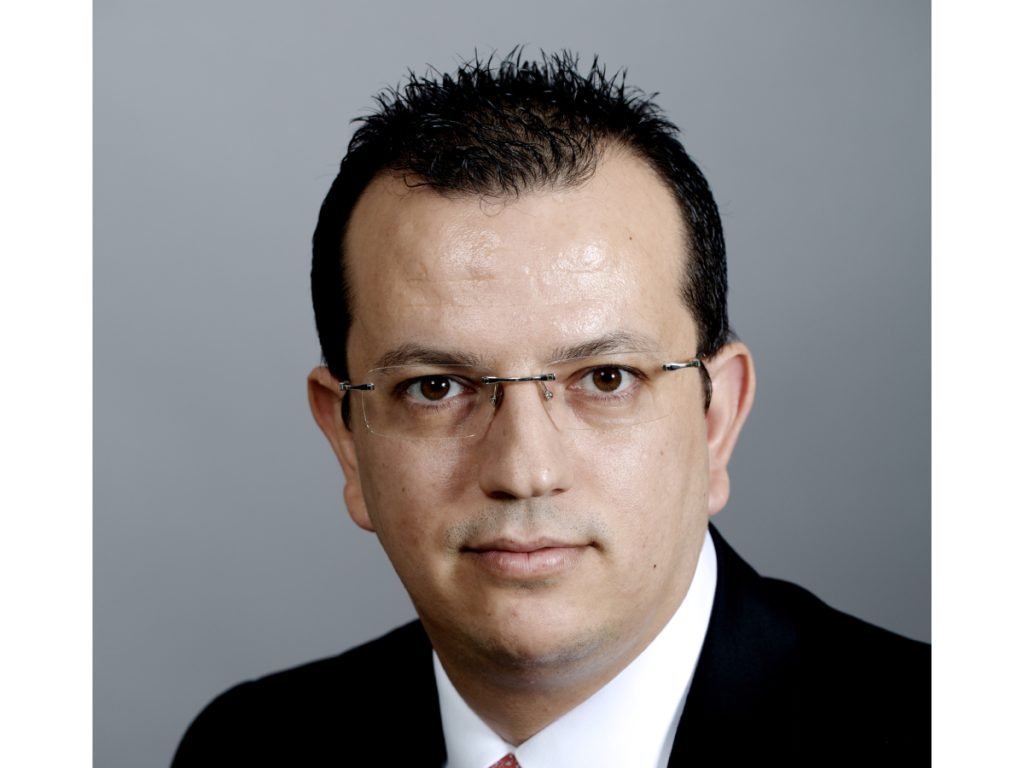
In a recent podcast interview with Cheque Point by Finance Middle East, Mohamed Damak, Managing Director and Global Head of Islamic Finance at S&P Global Ratings, discussed the growth of Islamic finance in the region. The podcast offers insights into the global rise of Islamic finance, the principles of ethical investing and risk-sharing and the role of Sharia compliance.
The following transcript has been edited for length and clarity. Listen to the full interview here.
We’ve seen a growing interest in Islamic finance globally in recent years. What are the key factors driving increased attention, and how do you see the landscape evolving in the coming years?
Yes, indeed. In recent years, we’ve seen increasing growth and interest in Islamic finance, and there are three reasons for that. The first reason is the strong growth of the industry. At the end of 2023, the Islamic finance industry was worth $3.3 trillion compared with $1.3 trillion just a decade ago, and it has been growing double-digit over the past decade. And we expect this growth to continue. Also, we’ve seen growth in all the components of the industry, from Islamic banking to the Sukuk market, to the fund industry to the Takaful industry, and we expect this growth to continue. The second reason is the industry value proposition. When issuers decide to go for Islamic finance versus commercial finance, they have the opportunity to speak to a class of investors that would not come if it’s just a conventional transaction, and those would be the Islamic finance investors that are not allowed to touch anything but Sharia-compliant transaction, and that allows for investor diversification and broadening the investor base for the transaction. The third reason is the entrenchment of the industry in the real economy and also its alignment with sustainability. We’ve seen the industry being used for the financing of the infrastructure gap; for example, we’ve seen the industry also adding value in the financing of sustainable development goals a few years ago and now more and more in the strategies to achieve net zero.
Islamic finance is always associated with principles of ethical investing and risk sharing. How do these principles differ from conventional finance, and what advantages do they offer to investors, particularly in today’s economic climate?
Risk sharing is one of the cardinal principles of Islamic finance. If you look at the purest form of Islamic finance, it can only be in equity form, meaning that any participant in a transaction has to share not only the profit but also the losses if there are any losses. However, this principle has not been applied consistently and stringently in Islamic finance. And that’s simply because, say, let’s assume a bank, for example, in good years, they’re going to serve profit to their clients. In bad years, they cannot serve losses to their clients because they take the risk of losing the deposits and driving into liquidity problems. If you apply the same principle to other products of Islamic finance, you end up with equity-like instruments. Equity-like instruments tend to be generally more expensive than fixed-income-like instruments. That’s why the industry came up with some other arrangements to make sure that they remain in compliance with this principle. But at the same time, the economic added value of the transaction continues to be there.
For ethical investment. I think people are slowly realising that there is a natural alignment between the principle of Islamic finance and sustainability and stewardship. For example, one of the principles of Sharia is to preserve life, which could be seen as aligned with mobilising resources, such as for environmental protection. Another principle is the principle of asset backing, and that could be seen as aligned with the principle of asset allocation or use of proceeds for sustainable finance.
Could you shed some light on the role of Sharia compliance and Islamic finance? How does it influence investment decisions and asset allocation, and what measures are in place to ensure adherence to these principles?
I think Islamic finance is subject to another layer of governance, which is Sharia governance, and the transaction is considered Sharia-compliant if it’s stamped so by a Sharia board. Now, at S&P Global Rating, we don’t comment on Sharia compliance. Still, we look at situations where the lack of compliance, or the perceived lack of compliance, could create additional risk. One of the issues that the industry has been facing over the last 40 or 50 years of development is the lack of standard interpretation of Sharia, which results in a situation that some transactions might be seen as Sharia-compliant in some jurisdictions and might be seen as no Sharia compliances in other jurisdiction. Now, this issue is supposed to be resolved by using common standards that would be acceptable to all the participants, and the issue is on the interpretation of these standards and to what extent this could be disruptive to the future development of the industry, which is a question that the industry needs to tackle.
Islamic finance has traditionally been associated with certain asset classes like real estate and infrastructure. Are there any emerging sectors or markets that will hold significant potential for Islamic investors in the near future?
You’re absolutely correct. Islamic finance has been associated with the real estate industry for many years, and that’s because you need tangible assets for Islamic finance. One of the principles is to have an underlying asset, and that underlying asset has to be tangible. This made real estate a natural habitat for Islamic finance. However, what we have observed is that sometimes you can have real estate backing the transaction, but the proceeds can be used elsewhere. So, for example, a corporation can use—and as we’ve seen in transactions in the past—existing real estate as an underlying asset in a structure where they raise funds in order to refinance existing maturities, for example, or invest in new projects. Also, we’ve observed structures whereby corporates try to leverage a little bit more their real estate assets by having a leg with tangible assets, typically at least 51% of a circle transaction and a leg with Murabaha assets for intangible assets, typically the remaining 49%. Also, recently, we’ve observed some Sukuk to be backed by other assets, like, for example, the aircraft, and we’ve seen that with the transaction that was issued last year. We’ve also seen sukuk being backed by airtime for telecom operators in the past. And that shows how the industry is entrenched in the real economy, and how the industry can serve in financing the real economy.
Sustainability and ESG considerations are becoming increasingly important in investment decisions. How is Islamic finance positioned to address these concerns?
There is an overlap between Islamic finance and sustainable finance, and the industry is slowly unlocking the opportunities related to sustainability. Now, if you look at the GCC, one of the key markets for Islamic finance, I think GCC countries represent more than 70% of the Islamic banking assets. For example, in the GCC, five of the six countries have committed to net zero by a specific deadline. Some have even announced a certain level of climate-related investments that need to be financed. This is where we think Islamic finance could add value. And this is why we think we could see more and more, like sustainable Sukuk, or green Sukuk, being issued in the market. Looking beyond the environmental and looking at the “S” side of the equation, which is the social side of the equation, we’ve seen sporadic issuance of social Sukuk, particularly during the pandemic. However, the Islamic finance industry has some specific instruments to tackle social challenges, such as Wakaf and Zakat. These are all products and structures that can be used to tackle some of the social objectives. And obviously when it comes to governance, there is that. I mean, governance rules are needed to ensure that the money goes where it should be.
For individuals and institutions new to Islamic finance. What advice would you give them in terms of navigating the principles and practices of this growing financial sector?
Being part of a rating agency, I cannot provide advice. However, what I can tell you is that when we analyse Islamic financial institutions and transactions, and particularly Sukuk, we spend the necessary amount of time to read and understand the legal documents, and depending on how Sharia standards may evolve, we may see some structures where the sponsor contractual obligations might be weakening, or we may see some transactions where the sponsor has to create some back doors in order to be able to comply with the requirement of Sharia, particularly due to the fact that Sharia requirement is evolving, and that would mean that investors could be exposed to additional risk, which is why we think that it’s extremely important to read the legal documents carefully and to make sure to understand how the transactions are put together.