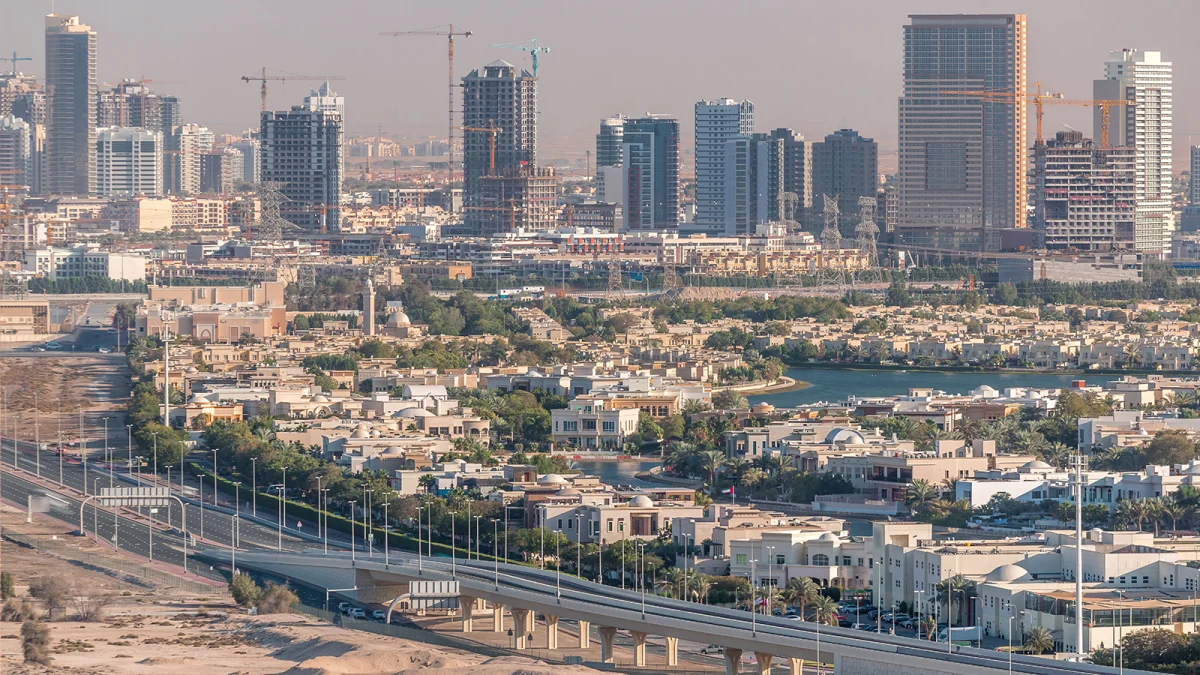
Dubai’s real estate sector delivered yet another landmark month in November 2025, logging 19,019 property transactions, a 30% year-on-year increase compared with November 2024, according to the latest report from fäm Properties.
That surge lifted the cumulative number of deals for the year to 197,263, surpassing the previous record annual high of 180,900 transactions set in 2024, even with a full month still left in 2025.
November deals generated AED 64.7 billion in sales value, up 50% compared with the same month last year.
That raised the total sales value for 2025 (so far) to AED 624.1 billion, overtaking 2024’s full-year total of AED 522.1 billion.
Market breakdown
Residential apartments remained the core driver with November seeing 15,905 apartment sales worth AED 32.1 billion, marking a 37.4% rise in volume year-on-year.
Villa sales recorded 2,078 transactions, slightly down in volume, but still generated AED 13.2 billion in value.
Commercial and plot sales also saw strong gains as commercial properties reached AED 2.3 billion in value, while plots racked up AED 17.1 billion.
Top-performing areas in November 2025 included:
Jumeirah Village Circle: 1,426 transactions worth Dh1.9 billion
Wadi Al Safa 5: 1,133 transactions worth Dh1.8 billion
Business Bay: 1,055 transactions worth Dh3.6 billion
Dubai South: 903 transactions worth Dh2.1 billion
Mina Rashid: 899 transactions worth Dh3.1 billion
What this means for institutional investors
The figures point to broad-based, sustained demand, a sign of market maturity rather than speculative bursts.
As noted by fäm, this is “market maturity meeting global demand,” with rising values reflecting increasing traction in premium segments.
For institutional investors, corporate real-estate portfolios, or treasury departments managing real-estate allocations, this momentum may signal compelling investment opportunities, particularly in mid to high end apartments, select villas, and plots with value-appreciation potential.
At the same time, the sharp rise in average prices implies a tightening market. The cost of acquiring new assets is rising, which may influence yield calculations, financing strategies, and long-term asset allocation decisions.