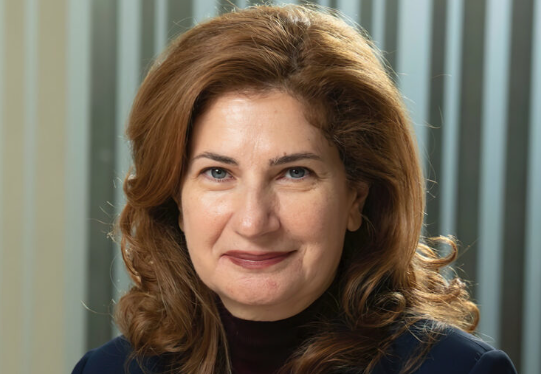
When Matt Shroder left senior roles at Uber and Binance to launch his own venture, the move was less about chasing the next big trend and more about solving a structural gap in global finance. His company, 1Money, which is less than a year old, is preparing to launch what it calls the world’s first stablecoin payments Layer 1 network, a system designed to make transactions instant, affordable, and compliant at scale. In this conversation with Finance Middle East, Shroder reflects on the lessons from scaling two of the world’s most disruptive companies, why he chose the Middle East as the launchpad for 1Money, and how he sees stablecoins moving from the margins of crypto into the core of mainstream finance.
What drove you to join the startup world?
I’ve always been drawn to businesses that challenge the status quo and redefine how people interact with technology. At Uber, I witnessed firsthand how technology could reshape transportation and even food on a global scale. At Binance, I saw crypto’s potential to do the same for financial services. 1Money is the natural next step. It addresses the inefficiencies in payments and banking by making stablecoin transactions instant, affordable and compliant at scale. For me, startups are about solving real-world problems with lasting impact, and this is one of the most urgent challenges to solve.
Why did you choose the Middle East as the place to start/expand the business?
The Middle East has rapidly positioned itself as a leading hub for fintech and digital assets. With progressive regulatory frameworks, rising demand for modern payment solutions and a highly active remittance market, the region offers a unique opportunity to drive real financial innovation.
Jurisdictions like ADGM are setting global benchmarks for responsible blockchain policy, and ecosystems like Hub71 are creating a supportive environment for early-stage startups to scale responsibly and gain access to key stakeholders and regulators. For 1Money, which is built on compliance, scale and real-world utility, the region offers both strategic alignment and long-term potential.
How would you describe the region’s startup scene in three words?
Ambitious, innovative, global.
There is a clear drive to build category-defining companies, supported by regulatory foresight and growing international interest. What stands out most is how the region is not just keeping pace with global tech trends but actively helping to shape them.
Is there something that has surprised you in your journey?
One of the biggest surprises has been how quickly large institutions are warming up to stablecoins as a real-world payment solution. When we started 1Money, we expected some resistance from traditional finance, but we’ve discovered that there is a strong interest from banks, payment providers and global merchants, who are actively looking for faster, cheaper and more efficient payment rails. The appetite for real infrastructure is growing faster than expected.
What are (in your view) the keys to approaching investors successfully?
Clarity of vision: Investors need to grasp the problem you’re solving immediately and what makes your solution different. A clear, compelling narrative is essential.
Experience and Team: Investors ultimately back people, not just ideas. A strong founding team with a track record of execution is one of the most critical factors in securing investment. Highlighting prior successes, industry expertise, and a world-class team gives investors confidence that you can build and scale the business effectively.
Demonstrating traction: Even at an early stage, traction matters too. Whether it is regulatory licensing, partnerships, early demand or product milestones, showing tangible progress demonstrates momentum.
Building relationships: Fundraising is not about a single pitch; it’s about cultivating long-term trust through consistent execution. As a founder, it’s on you to bring energy and conviction. Passion is contagious, so when investors see your relentless drive to solve a problem, it naturally draws them in.
What was the most challenging part of raising funding and how did you overcome it?
The biggest challenge was educating investors on why existing blockchain networks are not built to support global payments at scale. Many assumed today’s Layer 1s were already “good enough,” but we had to show why that isn’t the case, highlighting inefficiencies like slow settlement times, volatile fees and compliance risks. The reality is that the infrastructure that got the industry to this point won’t be what takes it forward. There’s a clear reason why existing Layer 1s haven’t been widely adopted by corporations.
One of our biggest differentiators is that we don’t have a native token, unlike 99% of projects in this space. While this may seem unconventional, it increases our utility for partners and customers, allowing for a pricing model that wouldn’t be possible with a token-based structure. Once our TradFi and Exchanges investors recognised that we weren’t just another Layer 1, but a purpose-built network designed for real-world payments, they quickly got on board.
In many ways, we represent a counter-bet to the prevailing trends in the industry, and we embrace that. Rather than following the well-worn path of token-driven incentives, we’re building a fundamentally different model—one that prioritises utility, stability and enterprise adoption. That’s what sets 1Money apart.
What is the best piece of financial advice you have received?
The best financial advice I’ve received is foundational but straightforward: focus on long-term success over short-term wins. Valuations, market sentiment and funding rounds can be tempting distractions, but what truly matters is building a business with strong fundamentals—putting the customer first, choosing the right investors, forming strategic partnerships, and ensuring long-term resilience. A startup’s success isn’t determined by how much capital it raises but by how effectively it executes.
In an era of instant market updates and constant media noise, it’s easy to get caught up in short-term fluctuations. To counter that, I’ve built a habit of stepping back from real-time analysis. I remove unnecessary distractions by deleting apps, muting market updates, and instead reviewing financial performance on a quarterly basis. It may seem old school, but having printed statements in front of me forces a broader perspective. This discipline keeps me focused on execution and prevents second-guessing based on temporary market swings. Long-term success is about conviction, not reacting to every peak and dip.
What has been your biggest success and your biggest failure?
Biggest success: While I’ve had the opportunity to be part of some of the most successful startups in history, the real value and success have always been about the people. Whether it’s hiring, partnerships, introductions or just long-standing friendships, the network of people I’ve worked with has had a greater impact than any financial or career milestone. What I consider my biggest success is being part of teams that not only built industry-defining companies but also forged relationships that continue to shape my work every day.
Biggest failure: Failure is an inevitable part of any path to success. If you never fail, you probably weren’t thinking big enough or taking bold enough action. I’ve experienced many failures across different areas, such as deciding to shut down a self-funded startup, losing market battles in certain regions, M&A deals that didn’t work out, and plenty more along the way. The key is how you approach failure. Instead of viewing it as a setback, it should be seen as a learning opportunity that often provides the most valuable lessons. Each misstep puts you in a better position to make stronger, more informed decisions moving forward.
What is the best quality a leader can have?
No founder can build a successful business without prioritising a customer-first culture and assembling a world-class team.
Starting with the customer, no unicorn has ever scaled without making customers’ needs the foundation of decision-making. If you look at the core values of major brands, you’ll notice that customer focus or even customer obsession is usually listed as a cultural value. This is critical because the moment your team loses direct communication with customers, you risk drifting away from their needs and what truly matters.
Building a world-class team to execute that customer-first strategy is just as essential. As a leader, your ability to attract and retain top talent depends on how well you:
• Recognise – Acknowledge great work, whether verbally or through tangible rewards.
• Teach – Invest in skill development or to help individuals grow professionally.
• Align – Connect your company’s mission and initiatives to an individual’s personal motivation, or ensure you hire people whose goals naturally align with that mission.
In my experience, when someone lacks two of these three elements, they often start looking for other opportunities. Leadership isn’t just about making decisions, it’s about creating an environment where the best people are excited to stay, grow and contribute to something meaningful.
Where would you like to be in 5 years’ time?
In five years, I see 1Money as the dominant stablecoin payments network, processing billions of transactions globally. I believe stablecoins will be fully integrated into mainstream finance, powering everything from everyday purchases to international remittances. Personally, I want to continue building impactful fintech solutions that make money movement as seamless as sending a text message.