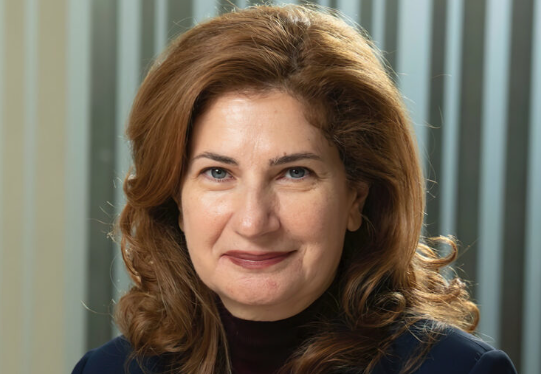
For Dr Payman Eslami, the unpredictability of global shipping markets is both a personal challenge and a business opportunity. After nearly 30 years in maritime engineering and a doctorate in market modelling, he founded Soshianest to tackle freight volatility with artificial intelligence.
The venture aims to give shipping and commodity players tools to forecast rates with over 90% accuracy, bridging the gap between research and real-world decision-making in a sector that underpins four-fifths of global trade.
What drove you to join the startup world?
I was driven by the willingness to tackle a long-standing pain in the maritime and commodity industries — the challenge of navigating volatile markets and making informed decisions in the face of uncertainty. I deepened my academic and domain knowledge by focusing my doctoral research on maritime market modelling, which gave me the tools to understand these complex dynamics in depth. Considering that over 80% of global trade by volume moves through shipping, and that inefficiencies in freight rate decisions alone can cost the industry billions of dollars annually, I saw the opportunity to transform research into practical solutions. By applying AI-driven analytics, we empower stakeholders to anticipate change, reduce risk, and make smarter economic decisions across the global supply chain.
Why did you choose the Middle East as the place to start/expand the business?
The Middle East is at the crossroads of global trade and energy, with shipping and commodities at the heart of its economy. My academic work and industry insights showed that intelligence could be particularly valuable in this region, where volatility and uncertainty can directly impact growth and stability. With strong government-backed initiatives, investor interest, and a clear appetite for innovation, the Middle East became the ideal hub to apply our expertise, scale our platform, and support smarter decision-making across regional and global markets.
How would you describe the region’s startup scene in three words?
Dynamic. Ambitious. Collaborative.
Is there something that has surprised you in your journey?
I’ve been pleasantly surprised by how receptive regional stakeholders are to collaborating with startups.
What are (in your view) the keys to approaching investors successfully?
The key is combining technical depth with a clear demonstration of industry impact and commercialisation potential. Academic and domain expertise provide the foundation, but investors need to see how that translates into measurable results. Clarity, evidence, and a path to commercialisation are essential to building investor trust.
What was the most challenging part of raising funding and how did you overcome it?
The most challenging part is bridging the gap between highly technical research and investor understanding. Maritime and commodity markets are complex, and not every investor is familiar with the scale of opportunity. (Note: we have not raised funding yet.) Being part of MBRIF will significantly help us in addressing this challenge by providing a strong layer of credibility, visibility in the ecosystem, and access to networks that can open the door to potential investors and strategic partners.
What is the best piece of financial advice you have received?
“Balance innovation with discipline” is the key. While bold ideas fuel growth, they need to be paired with prudent financial planning and precise execution to build a sustainable business.
What has been your biggest success and your biggest failure?
Our biggest success has been developing an engine with an average of over 90% accuracy in freight rate forecasting. This breakthrough allows shipping and trading companies to make confident, data-driven decisions in a historically volatile market. On the other hand, our biggest failure was underestimating how long it takes to convert pilots into long-term enterprise contracts.
What is the best quality a leader can have?
Adaptability grounded in vision. Maintain clarity of purpose while remaining flexible enough to adjust tactics as markets, technology, and opportunities evolve.
Where would you like to be in five years’ time?
In five years, I envision Soshianest as a global benchmark for intelligence in shipping, trade, and commodities. We aim to support sustainable practices, contributing to a smarter, greener, and more transparent global trade ecosystem that encompasses shipowners, traders, financial Institutions, and policymakers.