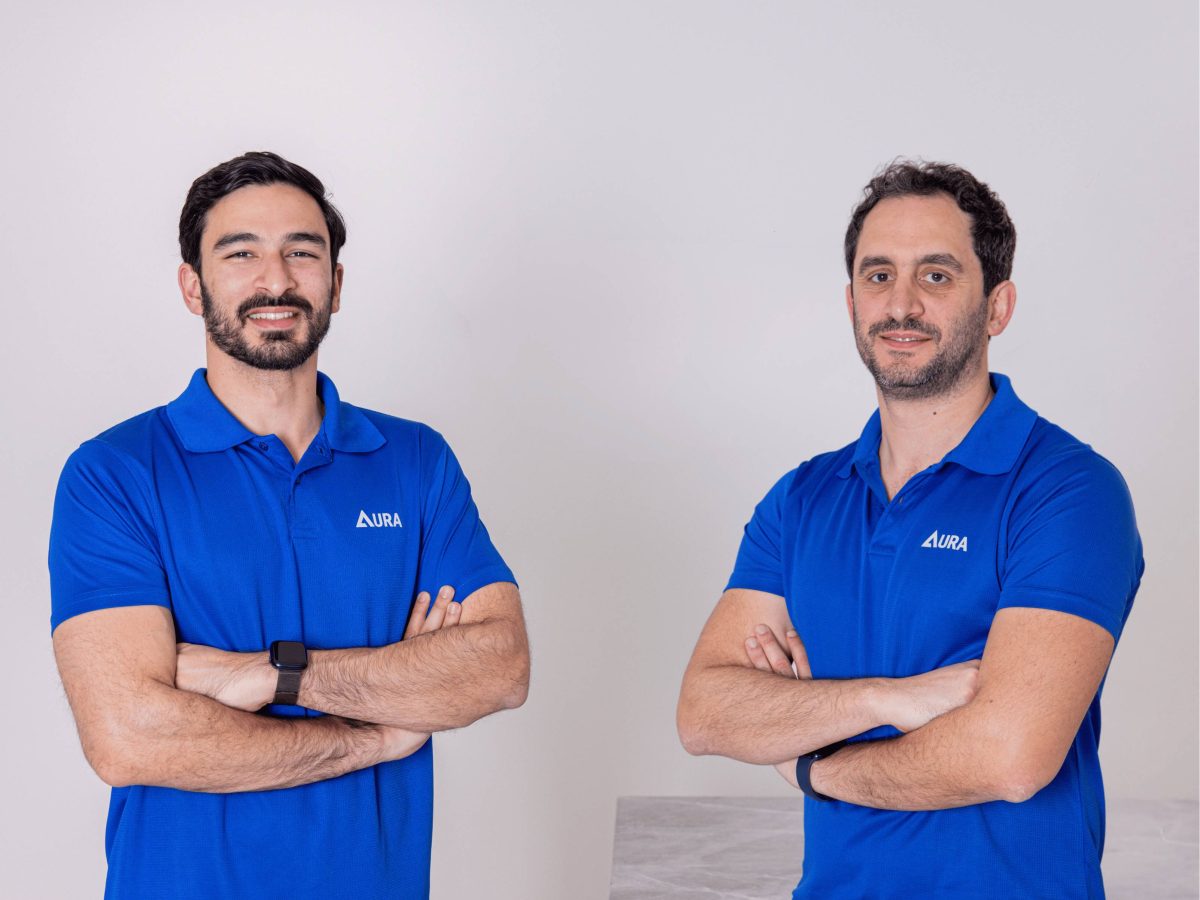
Shahrukh Ghazali and Samer El Mardini are tackling one of the region’s most persistent problems—delayed SME payments. With Aura Finance, the early-stage startup is building a system where small businesses can unlock cash flow on demand through invoice discounting and embedded credit tools. Drawing on their experience leading fintech at Careem Pay, the co-founders see a regional market primed for digitisation but constrained by inefficient financing.
Aura aims to reduce the friction between small suppliers and large clients by offering capital and helping traditional lenders match the startup’s speed and experience. The team is now expanding its product stack and working with ecosystem partners to make real-time SME financing as accessible as a click.
What drove you to join the startup world?
Shahrukh: I was drawn into tech startups while trying to build an online grocery delivery business during college. I believe innovation drives the best customer experiences, and there’s no better place to innovate than at a startup, where you’re not bogged down by organisational inertia.
Samer: Although I was lucky to be part of great companies, we wanted to tackle the problem of SME financing from the ground up. Startups allow you to move fast and experiment by making decisions without layers of bureaucracy. This provides a unique opportunity to shape an idea into something tangible, solve a real problem, and see the direct impact firsthand.
We saw the problems SMEs were facing when working with large businesses in the UAE, where they were able to close deals, but didn’t have the cash flow to fulfil them on their clients’ standard payment terms. When we looked at the options available to them, there was a clear gap, and recent advances from a regulatory, technology and infrastructure perspective presented the perfect opportunity to address it at scale. As we launched an invoice discounting service, with many back-office processes, we’ve seen a much broader opportunity in helping traditional lenders achieve our level of efficiency and customer experience.
Why did you choose the Middle East as the place to start/expand the business?
Shahrukh: I’ve spent the last 8 years in the UAE and I’ve seen it evolve as a tech hub while working at one of the region’s most well-known startup success stories. There is still a ton of potential, and we’re now putting ourselves in a position to realise it, from a regulatory, ecosystem and infrastructure perspective.
Samer: Being from the region and having built my career here, I believe the Middle East was the natural place to build a business. The rapid economic and digital transformation—especially in the UAE and KSA—has proven the region’s potential when the right solutions are implemented. Aura is our way of contributing to this momentum by supporting SMEs, the backbone of the economy.
How would you describe the region’s startup scene in three words?
Shahrukh: Ready for liftoff
Samer: Full of potential
Is there something that has surprised you in your journey?
Shahrukh: I’ve been surprised by how helpful founders are. Sometimes we find it difficult to get support from people we’ve worked with for a long time, but a founder we’ve met once for 30 minutes is almost always willing to take time out to help us with introductions, advice and more.
Samer: One of the most interesting parts of the journey has been seeing how the right people, ideas, and resources fall into place once you’re in motion. While execution is critical, a big part of growth comes from the unexpected opportunities, connections, and insights that emerge.
What factors have been most important in securing funding for your startup so far?
We’re fortunate to have some amazing angel investors, including founders, bankers and tech executives. Consistent communication has been the key. Most investors won’t write a cheque the first time you meet them, but as you continue to show progress with whatever resources you have, enough of them will gain the confidence to bet on you. Many of these meetings were by chance, so getting out there and meeting people relevant to what you’re building is important. You never know where these conversations will eventually lead.
Beyond funding, what are some of the key challenges startups face, and how can government-led accelerator programs help address those challenges?
Closing partnerships is difficult early on, especially with more well-established partners. Being part of government-led initiatives like MBRIF helps provide credibility, PR and introductions, which make these conversations much easier
What is the best piece of financial advice you have received?
Shahrukh: Frugality was a core value practised at Careem, which taught us how to hustle and get things done with little to no resources. That’s been instrumental in getting us to where we are today. There’s a free tier, or startup program, available for every tool, and you’re just leaving money on the table if you don’t go for it.
Samer: Success isn’t just about securing financing—it’s about using it efficiently. You need to be disciplined in allocating capital, ensuring that every dollar spent drives value. Scaling smartly is just as important as scaling fast. In financing, this means balancing growth with underwriting discipline.
What has been your biggest success and your biggest failure?
The biggest success we’ve seen so far is the feedback we’ve gotten from our customers. They’re switching to Aura from more established players because they love the experience.
Our biggest failure was taking too long to get started. Once we launched, we quickly realised that a week of operating beats a month of planning hands down, and nothing compares to putting a product in a customer’s hands.
What is the best quality a leader can have?
Shahrukh: In a startup, knowing which fires need your attention at what point is the most important trait for succeeding as a leader. You’re context switching constantly, so prioritization is key, otherwise you’ll accomplish nothing.
Samer: Adaptability. In a startup, a leader has to wear multiple hats—you might be handling operations one day, closing a strategic partnership the next, and then firefighting unexpected challenges right after.
Where would you like to be in five years’ time?
In five years, an SME anywhere in the MENA region should be able to access financing, on any platform, in minutes and with just a few clicks. Aura will be the key enabler for this, bringing capital to where it’s needed most through technology and automation.