The role of the CFO has undergone a profound transformation in recent years, shifting from a traditional financial management role to a more strategic leadership position. This evolution is driven by the increasing integration of finance with broader business strategies and the need for CFOs to be at the forefront of technological and industry changes. Today’s CFOs are expected to lead digital transformation efforts, drive sustainability initiatives, and demonstrate strong communication skills with stakeholders while maintaining their core responsibility of managing financial performance.
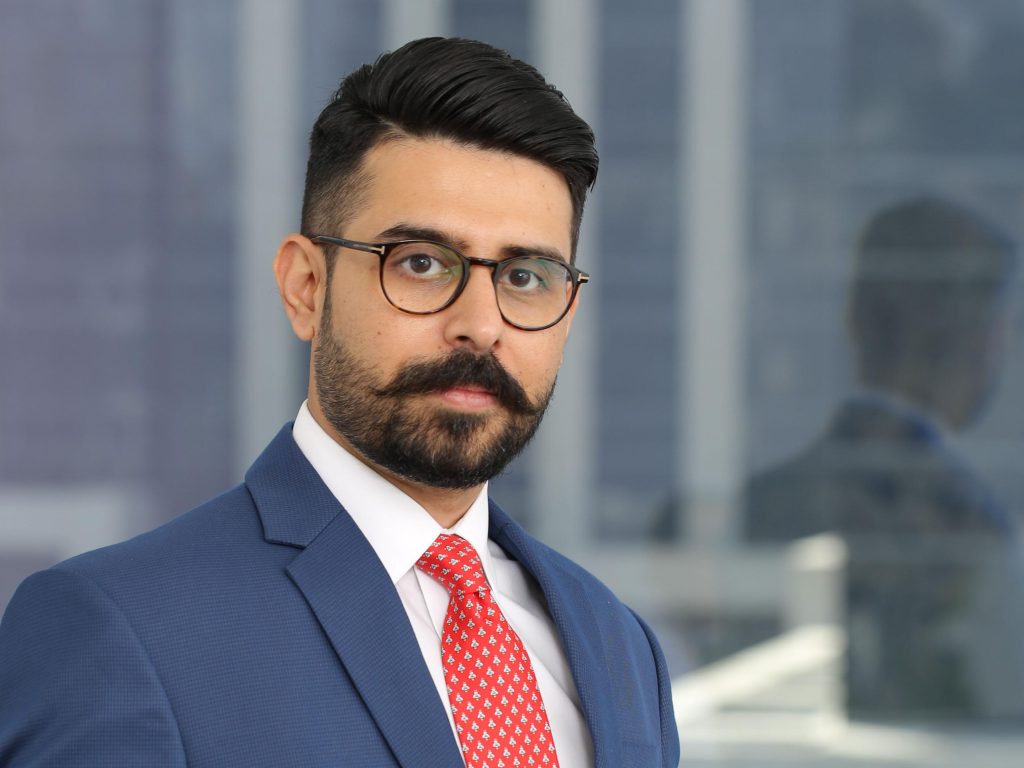
In a recent podcast interview with Cheque Point, Taimur Ali Mir, PwC Partner and PwC’s Academy ME Professional Qualifications Head, discussed the key skills needed for the future CFO. The conversation explored how CFOs are using emerging technologies, including AI and data analytics, to enhance decision-making and the importance of upskilling and continuous learning in an increasingly complex business environment.
How are the responsibilities of CFOs changing, and what new skills and competencies are becoming essential for modern financial leaders?
I think this is pertinent to today simply because the role of CFO has evolved perhaps more than any other role in the last decade or so. It has moved away from a more accounting, finance-based role to a more strategic role. This is now becoming integral to strategy formulation at entities, corporates, and the public sector, and it’s guiding the long-term business plans for the entities driven by the CFOs.
Another way of looking at it is that being a CFO also means being on top of what’s happening in your industry as well as the tech world. Digital literacy has become a very strong part of a CFO role. The proficiency is in emerging technologies, including AI, data analytics, and digital transformation, which are critical to a CFO’s role today. I would say some of the other traits, such as leadership, have remained. It’s always critical for a CFO to demonstrate a strong leadership role in terms of interpersonal skills. It’s essential for leading diverse teams, but with many entities now listed or in the public eye, communications is also a very important factor for CFOs, because they are talking to the street. They must be able to communicate themselves and their plans and bring optimism about their entities and companies to the general public.
In the last few years, we have also seen how sustainability, apart from risk management, has been at the forefront of these critical FSA skills that today’s CFOs need. Understanding and integrating all ESG factors into financial strategies is very important.
As CFOs take more strategic roles within an organisation, what tools and methodologies are they using to enhance their decision-making capabilities, and how do data analytics and AI play a part in shaping these financial strategies?
Data is the new currency when it comes to decision-making. The CFO role is becoming more strategic in nature, partly due to the role that data plays now in decision-making. CFOs are expected to possess strong analytical skill sets and demonstrate decisions driven by those. If you look at what a successful CFO should be competent in, it is the whole data and analytics piece within their organisation—automation, AI, and then the use of genAI, which is very prevalent now.
Data is the new currency when it comes to decision-making
Then, I would say using more targeted analysis and addressing specific business issues. And, finally, maybe extracting key insights for the decision-making process. For instance, if you look at the use of ERP systems for real-time financial reporting analysis, it has gone through the roof. It has been very effective. Similarly, things like scenario planning, where people are now developing multiple financial scenarios to anticipate potential impact outcomes to prepare for contingencies. That’s something which is on the back of data and AI. These are some of the critical roles within organisations and tools that the efforts should be looking at.
What challenges do they face in this role? How can they better prepare themselves? How can they effectively collaborate with other departments to ensure successful implementation while mitigating cybersecurity risks?
Change in management, particularly in the context of the whole digital transformation, is a critical responsibility for a CFO. They must navigate the associated risks and governance challenges attached to digital technologies. And that’s the balance they have to strike between going for these innovative tools and managing the risk.
In today’s world, a CFO must be digitally savvy. He or she must have that cross-functional skill set deep inside the respective industries. Continuous learning is an effective way for a CFO to keep abreast of what’s happening and the latest trends. Many studies show institutional investors believe using technological tools will improve outcomes. Key challenges sometimes faced in this area are: How do you quantify the ROI? How do you quantify the value that’s being created? This challenge sometimes has to do with the impact that this investment in technology and changes is bringing. And sometimes, it’s not as evident. This is, in my view, a clear challenge.
In today’s world, a CFO must be digitally savvy
Sometimes, transforming away from what you call legacy systems is a clear challenge because organisations are huge. They are big, a mindset change is required, and it sometimes becomes difficult to bring in new technology and new ways of working when the mindset is absent. In my view, the whole change management piece sits very much in that CFO space, whereby they lead it and enable it to happen. Part of your question on how we can prepare for this is that, in my view, it is continuous learning. A culture of innovation—trying to be more innovative in how things are being done and investing in talent development—is a very strong and pertinent area.

Some effective strategies are innovation culture, investing in the right talent, continuous development, and a cross-functional team. We discussed how CFOs need to be focused not just on one side of the business but cross-sectionally. This goes along the way in terms of risk management and innovation.
ESG factors are becoming critical in financial reporting. How can CFOs in the Middle East prepare their organisations for ESG reporting frameworks and strategies, and what specific challenges should they be aware of?
The ESG regulatory environment as a whole in the Middle East is rapidly evolving, and we have seen very strong commitments coming out of most Gulf nations and Egypt during COP28. Now, the CFOs need to prepare for stricter ESG requirements in the countries of this region, keeping in mind the aim for carbon neutrality and transition away from fossil fuel-based enrolments. The UAE and Saudi Arabia, specifically, are aligning their ESG frameworks with Western standards, and that requires the CFOs to be updated on global best practices.
Secondly, I would say while there might be a bit of a lag in adopting some formal ESG mandates, it can be expected that many countries in the Gulf will soon begin to reduce policy reform, and that, in my opinion, will be the catalyst, because very often than not, some of these changes come through from you as a business trying to be as transparent and ethical for your clients. But many times, this also happens through a regulatory push. Once you see those introductions of policy reforms, we will see that a lot of these nations and their companies have to keep pace with it. In that case, CFOs should invest today in the technologies that enable them to collect ESG data and analyse and report accurately.
One of the reports that PwC worked on in partnership with Workiva in 2023 was a survey, and it talked about how 85% of executives think they currently lack the right tools and tech infrastructure. I don’t believe this number has changed a lot in a year, but that’s the fact that a lot of investment still needs to be made in getting the right tools for data collection for reporting in the future. That’s the way to go about it, whether around services. Again, as PwC, that’s one of the things we are working on extensively with our clients, around how they can get the processes and policies in place for the reporting in the future.
Apart from the investments and tech side, a more proactive approach is crucial. This proactive approach comes through upskilling and adapting. It shouldn’t be a stick approach. It shouldn’t be approached whereby, okay, because now the government mandates me to do it, or my client mandates me to do it, I’m going to do it. It’s about proactively looking at ways to learn and understand it. Because for many people, it is just a term, and when you start looking at it in more or in more depth, you know that it’s beyond just keywords, it’s about a lot of action that needs to be done around it to be able to compliant or being seen as a sustainable entity. That mindset shift, for me, and investing in the technologies and the right skills is critical.
As a CFA charter holder who works with clients in the banking sector, why are CFOs prioritising upskilling and professional qualification? What specialist qualifications are in demand right now, and how does this relate to the nationalisation efforts in the region?
When I look at the significant transformation in the region, the key challenge these organisations often face is attracting and keeping the right talent—for instance, the banking and financial sectors. The UAE and KSA aim to make this the financial hub. And because it’s a very heavily services-based sector, you need the right skills and talents. You need talented individuals who can future-proof the industries going forward, which requires massive investment around upskilling.

We have seen that digitisation has been a focus for these key transformations, requiring a workforce equipped with relevant skills. A lot of time is spent designing the right programs at the right levels to keep the people in the organisation in a continuous learning mode. I’m talking about separate programs for the graduate levels, individual programs for manager levels, and then at the senior levels because you’re trying to create that pool of talent. It is succession planning, growing the business, and all of it together. Secondly, when you look at the nationalisation efforts, which has been a critical focus with all the public sector entities and the private sector entities now, is whereby trying to develop the local talent, to bridge the skills gap, which is, which is very critical because as a region, you need that you cannot have a limited number of workforce or talent, because then you are opening your opening yourself to the risk of flight. The best way of going about it is having a diverse workforce in terms of their abilities, their skills, the talent they bring in, and one on a constant learning curve, which means they are developing themselves. When you hire somebody in your organisation, whether you hire an expat or a local, the aim is that the person will deliver skills that will be aligned with your business growth, not the same level of output. When I’m looking at output, the services that are being delivered are going to grow in line with how the business is growing, and that’s only going to happen with upskilling. I think that’s where we have seen much focus coming through.