The Middle East is undergoing a transformation in its entrepreneurial landscape, positioning itself as a global launchpad for startups across sectors such as fintech, logistics, artificial intelligence, climate tech and digital infrastructure. Once viewed primarily as an oil-driven economy, the region is now making headlines for venture capital activity, government-backed innovation platforms and regulatory reforms tailored for entrepreneurs.
According to Wamda, the Middle East and North Africa (MENA) startup ecosystem showed resilience, with rising deal volumes and sectoral diversity, as MENA startups recorded $2.3 billion in investments in 2024. Despite the drop in value, the ecosystem saw growth in activity, with 610 deals marking a 3.5% year-on-year increase.
This growing appetite for innovation is driven by strategic policy frameworks, favourable demographics and emerging private-sector ecosystems.
Government-led reforms
At the heart of the region’s startup momentum are policy instruments like golden visas, tax-free zones and government-backed accelerators.
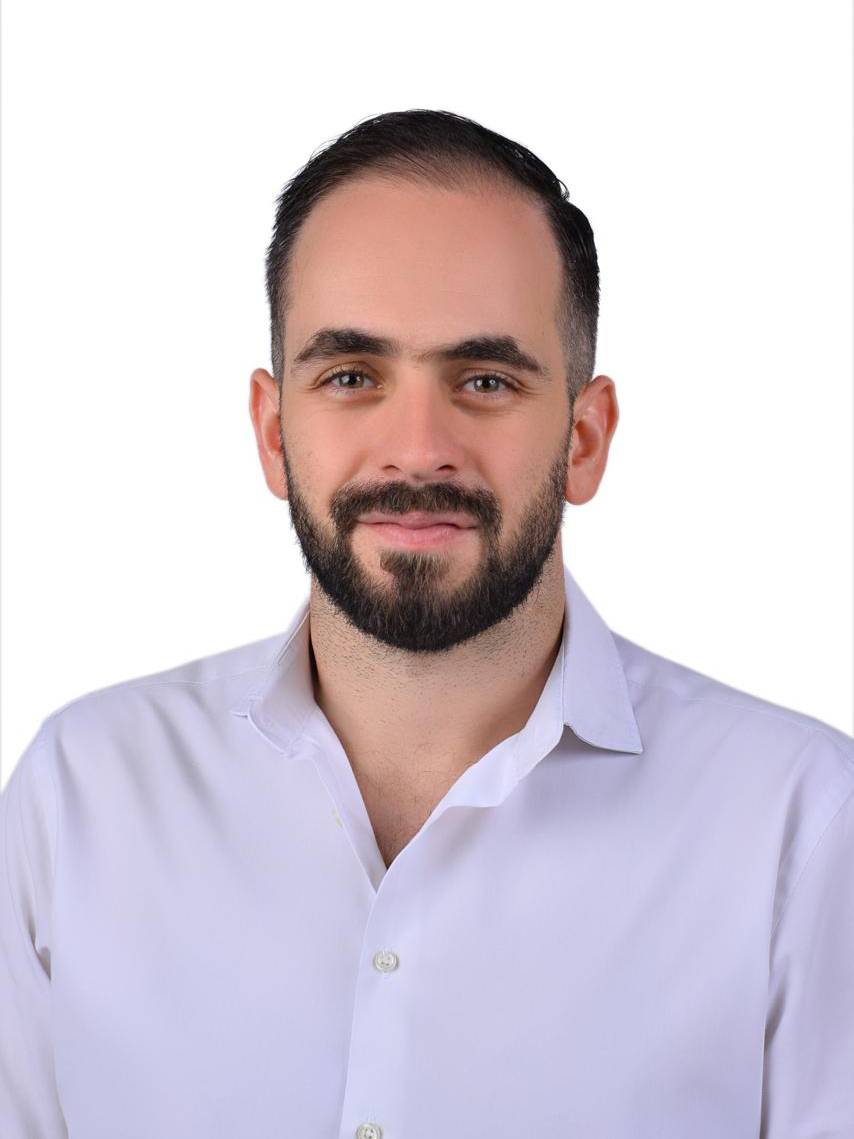
Hani Murad, CEO of Startupbootcamp, said, “Government-driven initiatives have dramatically accelerated the Middle East’s transformation into a global startup hub. These policies have not only attracted founders and capital, but also helped de-risk early-stage entrepreneurship in traditionally conservative markets.”
Dubai’s DIFC Innovation Hub, Abu Dhabi’s Hub71, and Saudi Arabia’s Vision 2030 SME support programmes have all played instrumental roles. These platforms offer more than capital. They provide founders access to subsidised office spaces, regulatory guidance and investor connections. The UAE’s introduction of a 10-year Golden Visa for entrepreneurs and highly skilled workers has further enhanced the appeal of setting up and scaling from the region.
However, Murad noted, “Their long-term sustainability hinges on evolving from policy-driven momentum to market-driven growth, through consistent regulatory clarity, stronger exits and more integration between innovation programs and real economy needs.”

Demographic advantage
The Middle East boasts one of the youngest populations globally, with over 60% of the population under 30. High smartphone penetration—estimated at 91% in the UAE and 89% in Saudi Arabia—and rising digital engagement have created fertile ground for B2C and B2B platforms.
“The Middle East’s youthful, tech-savvy population and high smartphone adoption aren’t just statistics, they’re catalysts,” Murad explained. “They enable rapid testing, adoption and scaling of digital solutions. In fintech, this has fuelled growth in paytech, remittances and embedded finance. In logistics, we’ve seen last-mile innovation thrive, driven by e-commerce and on-demand culture. In SaaS, the demand for localised, Arabic-first platforms in HR, procurement and compliance is growing fast.”
Investor interest
MENA’s venture capital ecosystem is becoming more sophisticated. While early-stage funding remains dominant, there is a gradual uptick in Series A and B rounds, especially in fintech and digital infrastructure.
“Local investors, corporates and family offices are increasingly shaping MENA’s startup ecosystem—not just with capital, but with networks, infrastructure and sector expertise,” said Murad. “We’re seeing a shift toward founder-friendly term sheets, co-building models and thematic funds aligned with national priorities like food security, fintech and AI.”
Yet gaps remain. These include a shortage of experienced lead investors, fragmented cross-border regulations and relatively few successful exits to date. “Unlocking the next growth phase will require more conviction-led investing and stronger alignment between private capital and public innovation agendas,” he added.

Case studies from the region
A closer look at founder journeys reveals the region’s growing appeal:
- Simpleem: Co-founded by Leonty Mukhortov, Simpleem uses behavioural AI to translate emotional signals into business insights. The company recently partnered with Hub71 to scale in the MENA region. “Companies in the Middle East care about performance, revenue and real impact, which aligns closely to what we offer,” Mukhortov explained.
- Mantas: Basil Mimi’s startup is pioneering cloud downtime insurance using parametric models. Mantas targets companies exposed to operational risks due to cloud service failures.
- FortyGuard: Jay Sadiq is turning heat into a design tool. His startup uses AI to map temperature data across urban areas, allowing municipalities and developers to make infrastructure more climate-resilient. The company has found the Middle East’s extreme climate and dense urban growth a natural proving ground.
- Duverse: Aimed at reshaping how cities are built, Duverse integrates urban planning with digital twin technology. Founder Hasan Algarhy said, “The UAE’s push for smart cities gave us the environment to test and evolve.”
- BaseTrack: Focused on logistics, Ilya Klyuev’s BaseTrack is creating more efficient freight coordination platforms. As Gulf economies expand trade routes, BaseTrack has grown in tandem with new infrastructure investments across Saudi Arabia and the UAE.
- Hoopla: Built by Australian founder Jacqueline Perrottet, Hoopla helps children regulate emotions using interactive content. The company scaled into the UAE after early success in Southeast Asia. “The Dubai ecosystem gave us both localisation tools and platform partners,” Perrottet said.
- CrossVal: Founded by Tanpure, CrossVal is building cross-border financial solutions. It aims to help financial institutions serve regional SMEs with greater accuracy and reach. The company’s long-term goal is to become a global financial solutions leader by 2030.
- BigDot: Mahesh Prajapati aims to turn BigDot into a unicorn within five years. The company’s offering addresses the demand for workflow automation in enterprises, especially in compliance-heavy industries.
- Nadeera: Rabih El Chaar’s startup is working on digitised waste management and circular economy tools aligned with the Gulf governments’ net-zero commitments.
- Bluwhale: Han Jin’s Bluwhale is building digital twin tools for infrastructure monitoring and aims to go public by 2030.
Fintech, climate tech and embedded finance
In 2024, fintech maintained its funding dominance across the EVMs, including the Middle East, Africa, and Southeast Asia, raising $3.9 billion across 335 deals. Despite an 8% decline in total funding and an 18% drop in deal volume across all geographies, the sector still secured nearly twice as much capital as the next closest industry.
With Fintech in MENA having already recorded $372 million from 42 deals in Q1 2025–more than 50% of FY2024 capital–MAGNiTT anticipates that FY 2025 will be a stronger year for the sector.
In embedded finance, companies like Abhi and Fuze are making inroads by linking payment and credit capabilities to third-party platforms.
Lowering the barriers to accessing funds is what drives us
Abhi’s Omair Ansari
Climate tech is also gaining ground. Nadeera, co-founded by Rabih El Chaar, is working on waste management solutions powered by AI. Meanwhile, startups like FortyGuard and Duverse are aligning their offerings with net-zero mandates emerging from Gulf state policies.
Smart cities and infrastructure
From NEOM in Saudi Arabia to Masdar City in Abu Dhabi, smart city initiatives have created new demand for urban tech startups. For example, Esther O’Callaghan’s youth employment startup uses AI and blockchain to track labour market entry points. She decided to expand to the UAE after exploring the region’s smart governance agenda. “There’s a visible alignment here between technology and national purpose,” she said.
Justin Newton, a serial founder who went from bankruptcy to building four unicorns, also sees promise in the region. “You can test, iterate, and build partnerships fast,” he said. “And the hunger for real impact here is very real.”
The Middle East’s startup momentum shows no signs of slowing. In the UAE alone, active startups grew by 35% between 2020 and 2024. Regional events such as Expand North Star, GITEX Impact and the Dubai FinTech Summit are helping drive visibility.
More importantly, the region’s startup growth is no longer driven solely by state initiatives. A new generation of founders is scaling fast-growing companies with regional relevance and global ambition.
As Murad puts it, “Digital-native demographics aren’t just an opportunity, they’re a competitive edge.” If governments continue providing regulatory clarity and private capital matures further, the Middle East could become one of the top five global hubs for startup formation by 2030.