“Hope for the best but plan for the worst” is good advice, both in life and in investing. In an increasingly fragmented world, unprecedented events are seemingly becoming the norm.
This year alone, events like India’s surprise election results and geopolitical tensions have created shock waves that have rippled across global markets, leading to short-term market volatility. 2024 is a big year for politics, with about half of the world’s population going to the polls. And with Biden dropping out just ahead of the US presidential race in November, it’s clear that the rollercoaster ride is far from over.
For investors, navigating these choppy waters means building a resilient portfolio that’s designed to expect the unexpected.
Why short-term market swings aren’t a cause for panic
Understanding the nature of market volatility can help you maintain perspective during such uncertainties. It’s important that investors separate long-term trends from near-term fluctuations.
Take the recent post-election market swing in India for example: When the results of India’s recent general election surprised the markets, India’s flagship NIFTY 50 index fell 6% amid questions about the economy’s long-run growth prospects. But as the markets digested the news, the index recovered the following day, gaining 3-4%, and has continued on an upward trajectory since.

So while it’s normal to feel nervous when markets are volatile, there’s no reason for panic if you’re investing for the long haul. Ultimately, sticking to the basic tenets of investing can help you ride through the ups and downs with greater peace of mind. Let’s dive into what these fundamental principles are.
Diversification
Diversification is a cornerstone of risk management in investing. Volatility will always exist, so it shouldn’t stop you from investing. If anything, such unexpected events should remind you of the importance of having a diversified portfolio. By spreading investments across different countries, regions and industries, investors can reduce the impact of any single asset’s poor performance on their overall portfolio.
Incorporating safe-haven assets like gold can provide an extra layer of protection against turbulence. Gold often retains value during market downturns and geopolitical instability, acting as a hedge in a well-diversified portfolio. Throughout history, the price of gold has spiked during times of uncertainty, like the COVID–19 pandemic and the 2008 global financial crisis.
Considering this, General Investing portfolios are currently overweight on gold—a strategic allocation that has supported our portfolios in the first half of this year. During this period, gold posted returns of 12.5% in USD terms, driven by increased demand and purchases from global central banks.
Long-term investing
While market fluctuations can be unsettling, it’s important to look beyond the daily headlines and focus on the bigger picture. Short-term volatility is bound to happen, and it doesn’t have to be a constant source of anxiety.
For long-term investors, doing nothing during market volatility can be a rewarding strategy. History has shown that markets tend to recover over time, and knee-jerk reactions to exit the market during a downturn can be detrimental to your long-term financial goals.
One effective strategy to mitigate the risk of timing the market is dollar-cost averaging. This approach involves investing a fixed amount of money at regular intervals, regardless of market conditions. By buying more when prices are low and fewer when prices are high, you can reduce your average cost per share over time.
Let’s consider a hypothetical scenario:
Jason invests $6,000 all at once to buy a stock worth $2 at that time, acquiring 3,000 shares. Jamie, on the other hand, decides to dollar-cost average and invests $1,000 every month over six months, with prices fluctuating between $1.05 and $2.50 per share. At the end of the six months, Jamie would have a total of $4,005 at an average price of $1.50 per share.
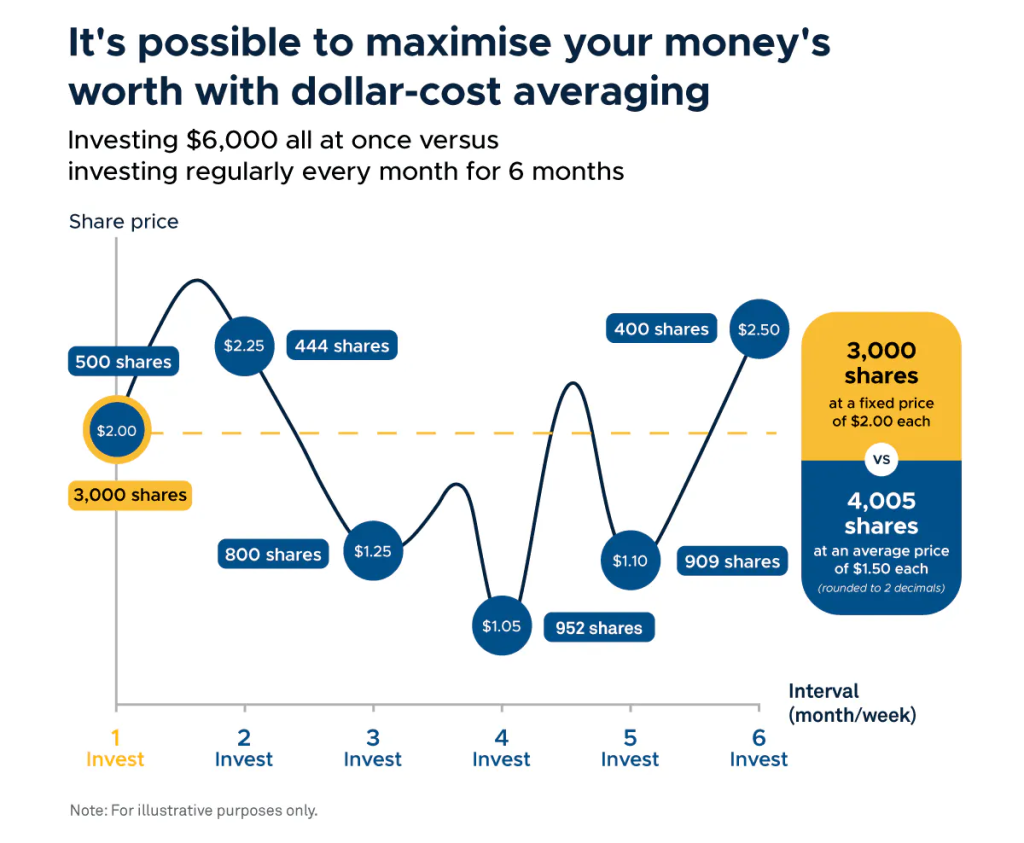
With the same initial investment, Jamie ends up with more shares at a lower average cost due to regular, consistent investments through market fluctuations.
Keeping an eye on global macroeconomic changes
While short-term market fluctuations don’t warrant a change in investment strategy, big shifts in the macroeconomic environment can call for a reassessment of your portfolio’s asset mix. Regular portfolio reviews and adjustments are essential to ensure that an investment strategy remains aligned with one’s financial goals and risk tolerance.
If you prefer a hands-off approach to investing, getting an expert-managed portfolio can help you maintain a diversified portfolio with minimal hassle.
All in all, investing in a volatile world that is becoming increasingly polarised is about keeping your eye on the long-term prize. Diversification, dollar-cost averaging, and staying informed about the big, macroeconomic changes are some time-tested strategies for building wealth over the long term.