Chief executives in Saudi Arabia are expressing strong confidence in the domestic economy, with 77% expecting growth over the next 12 months, according to PwC’s 28th Annual Global CEO Survey. That figure outpaces both global (44%) and Middle East (71%) averages and reflects rising optimism amid the Kingdom’s ongoing economic diversification under Vision 2030.
The optimism is supported by the International Monetary Fund’s latest projections, which place Saudi Arabia as the second-fastest growing economy in the world for 2025, forecasting 6% GDP growth. That puts the Kingdom just behind India in global rankings.
Revenue confidence
Saudi CEOs are similarly bullish on their own companies’ performance. While 98% expect revenue growth over the next 12 months, that confidence climbs to 100% when the horizon is extended to three years. This level of executive optimism is among the highest globally.
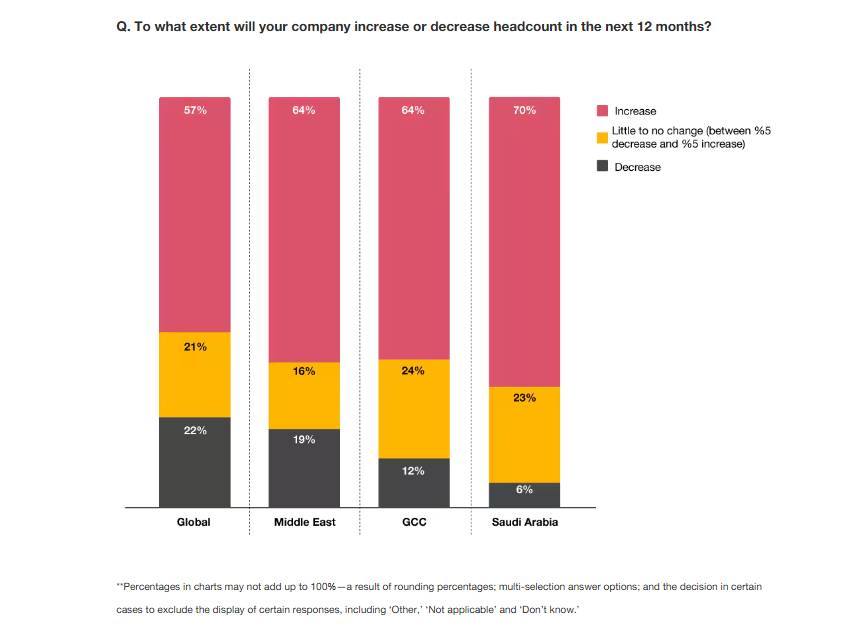
Hiring plans also reflect the upbeat outlook. Around 70% of Saudi CEOs expect to increase headcount this year, significantly higher than the global average of 42%. The push to expand talent comes as firms scale operations in line with domestic infrastructure projects, tourism initiatives, and a growing private sector role in the economy.
AI implementation accelerates
Artificial intelligence is becoming a core focus in executive strategy. According to the survey, 81% of Saudi CEOs say their companies have adopted generative AI in some form over the past 12 months, aligning closely with global trends. AI is being used to improve operational efficiency, generate insights, and augment decision-making.
Of those implementing AI, 53% report productivity gains, and 36% say it has improved profitability. However, concerns remain. Over a third of CEOs (36%) acknowledge their organisations lack a clear AI governance framework, raising questions around responsible use, data privacy and regulatory readiness.
Cybersecurity emerges as a critical threat
While inflationary pressure has receded as a top concern—cited by only 36% of respondents, down from 46% last year—cybersecurity has emerged as a priority. Nearly half (49%) of CEOs in Saudi Arabia say they face a high or very high exposure to cyber threats, more than doubling from 20% in the previous year.
As digital transformation accelerates, especially with the expansion of cloud computing and AI systems, the potential for cyber-related disruption has moved up the risk register. Many firms are now investing in enhanced digital infrastructure and compliance capabilities to mitigate these threats.
Strategic shifts and business model reassessment
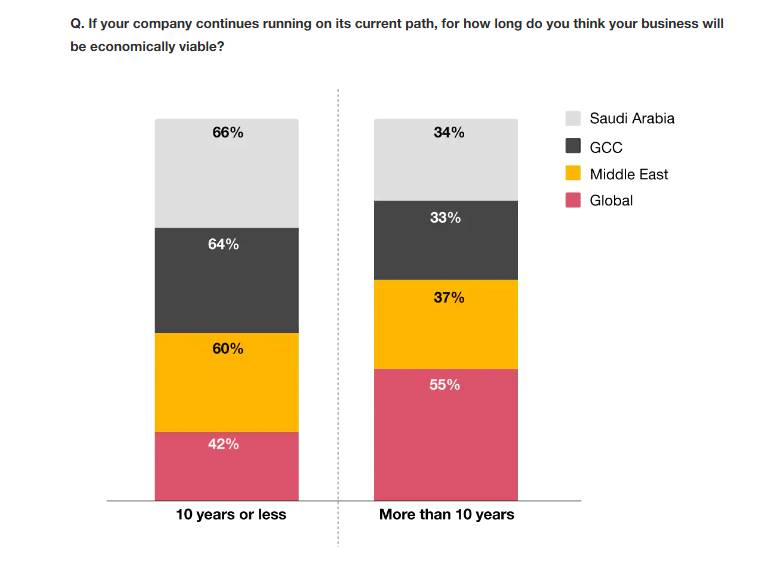
More than a third (34%) of Saudi CEOs believe their current business models will not be viable in 10 years if they continue operating as they are. This marks a growing awareness that technological shifts, regulatory pressures, and global competition are reshaping what sustainable growth will require in the next decade.
Executives are now placing greater emphasis on transforming core business models, whether through vertical integration, AI-powered operations, or regional expansion strategies.
Saudi Arabia’s broader economic context
The findings come as Saudi Arabia pushes forward with Vision 2030, its economic transformation program designed to reduce reliance on oil revenues and expand private sector participation. Mega projects like NEOM, growing tourism inflows and sovereign investments through entities like the Public Investment Fund are reshaping the economic landscape.
At the same time, the Kingdom has become more active in cross-border investment—particularly in tech, sports and green energy—while continuing to localise sectors such as financial services, healthcare and manufacturing.