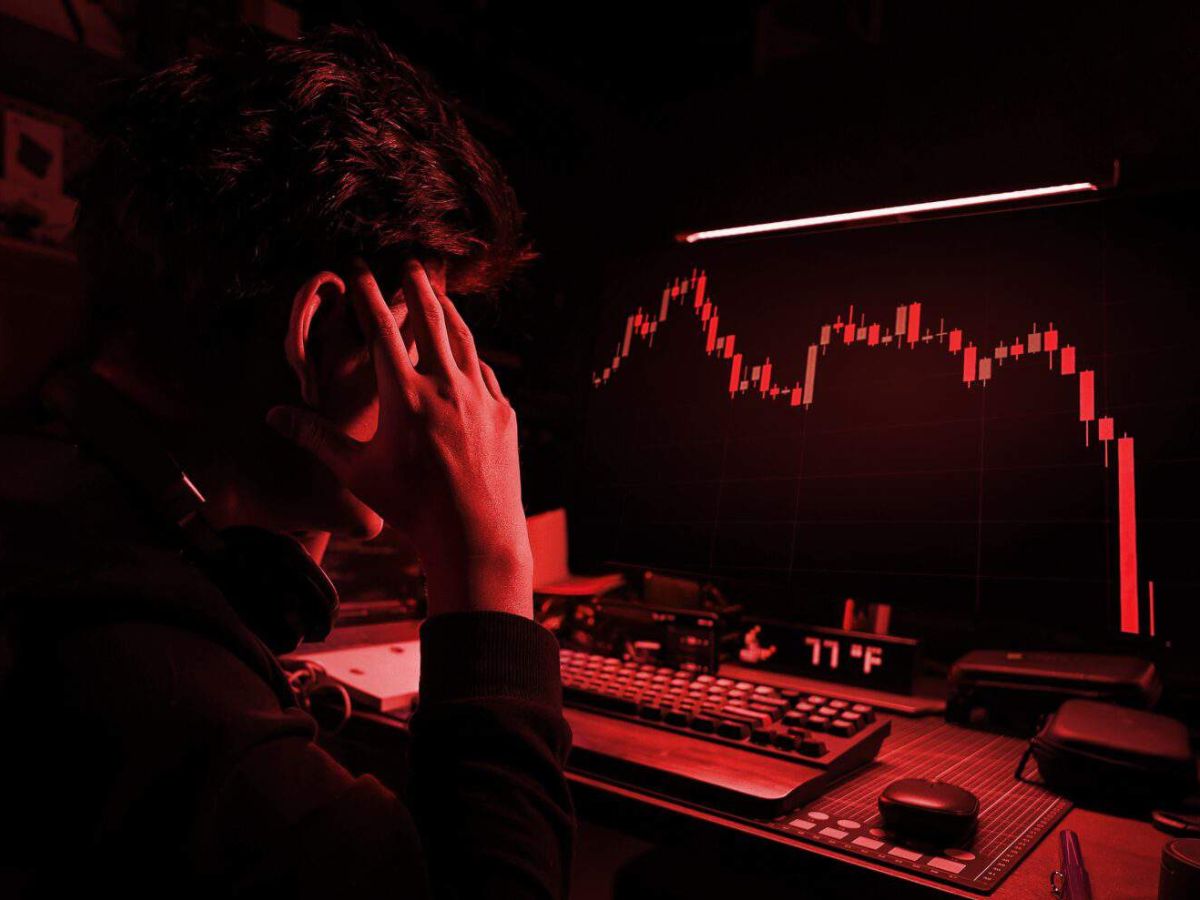
US stocks suffered their sharpest decline in nearly two years on Monday, upon worries of a looming recession and investor’s reaction to Japan’s interest rate rise.
The Monday market meltdown was a direct response to the weak US jobs data published late last week, which showed the nation’s unemployment rising to its highest level in nearly three years, reaching 4.3%. In addition, the ISM index fell to 46.8 in July, the lowest it has been at since November 2023.
The data deepened fears that the Federal Reserve may have waited too long to cut interest rates, threatening a recession in the world’s largest economy. As a result, futures for the S&P 500 were down 2.4% and the Dow Jones Industrial Average dropped to 2.6%. The Nasdaq technology index was down by 3.1%. Stocks in the US, the UK and Europe also fell on Monday due to fears of a US recession.
Japanese equities also had a difficult day, with the local benchmark suffering its biggest one-day loss since 2016. The drop was seen as a direct result of Japan’s decision last week to raise interest rates to levels unseen in 15 years. Japan’s Nikkei 225 stock index fell 12.4% on Monday, closing down 4,451.28 points at 31,458.42 and marking the biggest one-day rout since the 1987 Black Monday selloff.
Rising geopolitical tensions in the Middle East, and what investors described as “disappointing earnings reports”, particularly from Big Tech firms, also contributed to the equities sell-off. Nonetheless, Julius Baer analysts have claimed the current batch of soft data demonstrates “a temporary pause in the ongoing economic recovery” and expect markets to recover.
“Ultimately, our view was that equity markets were ripe for a near-term correction, given elevated positioning and optimistic earnings expectations,” said Mathieu Racheter, Head of Equity Strategy Research and David Kohl, Chief Economist, Julius Baer.
“That said, we view the current batch of soft data as a temporary pause in the ongoing economic recovery and continue to price in a low risk of recession (25%). Moreover, the reset in earnings expectations following the disappointing reports sets the bar back to an achievable level for companies.”
Japanese shares rebounded in Tuesday morning trade after the previous day’s plunge, with the Nikkei 225 stock index rising by as much as 10% after slumping by over 12% the previous day.