The first time can be luck and the second a coincidence, but leading four different companies to achieve $1 billion initial public offering (IPO) valuations is a demonstration of both talent and skill.
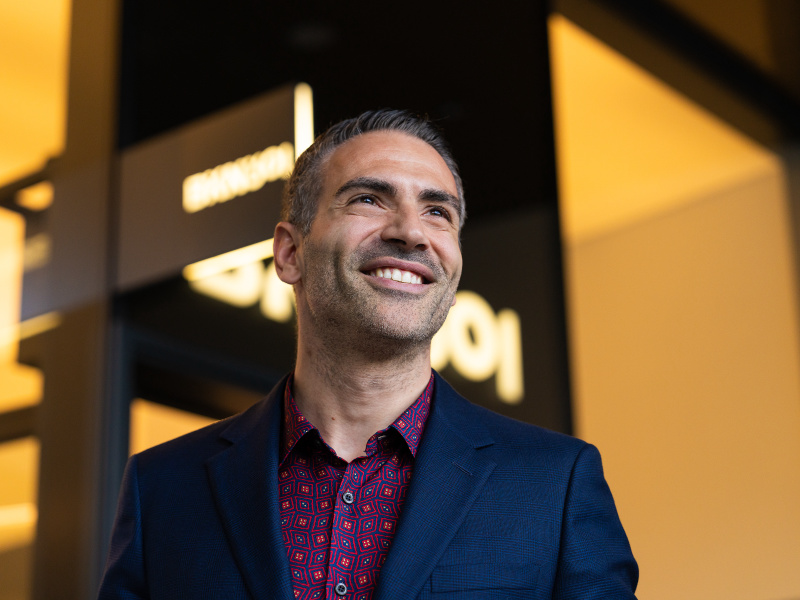
An early internet pioneer and a startup veteran—even claiming the title of “serial entrepreneur”—Justin Newton is known for driving companies to unicorn valuations while exemplifying the commitment to free speech and decentralised ownership that defined the internet revolution.
Newton was part of the leadership team that saw BlackLine, Demand Media, NetZero and Above Net obtain +$1 billion IPOs. He also founded the Internet Service Providers Consortium and has been an advisor to over a dozen startups including Alcatel, Citrix And Juniper Networks. Now, he is the CEO and Co-Founder of identity validation provider Netki. The company’s global expansion is precisely what has brought him to the Middle East and, in particular, Hub71’s Digital Assets ecosystem.
Netki has pioneered new digital ID validation solutions for onboarding, KYC/AML, and Travel Rule compliance for a variety of blockchain platforms. This is helping wallet providers, exchanges, banks, fintechs and governments comply with the guidelines set by the Financial Action Task Force (FATF), the Swiss Financial Market Supervisory Authority (FINMA) and the Financial Crimes Enforcement Network (FinCen) while maintaining privacy and autonomy.
In a conversation with Finance Middle East, Newton reflected on his journey so far.
What drove you to join the startup world?
I have been working exclusively for startups since the mid-1990s. For me, tech startups in emerging industries are the best means to create the change we want to see in the world. From working on the early Internet to democratise access to read and share information, to supporting the advancement of the later Internet and building a platform for open and permissionless innovation, my journey has led me to work in digital assets and Web3.
Today, we are democratising and decentralising finance. Building the future we want to live in is the best way to ensure that it happens.
Why did you choose the Middle East as the place to start/expand the business?
For the last few years, the US marketplace has presented numerous challenges that have hindered the support and advancement of the Web3/digital assets industry. As we looked to expand, we sought a jurisdiction that was actively embracing this new technology, with sophisticated regulators capable of creating and enforcing appropriate policies and regulations.
Abu Dhabi stood out as an ideal location offering a vibrant and well-funded environment that fosters innovation and with the support of Hub71, we can tap into an extensive network of market, capital and regulatory partners who can help us unlock strategic growth opportunities.
How would you describe the region’s startup scene in three words.
Emerging, energised and optimistic.
Is there something that has surprised you in your journey?
As an international founder setting up in Abu Dhabi, I found the warmth and openness I’ve encountered here truly heartening. The UAE capital and society have been incredibly welcoming to entrepreneurs from around the world, showcasing a genuine commitment to fostering innovation and collaboration.
What are (in your view) the keys to approaching investors successfully?
There are a few keys to successfully approaching investors. First, you need to understand what drives them and is important to them and be able to speak to how your company supports their goals. The second is to have a firm plan on how to achieve financial success and hit financial targets. Finally, you need to be able to show how your team is the right team to execute alongside the vision that you are sharing.
What was the most challenging part of raising funding and how did you overcome it?
Like many founders, I am proud of what I have built, and want to share with investors some of the intricacies and details of how we have overcome very difficult challenges. Often, investors are not interested in this and the time spent going over these details can be better utilised ensuring they remain engaged and intrigued by our proposition.
I have learned to keep things simple, and focus on the benefit to the customer and why people want it, rather than how you solve it.
What is the best piece of financial advice you have received?
One of the best CEOs I ever worked for in a startup environment was militant about the rule “Don’t lose money on more than one project at a time.” It sounds like simple advice, but sometimes can be hard to apply.
When you are losing money on something, it takes a lot of time, focus and management attention to get it onto the right course. If you have more than one thing like that going on at the same time, you won’t have time to improve everything that needs improvement. Also, you will be burning cash faster. Focus on getting a solid base with one product before moving on to the next. It means it may take longer to build to your full vision, but you will have a more stable base to build on when the time comes for the next step.
What has been your biggest success and your biggest failure?
My biggest success has been helping lead four companies in a row to over $1billion IPOs on NASDAQ, something I believe very few entrepreneurs have done. My biggest failure was bankrupting the company directly preceding those four because of not really knowing what I was doing as a founder, unfortunately, a trait that was shared by everyone on the founding team at that time.
What is the best quality a leader can have?
Building a strong team is almost always the best key to success. A great team with a mediocre product will go further than a mediocre team with a great product. That said, for the leader specifically, I think the most important skill is knowing when your unique vision is correct and to stick to it no matter what others are telling you. Also, knowing when there is new information or a new environment that means it is time for you to pivot.
Where would you like to be in five years’ time?
In five years, I would like to be transitioning the leadership of my company to the next generation of leadership and management through proper succession planning.