
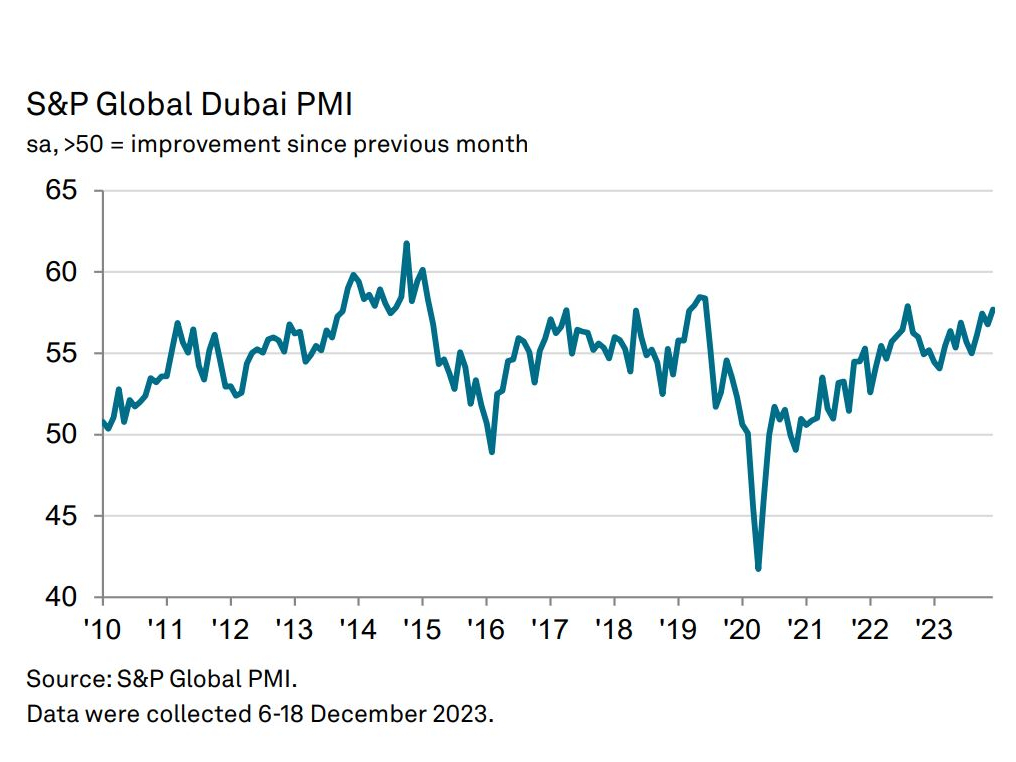
Dubai’s non-oil private sector demonstrated its strongest performance in 16 months during December, according to the latest survey data. Companies reported notable improvements in sales and activity, supported by reduced cost pressures that enabled them to offer greater customer discounts. New order growth accelerated significantly, marking the second-highest rate since mid-2019.
The headline S&P Global Dubai Purchasing Managers’ Index (PMI), derived from indices tracking changes in output, new orders, employment, delivery times, and purchased goods stocks, recorded a rise from 56.8 in November to 57.7 in December. This reading, well above the 50.0 mark indicating growth, represented the highest level since August 2022 and the second-highest in four-and-a-half years.
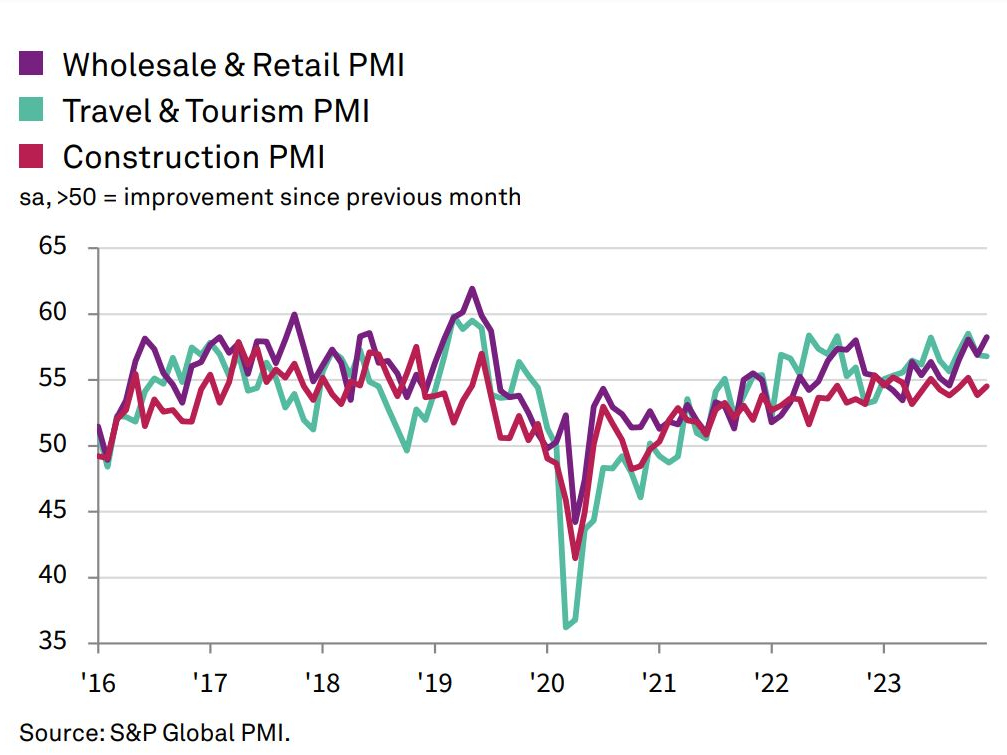
The surge in the New Orders Index, the largest sub-component, indicated a sharper increase in new business intakes. Around 30% of survey participants noted an improvement, with the wholesale & retail sector experiencing the most significant upturn in sales, followed by rapid growth in travel & tourism.
Firms enjoyed a rapid increase in new work, the second-quickest since the middle of 2019, confirming the strength of market demand across the emirate as we enter the new year.
David Owen, Senior Economist at S&P Global Market Intelligence
Output levels increased notably in December, with efforts on marketing and productivity intensifying as workloads expanded. Businesses attributed increased new work to improving market conditions and greater client demand, leading to a drop in output charges as firms sought to remain competitive.
Lower vendor fees were negotiated to ease input cost pressures from improved supply lines and reduced material prices. While overall expenses increased marginally due to higher wages and input demand, it was at a subdued pace.
“The improvement led to a modest pick-up in business expectations, following a drop in November when firms cited intense price competition as a noteworthy risk for 2024,” said Owen. “Competition for market share is still a concern, with survey members indicating that this is partly driving a fall in selling charges.”
Despite a slight slowdown in delivery times caused by supply chain disruptions, confidence towards the year-ahead outlook saw a recovery by the end of 2023, reaching levels recorded before the pandemic. Bolstered by improved confidence and sales, non-oil companies increased their workforce numbers to expand operations and meet output requirements. Job creation accelerated to a four-month high while stockpiling remained strong, although some firms sought to optimise their inventory management.