President Donald Trump’s second term is reshaping the US economy, and nowhere is that more visible than at the checkout counter. From iPhones to frozen pizza, new import tariffs are adding weight to the inflation burden that American households thought they had left behind.
In what economists describe as a once-in-a-generation reversal of trade orthodoxy, the administration has levied a 10% universal tariff on all imports and imposed duties of up to 145% on Chinese goods. The goal, according to White House officials, is to rebalance trade and bring jobs back home. The reality, so far, is higher prices, distorted supply chains and rising costs in sectors that touch nearly every US consumer.
“The effective tariff rate has jumped from 1.5% to over 29%,” said Hassan Fawaz, Chairman of GivTrade. “After-tax income is falling by as much as 1.3%, and lifetime losses for middle-income households could reach $58,000.” He added, “The average family is losing $3,800 a year in purchasing power — this is no longer a policy issue, it’s a household one.”

That projection aligns with findings from the Yale Budget Lab and updated CPI data, which show renewed momentum in core inflation since March. Analysts say that far from being absorbed by corporations, most tariff costs are quickly making their way to consumers. “Empirical studies suggest 40% to 100% of tariff costs are passed on to end users, depending on the product,” said Rania Gule, Senior Market Analyst at XS.com.
From retail floor to freight terminal
Retailers and brands have wasted little time reacting. Target, Shein, Temu and Columbia Sportswear have all raised prices. Smartphones have seen some of the steepest increases, with the iPhone 16 Pro Max jumping from $1,199 to $2,150 post-tariff. Apparel and footwear are up by 33%, home appliances by 20% and basic furniture by nearly 25%.
Even grocery aisles aren’t spared. Imported food and beverage prices have increased by 10–15% on average. Alcohol, processed foods and canned goods—particularly those sourced from Europe and South America—are feeling the squeeze.
Vehicles are also affected. With tariffs on both imported cars and electric vehicle components, sticker prices have climbed 12–15%. EV makers reliant on Asian supply chains for batteries and rare earth materials are particularly exposed.
Tariffs and inflation
The Federal Reserve, which had anticipated a soft landing and rate cuts in Q2 2025, is now facing pressure to hold or even raise rates. CPI readings in April showed a 0.6% month-on-month uptick in core goods, the highest since late 2022. Economists at Oxford Economics now forecast that the tariff package could add up to 1 percentage point to annual inflation.
Higher inflation not only affects consumption but mortgage rates and financing costs. Since March, the average 30-year fixed mortgage rate has risen by 75 basis points. Credit card APRs and auto loan rates have also edged higher, cutting into household liquidity and delaying purchases.
Construction, rent and utilities
Less visibly, tariffs are impacting long-term costs through construction and energy. Duties on steel, aluminium and electrical components have raised the cost of housing construction by $10,000–$12,000 per unit. According to the National Association of Home Builders, this translates to an average monthly rent increase of $90–$120 in major metros.
Utilities are affected too. Power companies that depend on imported transformers and solar panels are filing for rate hikes, citing 15–20% increases in infrastructure input costs. “This is a quiet crisis,” said Gule. “The inflation story isn’t just in goods, it’s in the systems that deliver those goods.”
The return of supply chain chaos
The just-in-time model that defines much of US retail is cracking under pressure. Companies scrambled to stockpile goods in Q1 2025 ahead of tariff deadlines, creating temporary inventory gluts. Now, restocking at higher prices is causing gaps in availability and longer lead times.
Retailers like Best Buy and Walmart are cutting back on promotional campaigns and product variety. Industry insiders report rising shipping costs, port congestion and re-routing delays as businesses attempt to avoid tariff-heavy ports of origin.
In fashion, some brands have quietly dropped product lines that no longer make sense under the new cost structure. “We’re seeing SKU rationalisation across categories—less variety, higher prices and fewer deals,” said Fawaz.

Employment impact
Tariffs may be designed to support US industry, but downstream sectors—which include retail, hospitality and logistics—are already suffering. The National Bureau of Economic Research previously estimated that the last round of tariffs (2018–2020) led to 175,000 job losses. New modelling suggests 2025 could eclipse that.
“We’re seeing hiring freezes in warehousing and transport,” Gule noted. Retailers are trimming staff hours, restaurants in tourist districts are experiencing slower foot traffic and small manufacturers who rely on imported components are delaying expansion plans.
Wages are stagnating, too. The Bureau of Labor Statistics reported a slowdown in real wage growth in Q1 2025, particularly in consumer-facing sectors. Even as prices rise, paychecks are holding flat.
Why companies are passing it on
While multinational giants like Apple can afford short-term cost absorption, most companies cannot. Shrinkflation—offering less product for the same price—is making a return. Others are using tactics like bundling, tiered pricing and reduced promotional cycles.
Goldman Sachs estimates 85–90% pass-through for most consumer goods. For essential categories like household items, the pass-through is closer to 100%, especially for low-margin products.
Retaliation and export risk
Trade partners aren’t sitting idle. China has retaliated with tariffs on US agricultural products, liquefied natural gas (LNG) and tech components. The EU is reviewing countermeasures targeting bourbon, motorcycles and industrial equipment.
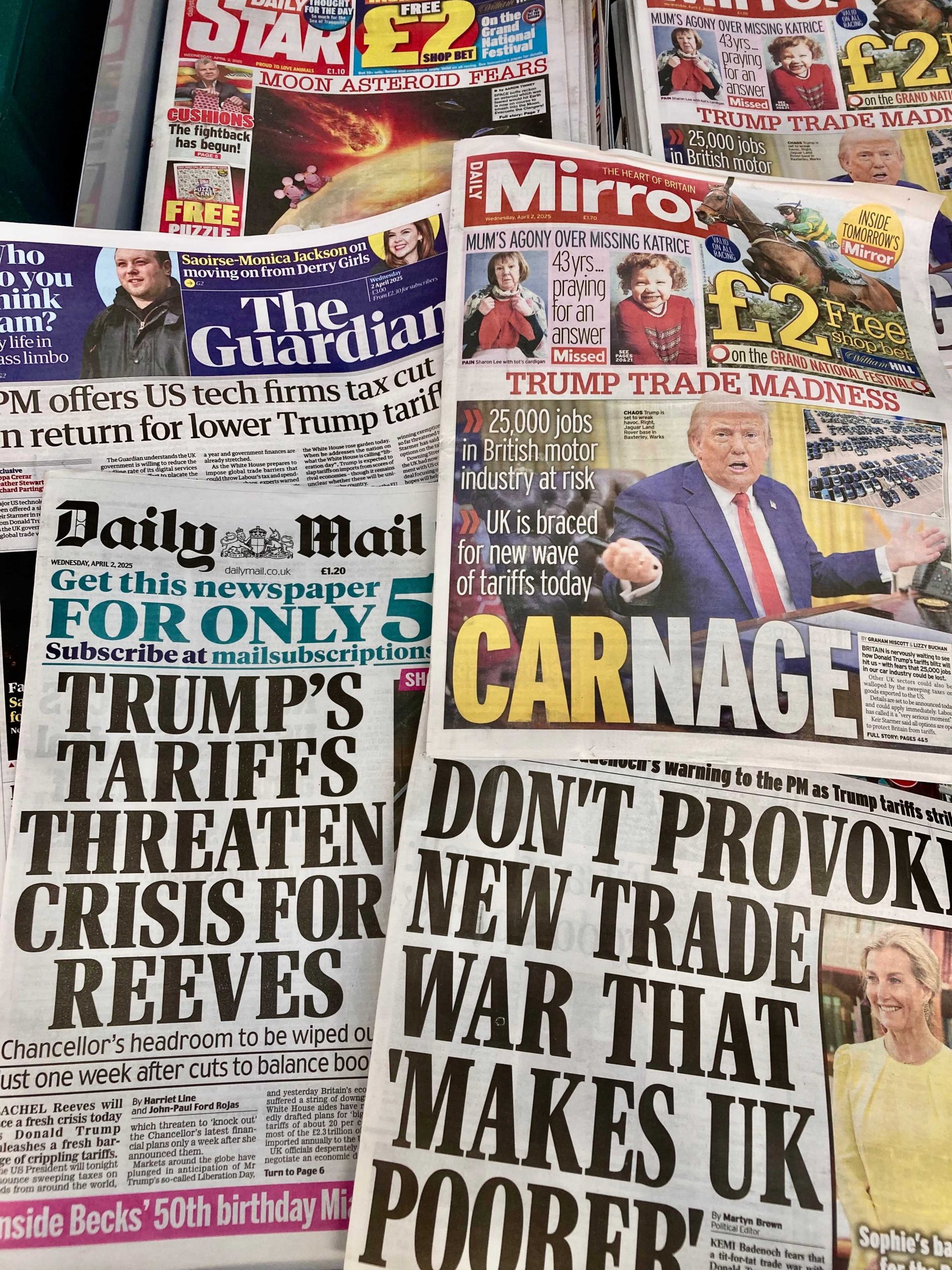
Export-driven sectors like agriculture, energy and machinery now face demand destruction overseas. The US Chamber of Commerce warns that up to 740,000 jobs could be affected by year-end. US farmers, who had just begun to recover from the last trade war, are once again facing cancelled contracts and falling prices.
“Trade is now a national security issue,” said Gule. Sectors like semiconductors, pharmaceuticals and rare earths are being reclassified as strategic. But critics argue that reshoring is not happening fast enough to offset cost inflation.
According to the Reshoring Initiative, only 9% of US manufacturers have shifted operations back home since the start of 2025. Infrastructure gaps, labour shortages and rising domestic input costs are holding back momentum.
Fawaz added, “Tariffs alone don’t create factories. You need industrial policy, skills development and investment incentives. Without those, tariffs just raise prices and distort incentives.”
President Trump’s tariff regime is no longer theoretical. It is active, expansive and already reshaping the economy. From smartphones to rent, few aspects of daily life are untouched. The bigger question isn’t whether tariffs are affecting the economy—they are. It’s whether the long-term promise of a more resilient industrial base is worth the short-term squeeze.
Until then, the consumer is paying the price—often literally.