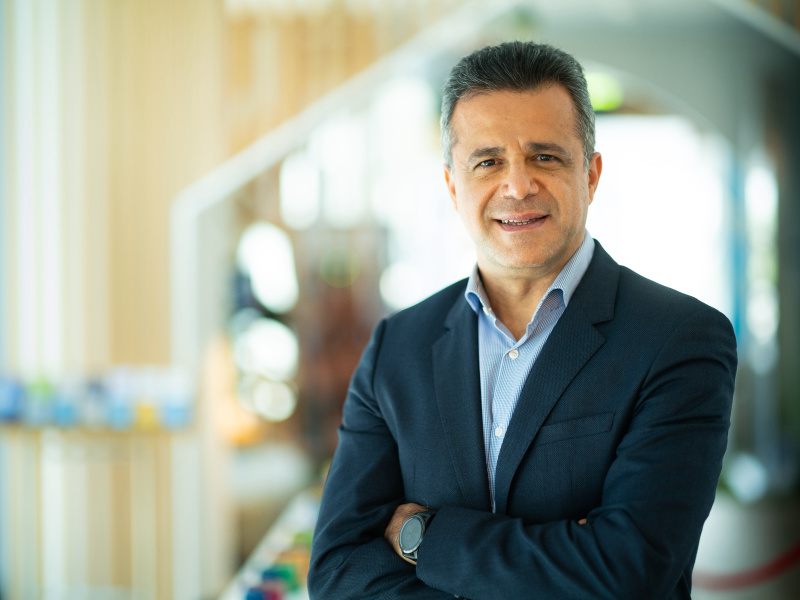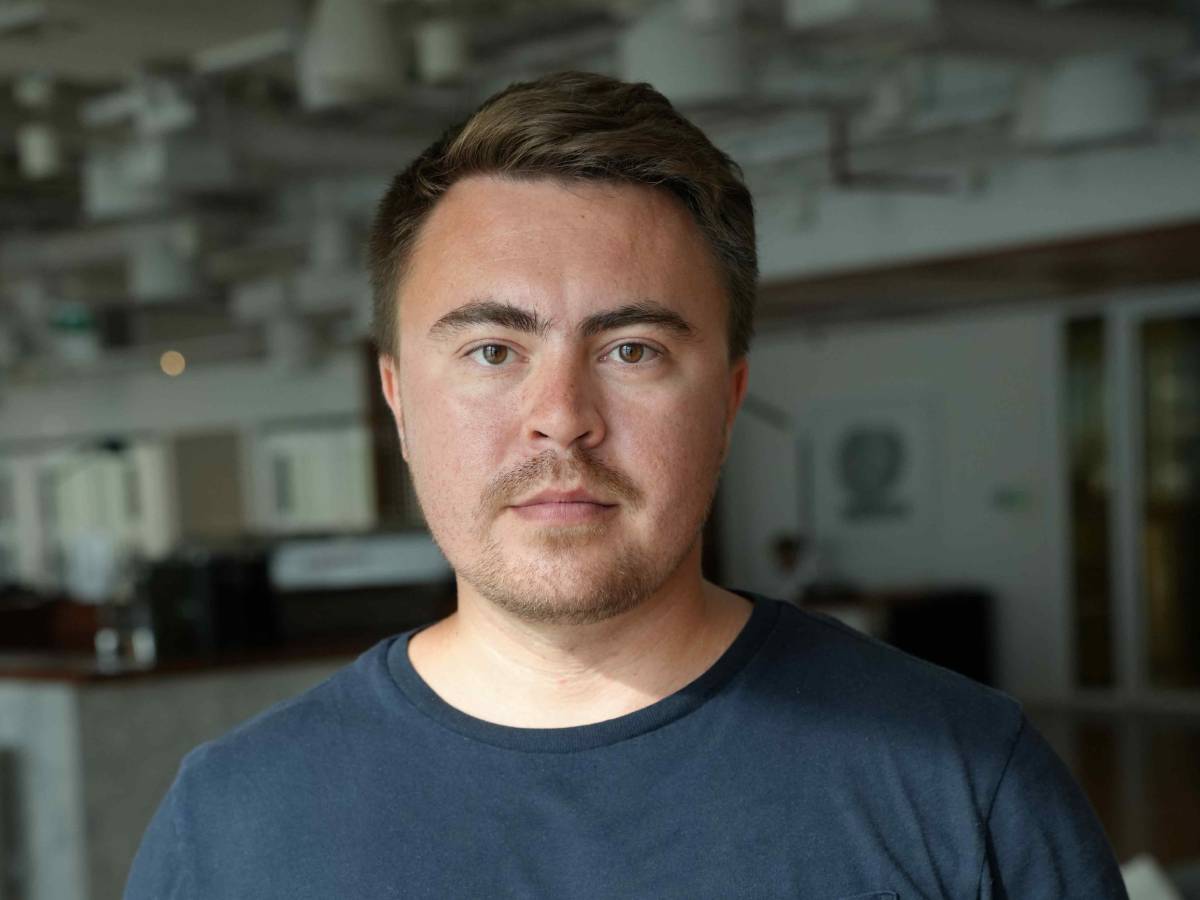
Leonty Mukhortov doesn’t believe in gut instinct. At Simpleem, the AI scaleup he co-founded, he’s building something more precise, a Behaviour Analysis AI that reads visual, vocal and contextual cues to predict human decisions—and their business consequences. Whether identifying top-performing sales candidates or optimising customer success teams, Simpleem quantifies emotion to drive performance.
Now expanding into the Middle East through Hub71, Mukhortov sees a region hungry for practical AI—with founders, corporates and regulators aligned around outcomes, not buzzwords. “We don’t chase trends,” he says. “We help people make better decisions—with clarity and intent.”
What drove you to join the startup world?
For someone with an entrepreneurial mindset, being an employee can feel limiting. It becomes frustrating when you repeatedly identify problems but lack the freedom to test solutions quickly. If your desire to solve those problems is strong enough, the most effective way to channel that energy is to build something yourself. A startup is still a business with more ambition, higher risk, and the opportunity to do things differently and with real impact.
In my case, I saw a fundamental gap in how people relate to each other. I wanted to translate human behaviour into something measurable, grounded in data, instead of relying on outdated psychological theories. When I met my co-founder, Anastasia, she shared the same vision and gained deep experience from leading global AI teams.
Why did you choose the Middle East to start/expand the business?
We entered the region through our network almost accidentally, but it quickly became clear there was a real opportunity. Businesses here are eager to adopt AI and often just need clarity on how to apply it effectively.
What stood out was the focus on tangible results – unlike some markets that chase trends. Companies in the Middle East care about performance, revenue, and real impact, and this aligns closely with what we offer.
There’s a growing sense of community among founders and operators, especially in places like Abu Dhabi, where tech ecosystems like Hub71 create accessible pathways for startups to scale globally from the Emirate.
It is a smaller but highly focused and action-oriented market, making it an ideal environment to scale meaningful innovation.
How would you describe the region’s startup scene in three words?
Friendly, early, and ambitious.
While the scene is still developing, the ambition is real. People genuinely want to help and have a strong sense of collaboration. That said, growth is sometimes slowed by traditional business processes from regulators or VCs that don’t always fit the startup model. But, I believe that will evolve because the desire to build something big is already present. This region can potentially become one of the world’s leading startup hubs.
Is there something that has surprised you in your journey?
Yes, something that surprised me is the level of transparency and how closely words align with actions. Compared to other regions we operate in, people here are more direct, and promises are more likely to turn into real outcomes.
What are (in your view) the keys to approaching investors successfully?
I believe there are two key principles when dealing with investors.
First, focus on building your business, not chasing funding. Second, say no early to investors not aligned with your vision.
If you’re building something valuable, the right investors will find you. This mindset gives you clarity and leverage, especially during tough conversations or market uncertainty. It helps you stay focused and rational and avoid compromising what matters.
As soon as you sense misalignment, a lack of genuine interest or wasted time, be polite but move on. Founders can say no, too – it’s not only investors who get to pass on a round.
What was the most challenging part of raising funding, and how did you overcome it?
The hardest part is managing your time and energy, especially when you’re already focused on scaling a business.
People often say that fundraising is just like sales, but I disagree. In sales, you’re solving real human problems. Investors, on the other hand, are not looking for solutions. They’re looking for returns with as little risk as possible.
Most investor conversations follow the same pattern and can become mentally and physically exhausting. The only way to manage it is to have a clear internal plan. Know how much time you’re willing to spend per conversation, what outcome you aim for, and where your boundaries are and stick to them. Without that, it’s easy to waste time on empty promises and lose momentum on both fronts: with customers and investors.
What is the best piece of financial advice you have received?
The best advice I’ve received is to never allow anyone to underestimate your value, whether it’s a customer, investor or partner. The moment you let that happen, you stop playing your own game,
What has been your biggest success and your biggest failure?
Our biggest success was building a best-in-class AI solution that solves real-world problems without burning huge amounts of capital. The most important lesson I’ve learned is to be careful where and with whom you spend your time. It’s your most valuable resource, and you can’t get it back once it’s gone.
What is the best quality a leader can have?
The best quality a leader can have is focus. A leader often must make decisions without having all the information. Things move fast, and your energy is limited. Focus allows you to make the right calls, recover quickly from mistakes and stay steady under pressure. Without it, you either burn out or lose direction.
Where would you like to be in 5 years’ time?
We have a few things in motion that I’m excited about, but I prefer to let the work speak for itself. What matters most is that we’re moving with intention, and I’m focused on building something that lasts.