
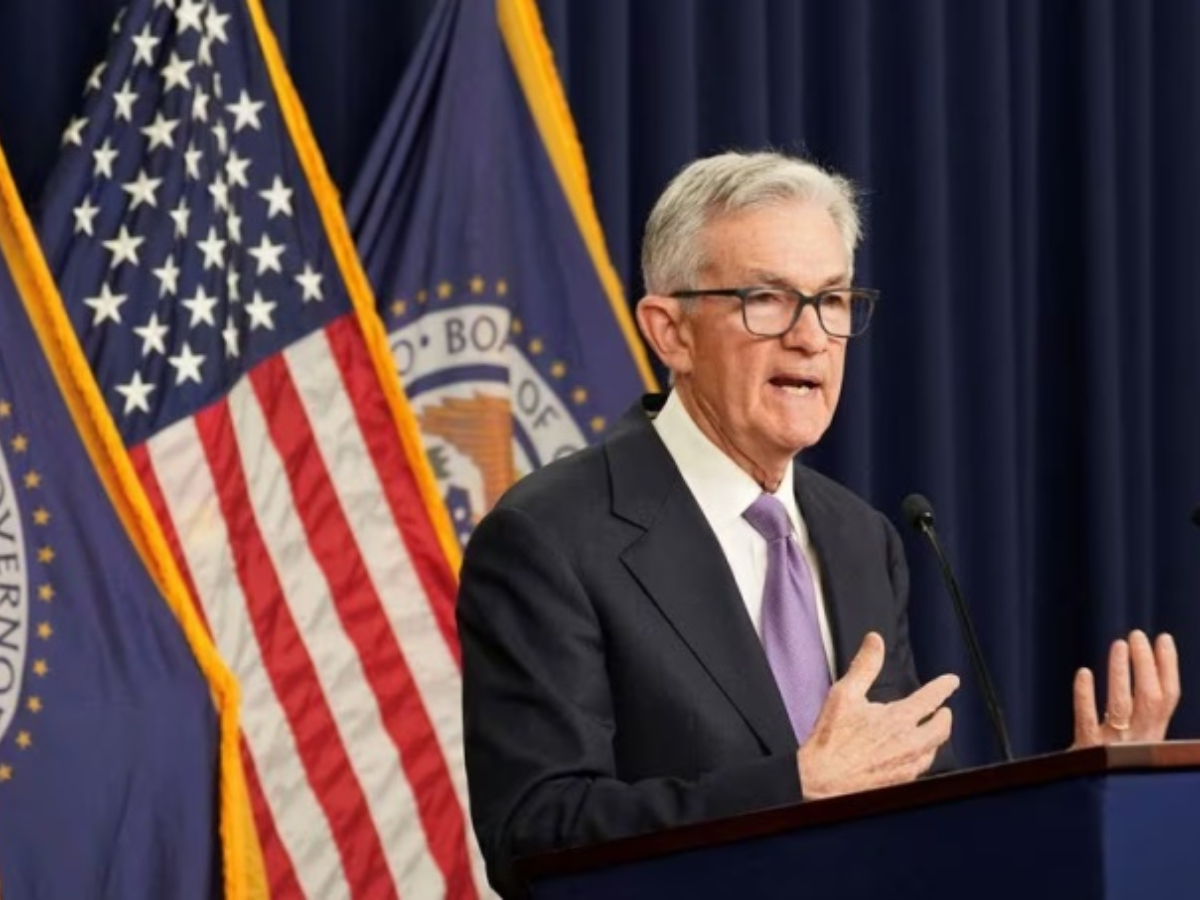
Federal Reserve Chair Jerome Powell carefully signalled that the US central bank is preparing to ease policy as soon as September, telling the Fed’s annual Jackson Hole conference that risks to the labour market are rising even as tariffs continue to complicate the inflation outlook.
“The stability of the unemployment rate and other labour market measures allows us to proceed carefully as we consider changes to our policy stance,” Powell said in prepared remarks. “Nonetheless, with policy in restrictive territory, the baseline outlook and the shifting balance of risks may warrant adjusting our policy stance.”
September rate cut
The Fed’s benchmark rate has been held at 4.25%–4.5% since December, down a full percentage point from a year ago. Powell noted that while the economy and job market remain resilient, “downside dangers are rising” and tariffs risk creating a stagflation scenario if inflation proves sticky.
Powell emphasised that the Fed would act independently despite repeated public calls from President Donald Trump for deeper, faster cuts, Bloomberg reported. “FOMC members will make these decisions based solely on their assessment of the data and its implications for the economic outlook and the balance of risks. We will never deviate from that approach,” Powell said.
Markets react swiftly
Financial markets responded immediately to Powell’s remarks. The Dow Jones Industrial Average surged more than 600 points on Friday, the S&P 500 pushed past 6,780, and Treasury yields tumbled. The policy-sensitive two-year note fell to 3.71%.
Economists at Deutsche Bank, Barclays, and BNP Paribas brought forward their forecasts for the first rate cut to September. Former St. Louis Fed President James Bullard told Bloomberg Television, “He used the speech to solidify expectations for 25 basis points in September. I think that’s a done deal.”
According to analysis by Antonio Di Giacomo, Financial Markets Analyst for LATAM at XS, Powell’s signal marked a turning point. “The S&P 500 index closed the week with a significant gain, reaching the 6,780-point level. The rally was driven mainly by a sharp decline in US Treasury yields, following Federal Reserve Chair Jerome Powell’s suggestion at the Jackson Hole Symposium that the central bank is prepared to implement interest rate cuts starting in September,” Di Giacomo wrote.
He added that looser policy expectations are boosting valuations of high-growth technology and consumer companies, while easing trade tensions, notably Canada’s decision to roll back some retaliatory tariffs, provided further support. “The combination of monetary policy flexibility and easing of trade frictions has restored a degree of optimism to financial markets. Although risks tied to global economic performance and US employment trends remain, the current backdrop offers investors some relief.”
Framework review
Powell also outlined revisions to the Fed’s policy framework. In 2020, the Fed adopted flexible average inflation targeting, effectively allowing inflation to run above 2% for periods to support employment. But as Powell admitted, that approach backfired when inflation surged to 40-year highs.
“As it turned out, the idea of an intentional, moderate inflation overshoot had proved irrelevant. There was nothing intentional or moderate about the inflation that arrived a few months after we announced our 2020 changes,” Powell said, noting the hardship caused, especially for lower-income households.
The Fed reaffirmed its 2% inflation goal and dropped language suggesting tolerance for overshoots, signalling less willingness to let the labour market “run hot” without acting.
What it means for households
For households, Powell’s remarks point to potential relief ahead on borrowing costs. A rate cut in September could translate into slightly lower interest rates on mortgages, credit cards, and personal loans by year-end. That would ease pressure for families carrying high debt after years of elevated borrowing costs.
However, the balance is delicate. If tariffs keep consumer prices elevated, households could still face stubborn inflation at the supermarket or petrol pump even as borrowing becomes cheaper. Powell’s warning about stagflation underscores that risk.
Implications for the Middle East
For the Middle East, Fed easing carries several ripple effects. Lower US rates typically weaken the dollar, which can boost oil prices as commodities become cheaper for holders of other currencies. That would improve fiscal positions for GCC exporters but also risk fuelling local inflation via higher import costs.

Regional stock markets, particularly in the UAE and Saudi Arabia, tend to track US market sentiment. A more dovish Fed stance and risk-asset rally could support investor appetite in Gulf equities and bonds. At the same time, Middle Eastern sovereign wealth funds may reassess allocations as US yields decline, potentially redirecting capital toward domestic projects or emerging markets.
For consumers in the region, cheaper global borrowing costs could reduce financing expenses for businesses and governments, creating room for infrastructure and diversification investments. Yet if the dollar weakens significantly, pegged currencies like the dirham and riyal will import more inflation, a challenge for policymakers balancing competitiveness and price stability.