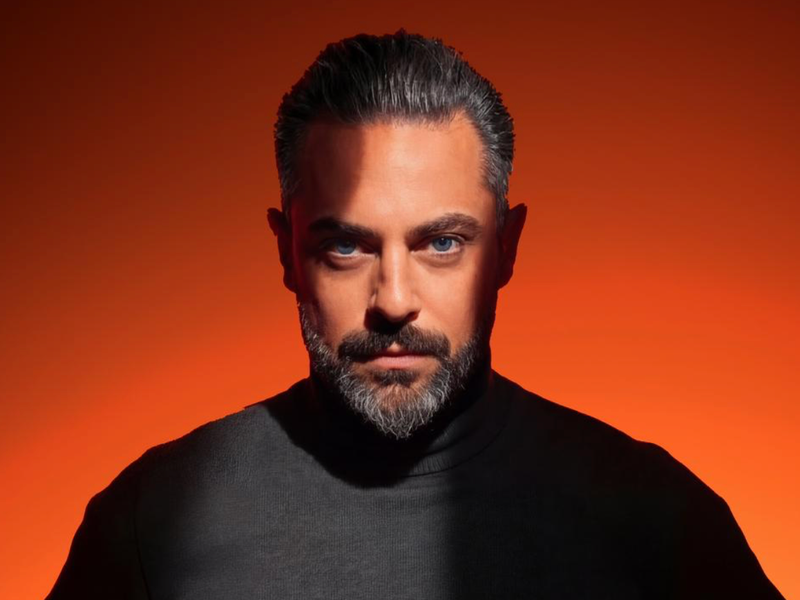
Pixonal’s journey began with a government contract in Dubai that gave founder Mohamed Said the chance to showcase his first deployment to HH Sheikh Mohammed bin Rashid and Sheikh Hamdan. That early break set the tone for a business that has since generated $8 million in revenue without external funding. Built entirely on client demand, Pixonal has worked with top government offices and global consultancies, proving that bootstrapping can be a growth strategy in itself. In this interview with Finance Middle East, Said discusses the realities of building in the Middle East, the pressures of running lean, and why he believes investors should only matter once a startup proves it can stand on its own.
What drove you to join the startup world?
I’ve always been interested in building something I can see grow, adapt and evolve. As cheesy as it sounds, going through the journey of solving a problem, I believed in its existence. A solution I trusted my capabilities that I’ll find the way of solving it, while getting the flexibility to pivot, shift, start over, onboard teams, onboard paying customers, even with all the expenses in 24/7 stress, questioning yourself every day, being the last resort at the company to fix, has always been the way I feel growing. I don’t think joining the startup world is a choice you make consciously. Actually, I believe that if you consciously decide to enter the startup world, you are more likely to fail, because the cause is not genuine. Joining the startup world often follows from having a vision for a solution to a problem that another group is facing. If you truly believe in that, you’ll find yourself in the startup world, running a business, coping with stress, failing, and starting over in parallel, all while enjoying every part of it.
Why did you choose the Middle East as the place to start/expand the business?
First of all, being from the Middle East. When we started Pixonal, we knew Dubai was a supportive environment, but we honestly didn’t know how to make it happen. We did experience it firsthand, though. Our first contract was directly with the government of Dubai, and we had the opportunity to personally showcase my first deployment to HH Sheikh Mohamed Bin Rashid and HH Sheikh Hamdan. I don’t think we can get this type of support or adoption anywhere in the world.
How would you describe the region’s startup scene in three words?
Good ideas get the best and fastest runway.
Is there something that has surprised you in your journey?
While its clear now, but I was surprised of where did I start from a solution perspective to how I am now, it’s the same problem, and the same vision, but interaction with real customers, advice from initiatives, advisors and supporters reshaped everything – again with the same vision, because without the real vision, you wont even get the proper access to those customers, advisors, or even initiatives.

What are (in your view) the keys to approaching investors successfully?
The key is to demonstrate that you can still succeed without that investor, in a completely respectful and realistic manner, of course. Most startups view fundraising as a milestone or validation in itself, which investors do not appreciate. Raising the funds is (for me) a pre-start, even in late series B/C.
What was the most challenging part of raising funding, and how did you overcome it?
The region is very welcoming when it comes to access to investors, but what is really different is that you can get the support of such initiatives, pitching to partners, and actually selling and bootstrapping your startup. We’ve been fortunate to receive support from MBRIF, Future100, Abu Dhabi SME Champions, and through direct contracts and initiatives with the governments of Dubai, Abu Dhabi, and at the federal level. Access to actual clients with actual pain points, boldness, and a willingness to try your product is too good to be true, but it is true in this region. We generated over $8 million in revenue, effectively serving as our seed funding for product development through real-life cases. Now we’re expanding outside the region, completely bootstrapped, and with a rock-solid experience with top leadership offices and enterprises. Such entities and initiatives believed in our mission and, most importantly, were bold enough to invest in our vision and products in development, which helped us succeed and earn international recognition for our work.
What is the best piece of financial advice you have received?
To get proper financial advice early on, not from your investors, but from financial experts and from advisors in the market.
What has been your biggest success and your biggest failure?
I look back at the type of clients and partners as my biggest success. Without repeating myself, this is what made our work real, with real impact, and shaped our global expansion.
My biggest failure is not speaking about what I do early on. It’s not about marketing or PR; it’s about raising awareness of the problem you are facing. Disruptive ideas often stem from problems you discovered early on, issues that other people haven’t yet recognised as problems. For instance, consider fast access to powerful AI. Before OpenAI, people didn’t realise it was a problem; they couldn’t envision the impact of its solution. I failed to discuss the problem we are solving early on and didn’t gather enough feedback from everyone I could’ve talked to about their perspective on this issue, which would have helped me develop a solution faster.
What is the best quality a leader can have?
Passing on the ownership feeling to everyone in their team. As a leader, you do what you do because you’re the last one who can act. If every single person in your team felt the same, imagine where you could go.
Where would you like to be in five years’ time?
A global company serving clients, both government and enterprise, on a global level with global deals. My vision is to enable everyone to consume, explore and act on data without the technical barrier. My dream is to work with global organisations, entities that have tens of thousands of employees internationally, and to democratise data interaction across their organisation.