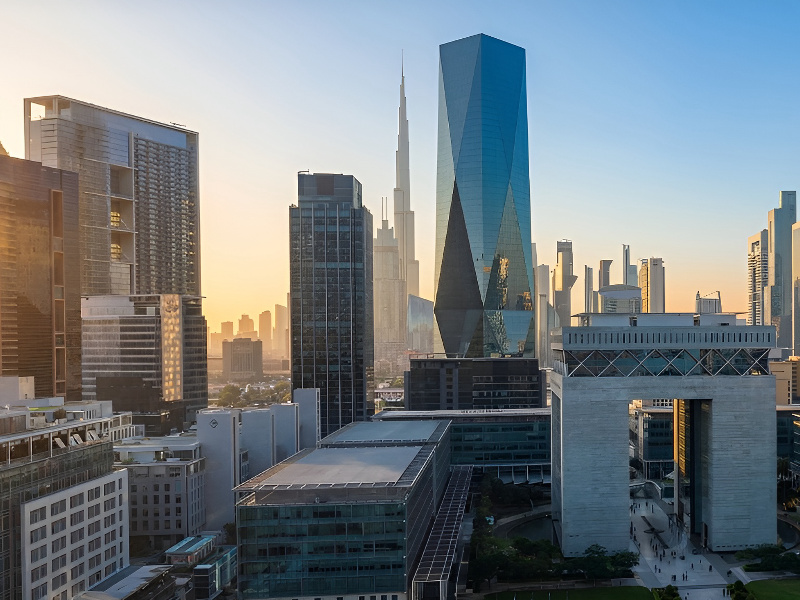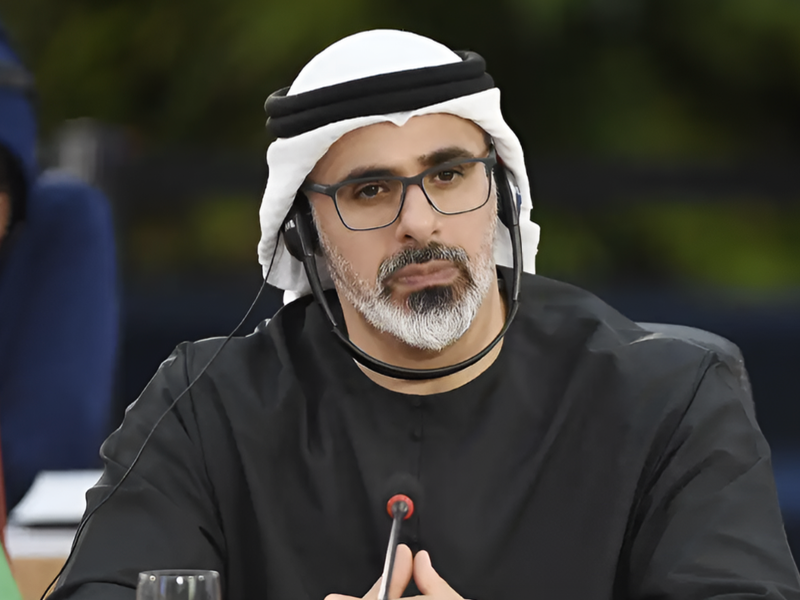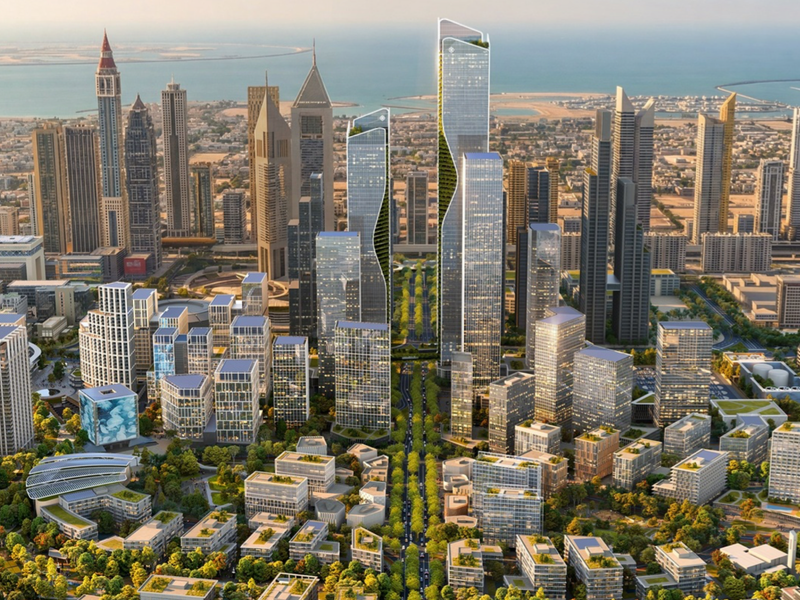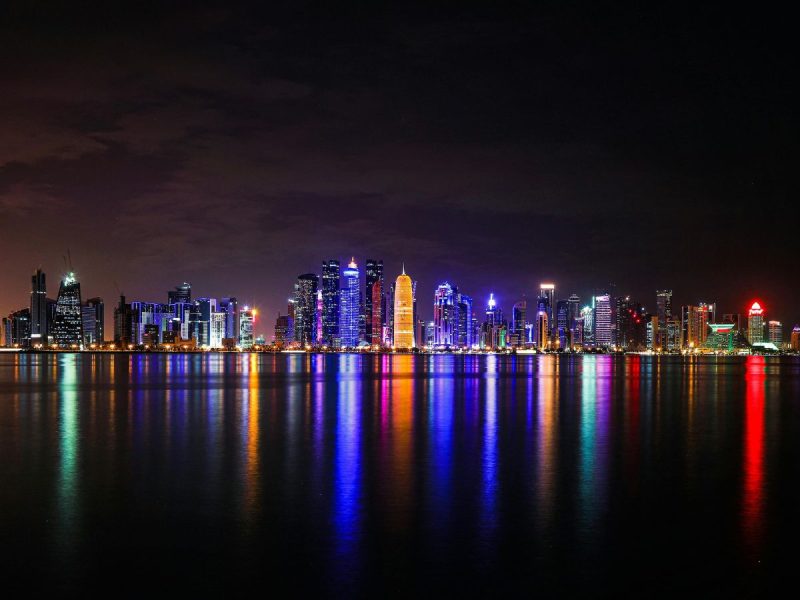
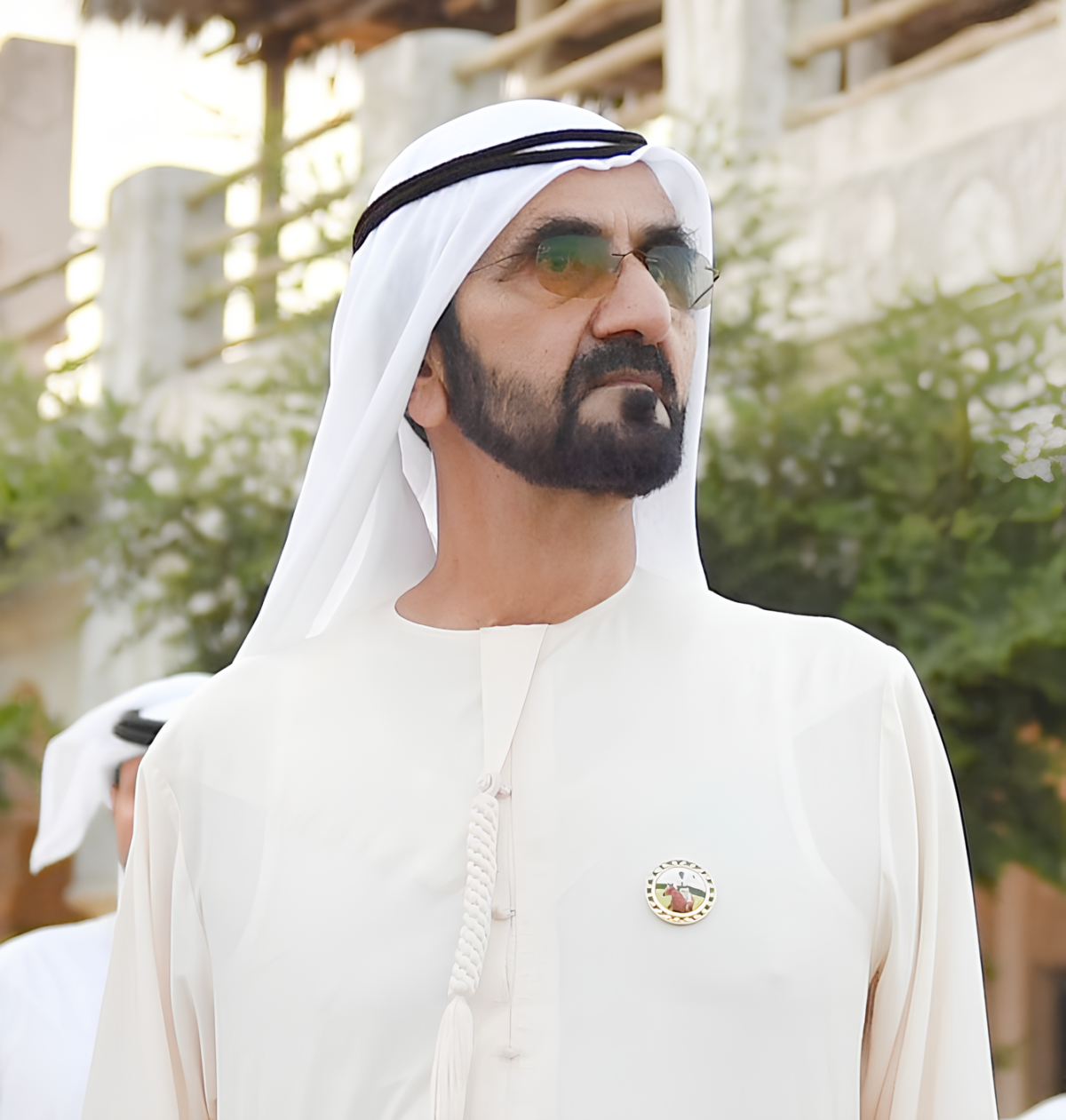

Today marks a moment of reflection: one defined by transformation, resilience, and strategic ambition. In fact, it is a time to look back on Dubai’s transformation from the early take-off in the early 2000s to the sprawling metropolis we see in the Arabian desert today.
But there was a time where Dubai wasn’t always so shiny, between the discovery of oil in 1958, the passing of His Highness Sheikh Maktoum bin Rashid, and Dubai’s maturing economy today.
HH Sheikh Mohammed bin Rashid’s Rule
Upon assuming leadership, HH Sheikh Mohammed bin Rashid prioritised commercial competitiveness as the primary engine of growth.
Unlike Abu Dhabi’s hydrocarbons-led model, Dubai deliberately structured its economy around logistics, aviation, and tourism: sectors capable of attracting sustained foreign capital and global relevance.
Down Old Family Lanes
Sheikh Mohammed assumed leadership on 4 January 2006 following the death of his brother, Sheikh Maktoum bin Rashid. Under his stewardship, Dubai transitioned from a regional trading port into a nexus for west–east and south–north capital flows.
It was only the last century that Sheikh Mohammed accompanied his then father, Sheikh Rashid bin Saeed, to London in 1959 for the then British protectorate to secure Dubai’s first airfield.
Landmark Projects Amidst Global Recession
Sheikh Mohammed has led numerous developments emblematic of Dubai’s commercial diversification.
2010 witnessed the opening of the world’s tallest building, the Burj Khalifa, followed by the grand opening of Dubai Metro and Dubai Mall.
Following Covid-19, these projects were paramount to Dubai’s rebound as other projects – such as Dubai’s World Islands – suffered from the financial crash (2008-2009).
Coming of Age: 2010s
By the next decade, Dubai pushed other projects adjacent to tourism but evergreen by nature.
DP World’s breakthrough came in 2007, upon its record-breaking $4.96B IPO, but its commercial success wasn’t well-known – beyond the MENA – until the next decade where the firm established itself as a major player in global trade and logistics.
Now the giant is present across seven continents, with its home in Dubai and neighbouring Jebel Ali.
DP World’s expansion to London, Buenos Aires, Singapore, and more recently – the African continent and Karachi, Pakistan – achieves something most GCC states haven’t: an economy diversified beyond aviation but global shipping and rail.
KSA is attempting to follow suit, in line with its brotherly neighbour, yet the scale and volume of DP World outstrips GCC competitors.
While Jeddah’s South Container Terminal recently expanded its annual capacity to approximately 4–5 million TEUs under a 30-year concession agreement with DP World, this scale remains modest when set against DP World’s wider operational footprint.
The Dubai-based port operator oversees a total global network of 78 marine and inland terminals spanning more than 40 countries, reflecting a far broader portfolio of international agreements, trade corridors and logistical capacity than Jeddah’s single-hub expansion can currently offer.
Policy Impact
Beyond infrastructure and balance sheets, Dubai’s transformation has also had a wider psychological and regional impact, reshaping how the MENA envisages growth, stability, and global integration.
As Emirati researcher Marwan Al-Blooshi of the Emirates Policy Centre (EPC) notes: “Dubai has become a living proof that the people of the region can break out of the never-ending cycles of wars, poverty, and extremism, and build highly functioning, cosmopolitan, and economically attractive cities that rival those of West and East Asia.”
Al-Blooshi elaborated on Dubai’s vision for human and financial capital beyond the MENA: “This has caused a massive shift in how people in the region imagine their place in the world – away from transnational and revisionist ideologies, towards a more pragmatic, globalised, and growth-centred perspective.”
Human and Financial Capital Shift
In fact, European millionaires are choosing the UAE as a top destination; 44% of 518 European millionaires considered relocating to Dubai in 2024 according to Henley Private Wealth Management.
Individuals from Singapore and China are also making the move.
Advisors at DIFC do not disclose nationalities on family-related entities, but many new entrants are Chinese. Executives are becoming uneasy about business conditions in mainland China or Hong Kong whilst those in Singapore worry about the difficulty of permanent residency in Singapore versus the UAE.
Diversification: Creative Capital
Yet with diversification comes new ventures. Abu Dhabi chose art tourism whereas Dubai chose high-end luxury. Now, the tables are turning as Dubai chooses to not box itself in.
In similar fashion, Dubai Creek developers are assessing art museum installations to mirror what the Al-Nahyan family has achieved with Saadiyat island: a centre for conserving Emirati history, local collectors, and designer infrastructure.
The influx of financial capital to Dubai, as the UBS’ Billionaire Report (2025) details, is also intersecting with less immediate financial sectors: art.
Art is functioning as an appreciating asset, but as a form of brand capital within the GCC’s relationship-driven business culture. Art gives a brand a unique factor, something GCC client visits as a node of appreciation to those GCC talents that designed the very city expatriates call home.
Dubai’s Next Stage
It is with this spirit that Dubai reflects on 20 years of success, rebound, and diversification as a commercial hub not just in the GCC but the global economy. Dubai’s first 20 years under HH Sheikh Mohammed bin Rashid have been defined by scale, speed, and strategic recalibration.
The next phase, marked by capital sophistication rather than infrastructure alone, may ultimately prove its most consequential.
Stay Up to Date with the Latest Updates at Finance ME!
Aramco 8% Diesel Price Hike Hits Saudi Business
Advancement, Flexibility, and Merit: Abu Dhabi Enacts HR Legislation to Attract Top Global Talent
Silah Gulf Launches IPO to Raise $7.7 Million, Targets Regional Expansion