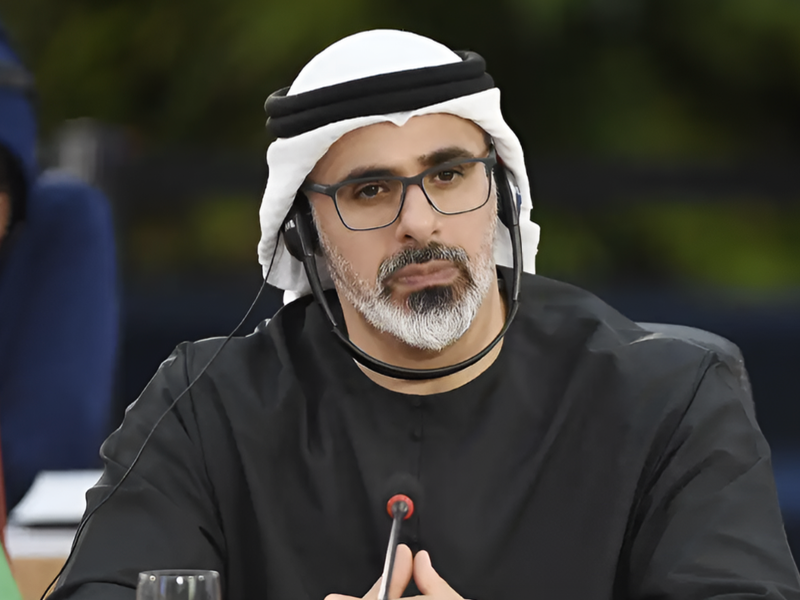

If 2023 can be described as a “stormy sea”, the world is now “sailing on the sunny side”, says Fahd Abdullah, Head of Investment Advisory at Julius Baer Middle East.
Uncertainty was paramount in 2023, with the majority of asset classes ending the year in positive territory and many equity indices posting double-digit gains despite a sharp rise in yields to levels not seen since the global financial crisis. In contrast, 2024 is set to be marked by a series of rate-cutting cycles, paving the way for the normalisation of economic cycles.
“2024 will revolve largely around when central banks will start to loosen monetary policy,” Abdullah tells Finance Middle East. “Even if some nervousness prevails until the timing of this shift becomes apparent, both equities and bonds are anticipated to benefit barring any wild-card events.”
In this context of cautious optimism, the Swiss wealth management company has advised investors to focus on companies that can provide “growth at a reasonable rate” during the year ahead, with a specific focus on quality growth and defensive stocks.

Macroeconomic outlook
In terms of global economic growth, Julius Baer expects neither a boom nor a bust. The wealth management firm predicts a “possibly jittery” start to the year, which will slowly transition into a new cycle as inflation continues to fall closer to the comfort zone of central banks, leading to cuts in investment rates.
“We expect the first-rate cuts to happen in the second quarter of this year, which would mark the beginning of a new economic cycle,” Abdullah says.
One of the aspects that would drive the lowering of inflation rates is the balance sheet recession that China is currently experiencing.
Julius Baer advises investments in “store of value” equity markets, meaning those countries that showcase a strong institutional framework, sound governance and efficient allocation of capital, such as the US, Switzerland and Sweden. In terms of emerging markets, South Korea, Taiwan and India are the ones grabbing the focus of investor attention.
In terms of industries, the firm highlights the continued growth in the technology and medical sectors, which were accelerated by the Covid-19 pandemic but were largely unaffected by geopolitical developments and higher interest rates.

Spotlight on the GCC
The war in Ukraine led to an increase in the price of hydrocarbons, which ultimately benefitted GCC economies. In 2022, the region grew by 7.4%, mainly driven by Saudi Arabia, Kuwait and the UAE, according to data provided by the company.
GDP growth is expected to moderate at 1.9% and pick up in 2024 (3.1%) due to the expected decline in oil production caused by OPEC+ cuts. Non-oil growth is also set to remain robust in 2023, supported by private consumption, tourism, and investment.
“The key thing you could read from all the GCC countries is that inflation remains contained,” Abdullah says. “The peg to the US dollar is what gives this region a credible anchor and a sign of strength for global investors.”
The company expects the region’s current account surplus to be maintained although, at a lower level compared to the 2022 highs. In terms of oil prices, Julius Baer predicts that they will stay close to $75 per barrel, with the majority of countries’ fiscal break-even oil prices remaining mostly below the current oil price level.
The Omani bonds do stand out. We think there is an attractive investment opportunity there
Fahd Abdullah, Head of Investment Advisory, Julius Baer
Looking ahead, the Head of Investment Advisory highlighted the need to keep an eye on two opposing trends: the oil supply curbs coming from Saudi Arabia, and China’s changes in demand.
What does this mean for investors? In the new interest rate cycle beginning in 2024, the focus is on maximizing opportunities.
Equities
In terms of equities, Julius Baer recommends starting the year with exposure to quality growth and defensive stocks, as well as developed-market equities overall, with the best returns potentially materialising in the second half of the year.
In the quality growth space, the wealth management group expressed a preference towards information technology and communication stocks, while in defensives, it highlighted the healthcare sector, Swiss equities, and European utilities.

Fixed income
In fixed income, Julius Baer highlighted that there is still an opportunity for investors to take advantage of the current interest rate environment and lock in attractive yields with quality bonds. In summary: the safer the issuer, the better. The company stressed Swiss-franc-denominated bonds, as well as Brazil, South Korea and Taiwan, with attention to be paid to legal restrictions.
Currencies
Regarding currencies, the US dollar is set to remain rangebound, supported by a very resilient US economy, the country’s ability to become self-sufficient and its technological developments.
Commodities
The “supercharged” cycle driven by the pandemic, overheated manufacturing sectors, adverse weather, and geopolitics is expected to continue to deflate in 2024. As a result, commodity prices will fall at first and then trade rangebound.
Nonetheless, an exception would be copper, where rising demand on the back of growth in electric vehicle production and supply constraints in the years ahead could provide a boost to prices.