
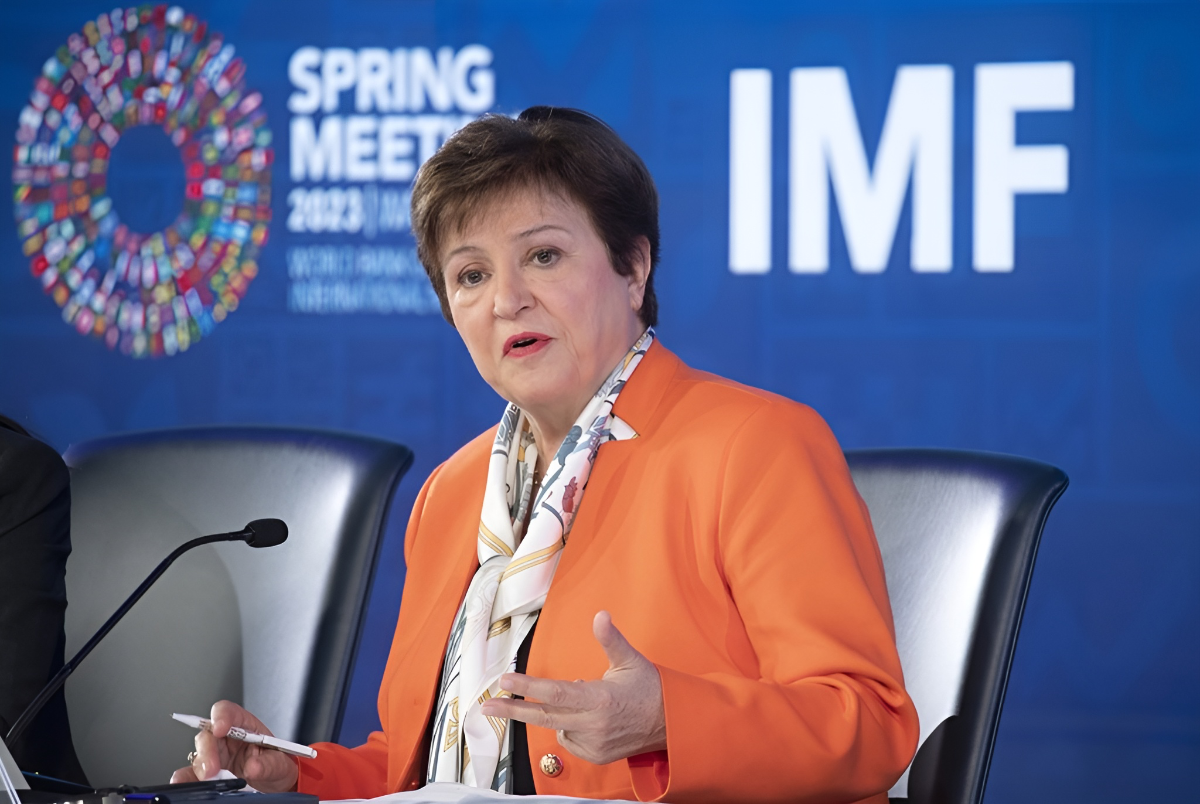

The ongoing conflict in the Middle East is anticipated to exert upward pressure on inflation and hinder global economic growth, according to the head of the International Monetary Fund.
As the IMF prepares to release its updated economic forecasts next week, significant downgrades in growth projections are expected, along with increases in inflation estimates.
Downgrades Expected
The IMF’s managing director highlighted that even a swift resolution to the conflict would not prevent the institution from adjusting its outlook. Previously, the IMF had estimated a modest improvement in global growth, projecting rates of 3.3% in 2026 and 3.2% in 2027.
However, recent analyses suggest that the ongoing war could induce a downward revision in growth forecasts and a corresponding rise in inflation expectations.
The forthcoming World Economic Outlook, set to be published on 14 April, is likely to reflect these emerging challenges. In a preliminary blog post from late March, the IMF indicated a potential downgrade, citing the “asymmetric economic shock” from the conflict and tightening financial conditions.
With the war resulting in a contraction in global oil supply, its impact reverberates through oil and gas logistics, as well as crucial supply chains for helium and fertilisers.
Should the conflict persist, the IMF anticipates that the ramifications for inflation and growth could be more pronounced.
Even if hostilities were to cease promptly, the adjustments to the growth forecast and inflation expectations would be substantial, reflecting a broader trend towards elevated prices and subdued economic expansion.
Stay Up to Date with the Latest Updates at Finance ME
Hawala Meets Crypto: Dickon Johnstone on the GCC’s Next AML Test
EDGE’s Rodrigo Torres on Risk, Sovereignty and Defence Finance in a Multipolar World
Talking Transition: Tobias Maier’s Move from CFO to CEO