In global finance, capital rarely disappears. It simply migrates.
Capital moves away from uncertainty and toward places where economic
fundamentals, leadership, and long-term vision create the confidence to invest.
Over the past few years, that migration has increasingly found its way to the Gulf
and most decisively: the United Arab Emirates.
Sustained Capital Demand
The UAE’s real estate market has entered a phase that many analysts now view as
a structural expansion driven by economic diversification, global wealth migration,
and strategic infrastructure investment rather than any cyclical surge.
Dubai alone recorded more than 270,000 real estate transactions worth AED 917B
(2025): the highest annual volume in the emirate’s history. At the same time, the
city welcomed 19.59M international visitors, while Dubai International Airport
handled a record 95.2M passengers, reinforcing the UAE’s position as one of the
world’s most connected economic hubs.
These numbers matter because they point to sustained demand.
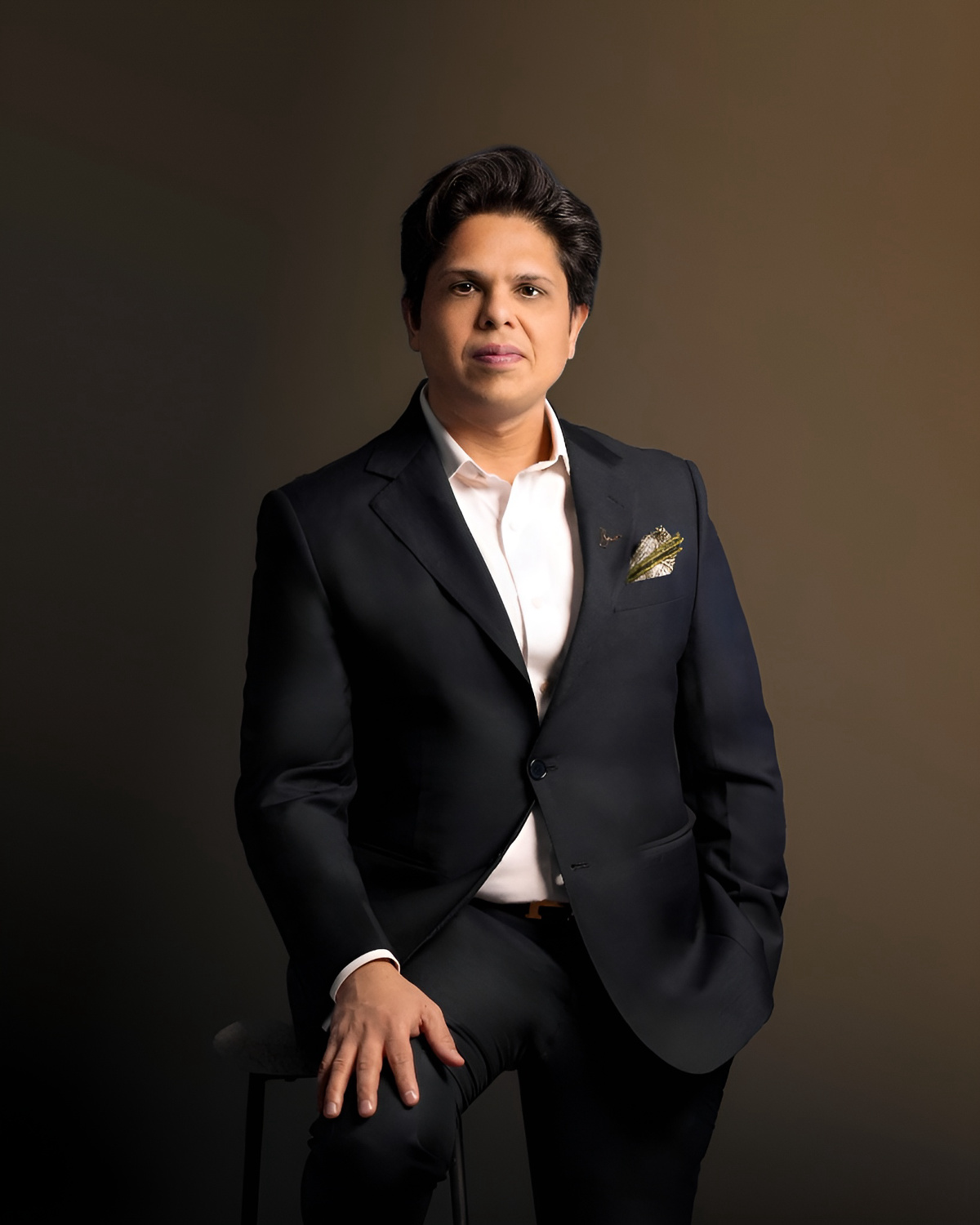
“Real estate is ultimately a reflection of economic confidence,” says Dr. (CA) Ankur
Aggarwal, Chairman and Founder of BNW Developments. “When tourism continues to break records, when global businesses relocate here, and when capital keeps flowing into the country, the demand for quality real estate becomes a natural outcome rather than a temporary surge.”
BNW Developments has been one of the companies positioning itself at the
intersection of this shift.
In just a few years, the developer has built a portfolio exceeding AED 32B in gross development value, with projects spanning Dubai Marina, Al Marjan Island, and
the emerging business district of RAK Central and the anticipated Al Marjan Beach.
The company has also become the largest private developer in Ras Al Khaimah, a
location that is rapidly becoming one of the most closely watched investment
corridors in the region.
Wynn Al Marjan Island Resort
A major reason for that attention lies just offshore. The Wynn Al Marjan Island
resort, currently under development and expected to open in the coming years, is
projected to become one of the most significant tourism catalysts the UAE has seen
outside Dubai.
History shows what happens when such destinations arrive. When Singapore
opened Marina Bay Sands, property values across the surrounding district
accelerated sharply. When Macau expanded its integrated resorts, the real estate
ecosystem around them expanded dramatically.
Aggarwal believes Ras Al Khaimah may now be approaching a similar moment.
“Large-scale tourism infrastructure creates an economic gravity of its own,” he
explains. “As global destinations emerge, hospitality demand rises, job creation
follows, and residential demand begins to expand around those ecosystems.”
Such insight has been central to the development strategy of Ras Al Khaimah.
Many of its flagship projects across Al Marjan Island, like Aqua Arc, Aqua Maya,
Pelagia, Taj Wellington Mews, have been deliberately positioned within minutes of
the Wynn development, aligning residential real estate with what could become
one of the region’s most powerful tourism anchors.
“The goal was never simply to build homes,” Aggarwal says. “The goal was to build
in places where the future of the economy is already taking shape.”
Waterfront Living & Branded Residencies
If capital is flowing into the UAE real estate market for structural reasons, the next
question becomes more specific: where, and with whom, should it be deployed?
Our strategy has taken shape through a focused strategy built around two of the
most powerful global trends in luxury property: waterfront living and branded
residences.
Across international markets, properties overlooking water consistently command
a meaningful premium. Studies across major coastal cities show that waterfront
developments can generate 20-30% higher capital appreciation compared to inland
properties, while also attracting stronger rental demand.
“Investors today are not simply buying square footage,” says Aggarwal. “They are
investing in lifestyle ecosystems, locations where tourism, hospitality, and residential living intersect.”
Portfolio to Match Demand
BNW’s portfolio has been designed around precisely that philosophy. Projects such
as Aqua Arc, Aqua Maya, Pelagia, and Aquino overlook the Arabian Sea and sit
within the rapidly evolving Al Marjan Island corridor.
Others, including the Radisson Blu Hotels and Residences in RAK Central, bring together residential ownership and hospitality services under globally recognised brands.
Branded Residencies
That approach reflects another important trend reshaping real estate investment:
branded residencies.
Across global luxury markets, partnerships with hospitality and lifestyle brands have become a powerful differentiator, offering buyers not only architectural identity but also service standards, asset management credibility, and international recognition.
BNW has actively pursued this model through collaborations with Tonino Lamborghini, Radisson Blu, FashionTV, and Taj Hotels, among others. For Aggarwal, these partnerships are not merely branding exercises.
“They create an ecosystem around the property,” Aggarwal says. “When a globally
recognised brand becomes part of a development, it strengthens both the lifestyle
proposition and the long-term investment narrative.”
Beyond branding and location, Aggarwal believes the most critical factor defining a
developer’s reputation remains execution. “Real estate credibility is built on delivery,” he says. “Vision and architecture may define a project’s ambition, but it is disciplined construction and transparency that build long-term investor trust.”
That philosophy led to the launch of Built Different, a construction update series in
which Aggarwal personally walks investors through active project sites, sharing
real-time progress updates and development milestones.
The idea is simple: allow investors to see development taking shape rather than rely solely on marketing material.
People-Centred Residencies
For Aggarwal, however, the story of real estate ultimately goes beyond buildings.
“I often say the most important ROI is not Return on Investment,” he reflects.
“It is Return on Individuals. When people grow, communities grow, and when
communities grow, businesses become sustainable.”
Current Regional Tensions
Reflecting on the current regional tensions, Dr. (CA) Ankur Aggarwal notes that the
UAE has once again demonstrated the strength of its institutions and preparedness.
“Like everyone else, our priority was the safety of our people and community,” he
says.
“BNW immediately opened accommodation and arranged complimentary travel
support for anyone who found themselves stranded during this period. At the same
time, construction activity across our projects has now resumed as normal.
Moments like these test systems, and the UAE continues to show why global
investors trust its stability. On the real estate front, the fundamentals remain
unshaken.”
In a world where capital is constantly searching for stability and growth, the UAE is
no longer just a destination; it is becoming a default. For developers at the centre of
that shift, the opportunity is not to build, but to define where capital flows next.
Stay Up to Date with the Latest Updates at Finance ME
Hawala Meets Crypto: Dickon Johnstone on the GCC’s Next AML Test
EDGE’s Rodrigo Torres on Risk, Sovereignty and Defence Finance in a Multipolar World